



At a glance
- Both clades of monkeypox spread through close or intimate contact with a person with monkeypox, direct contact with an infected animal, or contact with contaminated objects.
- A person can spread monkeypox from the time symptoms start until the rash has fully healed.
- Monkeypox does NOT spread through the air or through casual contact like you'd have during travel, in a classroom or office, or in pools.

How it spreads
Close or intimate contact
There are two types of monkeypox: clade I and clade II.
Both clades can spread through:
- Close contact (including intimate or sexual contact) with a person with monkeypox
- Contact with contaminated materials used by someone with monkeypox
- Direct contact with live or dead infected wild animals in some parts of Western and Central Africa, where monkeypox occurs regularly
A person can spread monkeypox from the time symptoms start until the rash has fully healed and a fresh layer of skin has formed. Data from 2022 suggest that some people can spread monkeypox from 1 to 4 days before they show symptoms, but no evidence suggests that people who never have symptoms can spread the virus to someone else. CDC continues to study how monkeypox spreads.
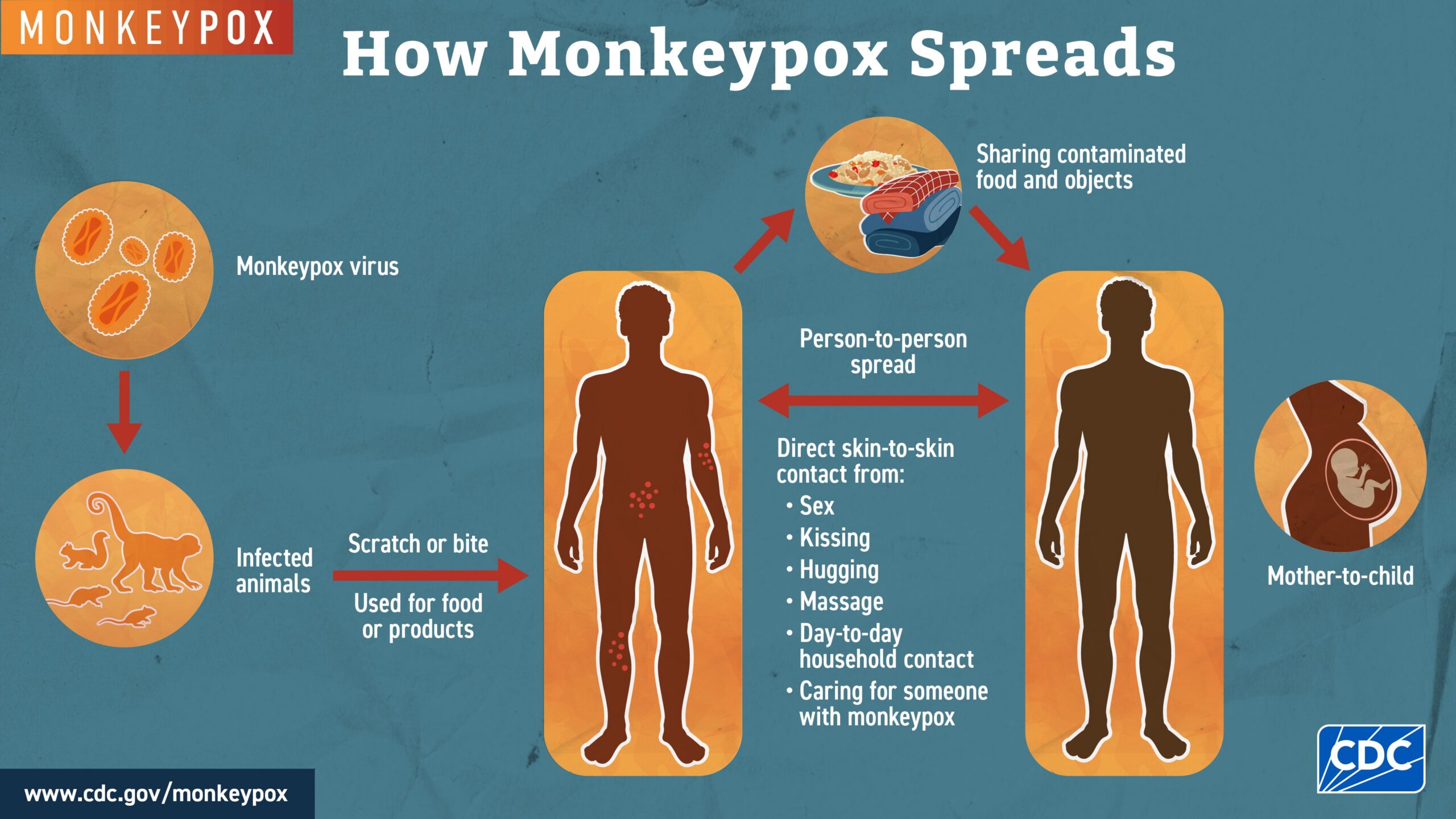
Close or intimate contact
Monkeypox can spread to anyone through close, personal contact, including:
- Direct skin-to-skin contact with monkeypox rash or scabs from a person with monkeypox
- Contact with saliva, upper respiratory secretions (snot, mucus), and bodily fluids or lesions around the anus, rectum, or vagina from a person with monkeypox
- Pregnant women with monkeypox can pass the virus to the fetus during pregnancy or to the newborn during and after birth.
Direct contact can happen during intimate contact, including:
- Oral, anal, or vaginal sex, or touching the genitals (penis, testicles, labia, and vagina) or anus
- Hugging, massage, and kissing
Touching objects
The virus that causes monkeypox can spread through contact with objects, fabrics, and surfaces that have not been disinfected after use by someone with monkeypox. This includes items like clothing, bedding, towels, dishes, utensils, fetish gear, or sex toys.
Infected animals
Monkeypox can spread from animals to people in a few ways:
- Through small wild animals in West and Central Africa, where monkeypox is endemic (found regularly).
- During activities like hunting, trapping, or processing infected wild animals in areas where monkeypox is endemic.
- Direct close contact with an infected animal or their fluids or waste, or getting bitten or scratched.
People are less likely to get monkeypox from a pet or livestock, or vice-versa, but it's possible.
To reduce the risk of spreading monkeypox between animals and people:
- Avoid close contact with an animal that might have monkeypox, including petting, cuddling, hugging, kissing, licking, and sharing sleeping spaces or food.
- Avoid contact with animals, including pets, if you have monkeypox.
How monkeypox does not spread
Through the air
The disease is not known to spread in settings where only respiratory spread is possible, like across rooms, in markets or classrooms, in offices, or during travel. Some studies suggest that the virus can be found in respiratory droplets, and spread has been shown to sometimes occur between animals in a lab housed separately but very close to each other for long periods of time. However, information from real-life outbreaks suggests it's not likely that it can spread from person to person through the air. Currently, CDC recommends that people with monkeypox wear a mask when around others, even when they are receiving care. CDC also recommends that people taking care of someone with monkeypox use appropriate personal protective equipment to avoid getting the disease
Hot tubs or pools
No studies have found a clear link between monkeypox and water in pools, hot tubs, or splash pads. The monkeypox virus is killed in water at the chlorine levels recommended for disinfection in recreational water venues by CDC and required by U.S. jurisdictions.