



What to know
- JYNNEOS is a 2-dose vaccine developed to protect against monkeypox and smallpox.
- CDC has recommendations for who should get the vaccine.
- Get both recommended doses of the vaccine for the best protection against monkeypox.
- The second dose should be given 4 weeks after the first dose, but get the 2nd dose even if it's been longer than 4 weeks.
- Whether or not you've been vaccinated, take other steps to reduce your risk of getting monkeypox.
Overview
Vaccination is an important tool in stopping the spread of monkeypox. If you have certain risk factors that make you eligible, you can help protect yourself from monkeypox by getting the 2-dose monkeypox vaccine. The second dose should be given 4 weeks (28 days) after the first dose. If you can't get your second dose on time, you should get it as soon as possible to complete the series. Getting both doses gives you the best protection against monkeypox.
People who are vaccinated should continue to avoid close, skin-to-skin contact with someone who has monkeypox.
If you've recovered from monkeypox, CDC does not recommend that you get JYNNEOS vaccine doses at this time.
Who should get vaccinated
CDC recommends vaccination if:
- You had known or suspected exposure to someone with monkeypox
- You had a sex partner in the past 2 weeks who was diagnosed with monkeypox
- You are a gay, bisexual, or other man who has sex with men, or are transgender or nonbinary and in the past 6 months have had any of the following:
- A new diagnosis of one or more sexually transmitted diseases (e.g., chlamydia, gonorrhea, or syphilis)
- More than one sex partner
- Sex at a commercial sex venue (like a sex club or bathhouse)
- Sex related to a large commercial event or in a geographic area (city or county for example) where monkeypox virus transmission is occurring
- You have a sex partner with any of the above risks
- You anticipate experiencing any of the above scenarios
- If you are traveling to a country with a clade I monkeypox outbreak and anticipate any of the following activities during travel:
- Sex with a new partner
- Sex at a commercial sex venue (e.g., a sex club or bathhouse)
- Sex in exchange for money, goods, drugs, or other trade
- Sex in association with a large public event (e.g., a rave, party, or festival)
- You are at risk for occupational exposure to orthopoxviruses (e.g., certain people who work in a laboratory or a healthcare facility).
You should NOT get the vaccine if:
You had a severe allergic reaction (such as anaphylaxis) after getting a previous dose of the JYNNEOS vaccine or to a vaccine component.
Talk to your healthcare provider if you had an allergic reaction to the antibiotics gentamicin or ciprofloxacin, or chicken or egg protein.
How the vaccine is given
The vaccine can be given to you two ways:
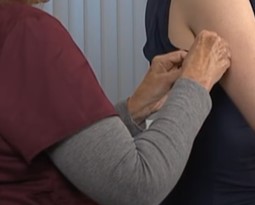
- Subcutaneous, which means that the vaccine is injected in the fat layer underneath the skin on the back of your upper arm (the area above the tricep muscle).
- Intradermal, which means the vaccine is given between the top layers of your skin in the forearm, upper back below the shoulder blade, or shoulder above the deltoid muscle.
You and your provider can discuss which method to use.
Get both recommended doses of monkeypox vaccine
Considerations for vaccine method
- Intradermal vaccination may leave a mark that others can see on your forearm. If that concerns you, you can get it subcutaneously or in the skin of your upper back or shoulder.
- If you have ever had keloid scars (thick, raised scars), ask for the vaccine to be given to you subcutaneously.
- If you are under 18 years of age, you should be given the vaccine subcutaneously.
- When JYNNEOS vaccine is given intradermally, some people have reported less pain after vaccination but more side effects like itching, swelling, redness, thickening of the skin, and skin discoloration at the spot where the vaccine was given. Some of these side effects may last for several weeks.
How long it takes for the vaccine to work
You can start to have an immune response after the first dose of JYNNEOS, but it takes two weeks after the second dose to be the most protected.
Possible side effects
Not everyone has side effects, but some people do. The most common side effects after JYNNEOS vaccination are pain, redness, and itching at the spot where the vaccine is given. You might also experience fever, headache, tiredness, nausea, chills, and muscle aches. These are signs that your immune system is responding, not that you're getting sick.
Where to get the vaccine
- In some large cities, monkeypox vaccines may be available at the health department, public health clinics, hospitals, pharmacies or sometimes at large social gatherings or venues.
- In other areas, monkeypox vaccines may only be available from the health department.
- Contact your healthcare provider, local pharmacy, or local health department for monkeypox vaccine availability.
The cost of JYNNEOS vaccine may be covered by some health insurance plans.
Common questions
Can I get monkeypox after I've been vaccinated?
- Infections after any vaccination are possible. No vaccine is 100% effective.
- It's rare but possible for people who have been fully vaccinated to get monkeypox. And if they did get monkeypox, the illness was generally mild.
- If you have a rash or other symptoms of monkeypox, you should get tested even if you have been vaccinated or had monkeypox.
- Even if you get monkeypox after being vaccinated, the vaccine may help protect you against severe infection, hospitalization, and death.
- Studies have shown that people who had more sexual partners were more likely to get monkeypox after getting both doses of the vaccine. It may be that more chances to get monkeypox may increase your risk, even if you're fully vaccinated.
Can I get monkeypox after I've had it already?
While it's possible for people who have recovered from monkeypox to get it again, it's been very rare (less than 0.001%). And if they did get monkeypox, the illness was generally milder than the first time.
Should I get a monkeypox vaccine booster?
- Evidence suggests that the vaccine continues to be effective for at least 7 years and a booster is not needed.
- Right now, getting more than 2 monkeypox vaccine doses, like a booster dose, isn't recommended unless you work with monkeypox virus or other orthopoxviruses in a research laboratory.
- It's not known how long protection might last, or if protection might decrease over time. CDC is analyzing the current data and conducting studies to enhance the knowledge on how well the JYNNEOS vaccine works during modern monkeypox outbreaks, as well as how long protection might last. These studies will be used to make future vaccine recommendations.