



Key points
This outbreak is over. If you are pregnant, 65 or older, or have a weakened immune system, you may be at higher risk of getting sick with Listeria. Choosing cheeses made with pasteurized milk or heating cheese to 165 °F or steaming hot can help protect yourself from getting sick.
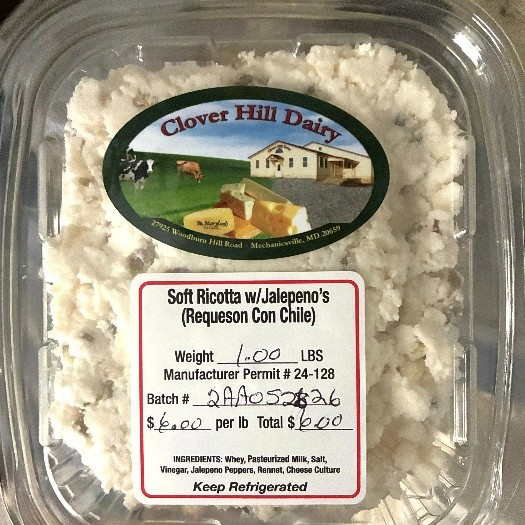
August 26, 2026
CDC, public health and regulatory officials in several states, and the U.S. Food and Drug Administration (FDA) investigated a multistate outbreak of Listeria monocytogenes infections.
Epidemiologic, laboratory, and traceback data showed that some requesón cheeses supplied by Clover Hill Dairy were contaminated with Listeria monocytogenes and made people sick.
Epidemiologic Data
Cases
Total Cases
Hospitalizations
14 (100%) of 14 people with information available
Deaths
1 from Maryland
Illnesses started on dates ranging from March 6, 2023, to July 8, 2026. The true number of sick people in this outbreak was likely higher than the number reported, and the outbreak may not have been limited to the states with known illnesses. This is because some people recover without medical care and are not tested for Listeria.
Demographics
Public health officials collected many different types of information from sick people, including their age, race, ethnicity, other demographics, and the foods they ate in the month before they got sick. This information provided clues to help investigators identify the source of the outbreak.
The table below has information about sick people in this outbreak ("n" is the number of people with information available for each demographic).
Age
(n=15)
Range from 16 to 81 years
Median age of 55
Sex
(n= 15)
67% female
33% male
Race
(n= 11)
82% White
18% Other
Ethnicity
(n= 13)
92% Hispanic
8% non-Hispanic
Food exposure
State and local public health officials interviewed people about the foods they ate in the month before they got sick.
Of the 13 people interviewed:
- 11 (85%) reported eating any cheese
- Five (45%) people reported eating requesón cheese made by Clover Hill Dairy
- Other people reported exposures to different types of cheeses.
Laboratory and Traceback Data
Public health investigators used the PulseNet system to identify illnesses that were part of this outbreak. CDC PulseNet manages a national database of DNA fingerprints of bacteria that cause foodborne illnesses. DNA fingerprinting is performed on bacteria using a method called whole genome sequencing (WGS). WGS showed that bacteria from sick people's samples were closely related genetically. This suggests that people in this outbreak got sick from the same food.
FDA and state partners collected and analyzed product and environmental samples. Listeria was detected in six product samples of requesón cheese and in one environmental sample. WGS showed that the Listeria in the cheese is the same Listeria in the sick people.
Previous updates
Epidemiologic, laboratory, and traceback data show that some requesón cheeses supplied by Clover Hill Dairy are contaminated with Listeria monocytogenes and are making people sick. The investigation is ongoing to determine the source of contamination and whether additional cheeses are linked to the outbreak.
Laboratory and Traceback Data
Public health investigators are using the PulseNet system to identify illnesses that may be part of this outbreak. CDC PulseNet manages a national database of DNA fingerprints of bacteria that cause foodborne illnesses. DNA fingerprinting is performed on bacteria using a method called whole genome sequencing (WGS). WGS showed that bacteria from sick people's samples are closely related genetically. This suggests that people in this outbreak got sick from the same food.
FDA and state partners collected and analyzed product and environmental samples. Listeria was detected in six product samples of requesón cheese and in two environmental samples. WGS showed that the Listeria in the cheese is the same Listeria in the sick people.
Epidemiologic, laboratory, and traceback data show that some requesón cheeses supplied by Clover Hill Dairy are contaminated with Listeria monocytogenes and are making people sick. The investigation is ongoing to determine the source of contamination and whether additional cheeses are linked to the outbreak.
Epidemiologic Data
Since the last epidemiological update on June 15, 2026, 3 new illnesses were reported.
As of June 24, 2026, a total of 12 people infected with the outbreak strain of Listeria have been reported from 4 states. Sick people's samples were collected on dates ranging from March 6, 2023, to June 2, 2026. Of 12 people with information available, 10 have been hospitalized and 1 death has been reported from Maryland.
The true number of sick people in this outbreak is likely higher than the number reported, and this outbreak may not be limited to the states with known illnesses. This is because some people recover without medical care and are not tested for Listeria. In addition, recent illnesses may not yet be reported as it usually takes 3 to 4 weeks to determine if a sick person is part of an outbreak.
Public health officials collect many different types of information from sick people, including their age, race, ethnicity, other demographic characteristics, and the foods they ate in the month before they got sick. This information provides clues to help investigators identify the source of the outbreak.
The table below has information about sick people in this outbreak ("n" is the number of people with information available for each demographic).
Age
(n=12)
Range from 16 to 81 years
Median age of 55
Sex
(n= 12)
67 % female
33 % male
Race
(n= 9)
89% White
11 % Other
Ethnicity
(n= 11)
91 % Hispanic
9 % non-Hispanic
State and local public health officials are interviewing people about the foods they ate in the month before they got sick. Of the 10 people interviewed, 9 reported eating any cheese. Two people reported eating requesón cheese made by Clover Hill Dairy. Other people reported exposures to different types of cheeses. The investigation is ongoing to determine if those cheese exposures relate to Clover Hill Dairy.
Public health investigators continue to gather information on what people ate before getting sick to determine whether additional products are linked to the outbreak.
Laboratory and Traceback Data
Public health investigators are using the PulseNet system to identify illnesses that may be part of this outbreak. CDC PulseNet manages a national database of DNA fingerprints of bacteria that cause foodborne illnesses. DNA fingerprinting is performed on bacteria using a method called whole genome sequencing (WGS). WGS showed that bacteria from sick people's samples are closely related genetically. This suggests that people in this outbreak got sick from the same food.
FDA and state partners collected and analyzed product and environmental samples. Listeria was detected in six product samples of requesón cheese and in one environmental sample. WGS showed that the Listeria in the cheese is the same Listeria in the sick people.
Public Health Actions
On June 18, 2026, Clover Hill Dairy expanded their recall to include all of its cheese products. CDC advises people not to eat, sell, or serve recalled cheese.
Public Health Actions
On June 18, 2026, Clover Hill Dairy expanded their recall to include all of its cheese products. CDC advises people not to eat, sell, or serve recalled cheese.
Epidemiologic, laboratory, and traceback data show that requesón cheeses supplied by Clover Hill Dairy are contaminated with Listeria monocytogenes and are making people sick. The investigation is ongoing to determine the source of contamination and whether additional cheeses are linked to the outbreak.
Laboratory and Traceback Data
Public health investigators are using the PulseNet system to identify illnesses that may be part of this outbreak. CDC PulseNet manages a national database of DNA fingerprints of bacteria that cause foodborne illnesses. DNA fingerprinting is performed on bacteria using a method called whole genome sequencing (WGS). WGS showed that bacteria from sick people's samples are closely related genetically. This suggests that people in this outbreak got sick from the same food.
FDA and state partners collected and analyzed product and environmental samples. Listeria was detected in six product samples of requesón cheese and in one environmental sample. WGS showed that the Listeria in the cheese is the same Listeria in the sick people.
Public Health Actions
Clover Hill Dairy has agreed to recalled all of its cheese products. CDC advises people not to eat, sell, or serve recalled cheese.
Epidemiologic, laboratory, and traceback data show that some requesón cheeses supplied by Clover Hill Dairy are contaminated with Listeria monocytogenes and are making people sick. The investigation is ongoing to determine the source of contamination and whether additional cheeses are linked to the outbreak.
Epidemiologic Data
Since the last update on June 4, 2026, one new illness was reported.
As of June 9, 2026, a total of 9 people infected with the outbreak strain of Listeria have been reported from 3 states. Sick people's samples were collected on dates ranging from March 6, 2023, to May 10, 2026. Of 9 people with information available, 8 have been hospitalized and 1 death has been reported from Maryland.
The true number of sick people in this outbreak is likely higher than the number reported, and this outbreak may not be limited to the states with known illnesses. This is because some people recover without medical care and are not tested for Listeria. In addition, recent illnesses may not yet be reported as it usually takes 3 to 4 weeks to determine if a sick person is part of an outbreak.
Public health officials collect many different types of information from sick people, including their age, race, ethnicity, other demographic characteristics, and the foods they ate in the month before they got sick. This information provides clues to help investigators identify the source of the outbreak.
The table below has information about sick people in this outbreak ("n" is the number of people with information available for each demographic).
Age
(n=9)
Range from 16 to 81 years
Median age of 55
Sex(n= 9)
67 % female
33 % male
Race(n= 6)
83 % White
17 % Other
Ethnicity(n= 8)
88 % Hispanic12 % non-Hispanic
State and local public health officials are interviewing people about the foods they ate in the month before they got sick. Of the 8 people interviewed, 6 reported eating any cheese. Two people reported eating requesón cheese made by Clover Hill Dairy. Other people reported exposures to different types of cheeses. The investigation is ongoing to determine if those cheese exposures relate to Clover Hill Dairy.
Public health investigators continue to gather information on what people ate before getting sick to determine whether additional products are linked to the outbreak.
Laboratory and Traceback Data
Public health investigators are using the PulseNet system to identify illnesses that may be part of this outbreak. CDC PulseNet manages a national database of DNA fingerprints of bacteria that cause foodborne illnesses. DNA fingerprinting is performed on bacteria using a method called whole genome sequencing (WGS). WGS showed that bacteria from sick people's samples are closely related genetically. This suggests that people in this outbreak got sick from the same food.
New York State Department of Agriculture and Markets (NYS AGM) collected samples at a retail location shopped at by sick people. One sample of requesón that was repackaged at this retailer tested positive for Listeria monocytogenes. WGS confirmed the Listeria in the repackaged cheese is the same as the Listeria making people sick in this outbreak.
NYS AGM also went to the distributor who supplied cheese to the retail location. They collected a sample from an unopened 18-pound bucket of requesón that was supplied by Clover Hill Dairy. This sample tested positive for Listeria monocytogenes. Whole genome sequencing showed the strain from the cheese is the same strain as the sick people.
FDA's traceback investigation is ongoing.
Public Health Actions
Clover Hill Dairy and Nelson & Isa Lacteos LLC. have recalled requesón/soft ricotta cheese. CDC advises people not to eat, sell, or serve recalled cheese.
CDC, public health and regulatory officials in several states, and the U.S. Food and Drug Administration (FDA) are collecting different types of data to investigate a multistate outbreak of Listeria monocytogenes infections.
Epidemiologic, laboratory, and traceback data show that some requesón/soft ricotta cheese are contaminated with Listeria monocytogenes and are making people sick. The investigation is ongoing to determine the source of contamination and whether additional cheeses are linked to the outbreak.
Epidemiologic Data
As of June 4, 2026, a total of 8 people infected with the outbreak strain of Listeria have been reported from 3 states. Sick people's samples were collected on dates ranging from March 6, 2023, to May 9, 2026. Of 8 people with information available, 7 have been hospitalized and 1 death has been reported from Maryland.
The true number of sick people in this outbreak is likely higher than the number reported, and this outbreak may not be limited to the states with known illnesses. This is because some people recover without medical care and are not tested for Listeria. In addition, recent illnesses may not yet be reported as it usually takes 3 to 4 weeks to determine if a sick person is part of an outbreak.
Public health officials collect many different types of information from sick people, including their age, race, ethnicity, other demographic characteristics, and the foods they ate in the month before they got sick. This information provides clues to help investigators identify the source of the outbreak.
The table below has information about sick people in this outbreak ("n" is the number of people with information available for each demographic).
Age
(n=8)
Range from 16 to 81 years
Median age of 57
Sex
(n= 8)
63 % female
37 % male
Race
(n= 6)
83 % White
17 % Other
Ethnicity
(n= 8)
88 % Hispanic
12 % non-Hispanic
State and local public health officials are interviewing people about the foods they ate in the month before they got sick. Of the 7 people interviewed, 5 reported eating any cheese. Two people reported eating requesón cheese made by Clover Hill Dairy. Other people reported exposures to different types of cheeses. The investigation is ongoing to determine if those cheese exposures relate to Clover Hill Dairy.
Public health investigators continue to gather information on what people ate before getting sick to determine whether additional products are linked to the outbreak.
Laboratory and Traceback Data
Public health investigators are using the PulseNet system to identify illnesses that may be part of this outbreak. CDC PulseNet manages a national database of DNA fingerprints of bacteria that cause foodborne illnesses. DNA fingerprinting is performed on bacteria using a method called whole genome sequencing (WGS). WGS showed that bacteria from sick people's samples are closely related genetically. This suggests that people in this outbreak got sick from the same food.
New York State Department of Agriculture and Markets (NYS AGM) collected samples at a retail location shopped at by sick people. One sample of requesón that was repackaged at this retailer tested positive for Listeria monocytogenes. WGS confirmed the Listeria in this cheese is the same as the Listeria making people sick in this outbreak.
NYS AGM also went to the distributor who supplied cheese to the retail location. They collected a sample from an unopened 18-pound bucket of requesón that was supplied by Clover Hill Dairy. This sample tested positive for Listeria monocytogenes. WGS is pending to see if it is the same strain as the strain that is making people sick in this outbreak.
Due to the public health risk, the Maryland Department of Health has suspended Clover Hill Dairy's operating license and is conducting a follow up evaluation in cooperation with the facility.
FDA's traceback investigation is ongoing.
Public Health Actions
On June 3, 2026, Clover Hill Dairy recalled requesón/soft ricotta cheese. CDC advises people not to eat, sell, or serve recalled cheese.
This page was last updated on this date. Updates may include minor edits, image changes, or other modifications to page content.
The information on this page was last reviewed by subject matter experts to ensure accuracy.