



At a glance
- Getting enough sleep contributes to a student's overall health and well-being.
- Students should get the proper amount of sleep at night to help stay focused, improve concentration, and improve academic performance.
- Good sleep hygiene, combined with later school times, helps adolescents be healthier and be better academic achievers.
Overview
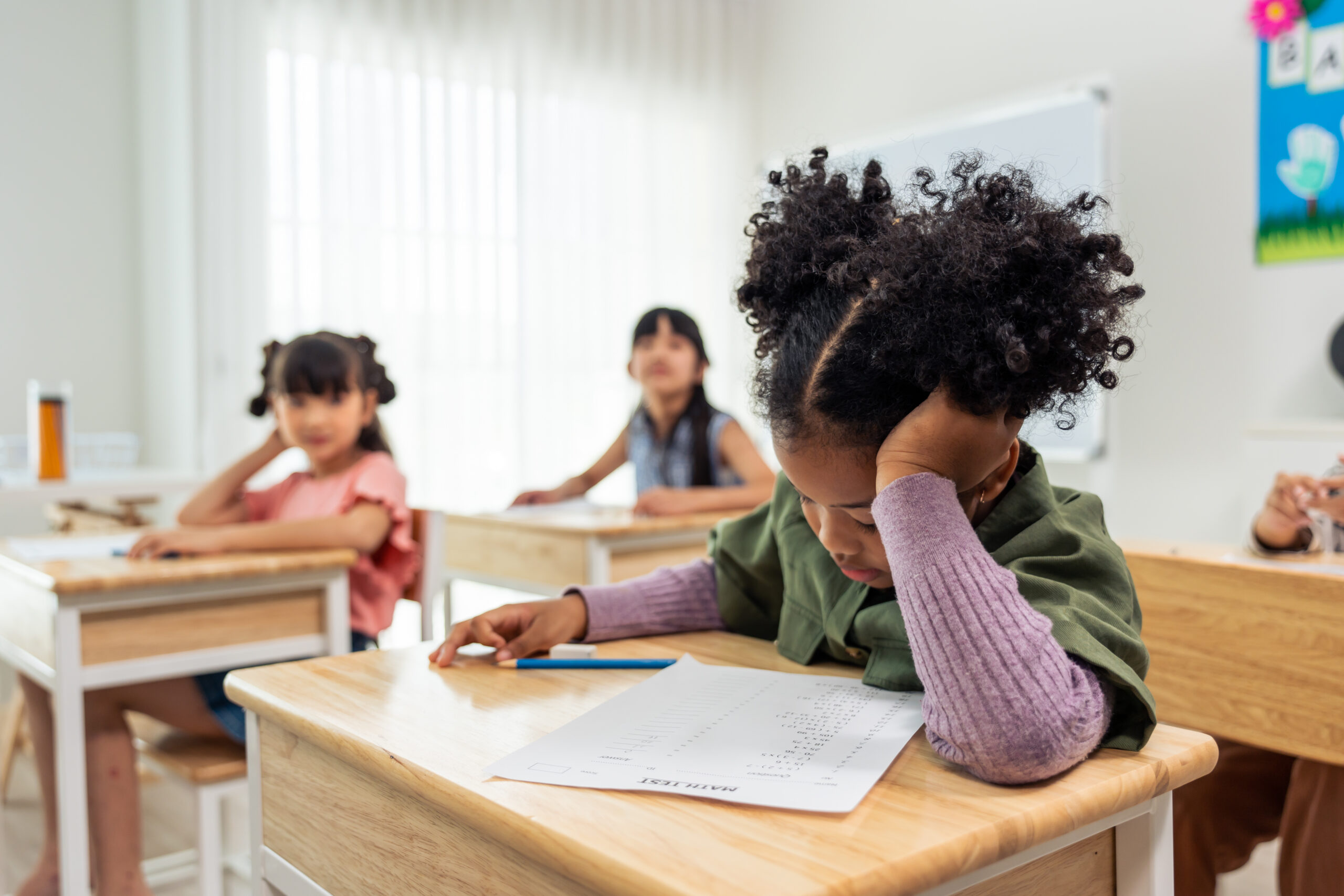
Children and adolescents who do not get enough sleep have a higher risk for many health problems. Examples include obesity, type 2 diabetes, poor mental health, and injuries. These children are also more likely to have attention and behavior problems, which can lead to poor academic performance in school.
Facts
How much sleep do students need?
How much sleep someone needs depends on their age. The American Academy of Sleep Medicine has made the following recommendations for children and adolescents:
6–12 years
9 to 12 hours per 24 hours
13–18 years
8 to 10 hours per 24 hours
Insufficient sleep among students
- According to data from 2025, 75% of students are not getting adequate sleep.
- Male students were more likely than female students to get enough sleep.
- Younger high school students were more likely than juniors and seniors to get enough sleep.
Recommendations
In 2014, American Academy of Pediatrics recommended that middle schools and high schools start no earlier than 8:30 AM. This can allow adolescents to get the sleep they need. The American Medical Association, the American Academy of Sleep Medicine, and other medical associations have since made recommendations. They also support delaying school start times for adolescents.
Common Questions
What can schools do?
Provide sleep education
Schools can add sleep education to the K–12 curriculum to help children and adolescents learn why sleep is important for health. Lessons in sleep patterns and sleep disorders, snoring, drowsy driving, and insomnia are among topics teachers can cover in the classroom. These lessons can help students develop healthy sleep habits.
School sleep education programs may result in:
- Significantly longer weekday and weekend total sleep time.
- Improved sleep hygiene (habits that support good sleep).
However, more research is needed to know how best to maintain these improvements long term. One possible strategy is to have refresher sessions for students.
Review school start times
The combination of late bedtimes and early school start times results in most adolescents not getting enough sleep. In recent years, studies showed that later school start times for adolescents result in more students getting enough sleep.
School officials can learn more about the research connecting sleep and school start times. School districts can support adequate sleep among students by implementing delayed school start times, as recommended by medical societies.
What can parents do?
- Model and encourage habits that promote good sleep. Set a regular bedtime and wake-up time, including on weekends, for everyone—children, adolescents, and adults alike.
- Keep in mind that adolescents with parent-set bedtimes usually get more sleep than those whose parents do not set bedtimes.
- Dim lighting. Adolescents exposed to more light (room lighting, or lighting from electronics) in the evening are less likely to get enough sleep.
- Set a media curfew. Technology use (computers, video gaming, or mobile phones) may also contribute to late bedtimes. Parents should consider banning technology use after a certain time, or removing these technologies from the bedroom.
What can health professionals do?
- Educate adolescent patients and their parents about the importance of adequate sleep, and factors that contribute to insufficient sleep among adolescents.
Resources
Sleep education
- CDC | Sleep and Sleep Disorders
- American Academy of Sleep Medicine | Sleep Education for School
- Sleep Recharges You: Educator Resources
School start times
- Start School Later | Learn More
- Owens J, Drobnich D, Baylor A, Lewin D. School start time change: an in-depth examination of school districts in the United States. Mind Brain Educ. 2014;8(4):182–213.
- Wheaton AG, Chapman DP, Croft JB. School start times, sleep, behavioral, health, and academic outcomes: a review of the literature. J Sch Health. 2016;86(5):363–381.
- Morgenthaler TI, Hashmi S, Croft JB, Dort L, Heald JL, Mullington J. High school start times and the impact on high school students: what we know, and what we hope to learn. J Clin Sleep Med. 2016;12(12):1681–1689.
This page was last updated on this date. Updates may include minor edits, image changes, or other modifications to page content.
The information on this page was last reviewed by subject matter experts to ensure accuracy.
- Crowley SJ, Acebo C, Carskadon MA. Sleep, circadian rhythms, and delayed phase in adolescence. Sleep Med. 2007;8(6):602–612.
- Bartel KA, Gradisar M, Williamson P. Protective and risk factors for adolescent sleep: a meta-analytic review. Sleep Med Rev. 2015;21:72–85.
- Knutson KL, Lauderdale DS. Sociodemographic and behavioral predictors of bed time and wake time among US adolescents aged 15 to 17 years. J Pediatr. 2009;154(3):426–430.
- Paruthi S, Brooks LJ, D'Ambrosio C, et al. Consensus statement of the American Academy of Sleep Medicine on the recommended amount of sleep for healthy children: methodology and discussion. J Clin Sleep Med. 2016;12(11):1549–1561.
- Owens J; Adolescent Sleep Working Group; Committee on Adolescence. Insufficient sleep in adolescents and young adults: an update on causes and consequences. Pediatrics. 2014;134:e921–e932.
- Lowry R, Eaton DK, Foti K, McKnight-Eily L, Perry G, Galuska DA. Association of sleep duration with obesity among US high school students. J Obes. 2012;2012:476914.
- Fitzgerald CT, Messias E, Buysse DJ. Teen sleep and suicidality: results from the Youth Risk Behavior Surveys of 2007 and 2009. J Clin Sleep Med. 2011;7(4):351–356.
- Wheaton AG, Everett Jones S, Cooper AC, Croft JB. Short sleep duration among middle school and high school students — United States, 2015. MMWR Morb Mortal Wkly Rep. 2018;67(3):85–90.
- Adolescent Sleep Working Group, Committee on Adolescence, Council on School Health. Policy statement: school start times for adolescents. Pediatrics. 2014;134(3):642–649.
- American Medical Association. AMA supports delayed school start times to improve adolescent wellness. 2016. Accessed September 25, 2024. https://www.ama-assn.org/ama-supports-delayed-school-start-times-improve-adolescent-wellness
- Watson NF, Martin JL, Wise MS, et al. Delaying middle school and high school start times promotes student health and performance: an American Academy of Sleep Medicine position statement. J Clin Sleep Med. 2017;13(4):623–625.
- Chung K-F, Chan M-S, Lam Y-Y, Lai CS-Y, Yeung W-F. School-based sleep education programs for short sleep duration in adolescents: a systematic review and meta-analysis. J Sch Health. 2017;87(6):401–408.