



At a glance
- To achieve a future free of HIV, it is critical to prevent new HIV infections in infants and ensure mothers living with HIV receive lifelong treatment.
- With CDC's support, Tanzania has made strides in expanding HIV testing, lifelong treatment for pregnant women living with HIV, and early infant diagnosis services.
Community support at the heart of Tanzania's HIV response
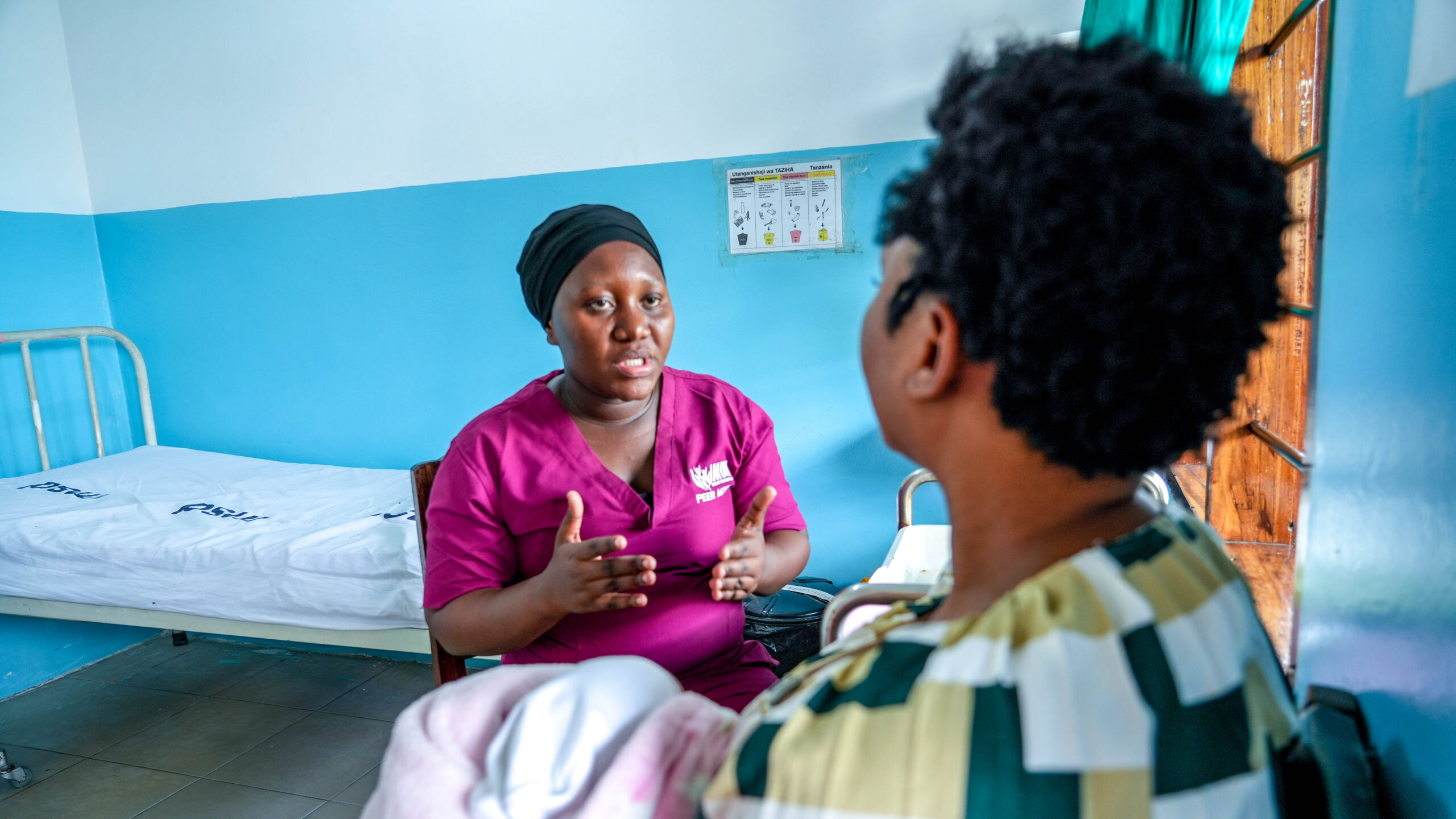
When Geah was diagnosed with HIV as a young girl, fear and uncertainty shaped her life. Today, she stands in a Dar es Salaam clinic as a trained "Mentor Mother", supporting more than 200 pregnant women living with HIV and helping them deliver healthy, HIV-free babies. As a mother of two children born without HIV, Geah draws on her own experience to provide guidance, encouragement, and hope.
Her story also reflects Tanzania's broader progress in reducing mother-to-child transmission (MTCT) of HIV and improving outcomes for mothers and children nationwide.
With support from CDC, through the U.S. President's Emergency Plan for AIDS Relief (PEPFAR), Tanzania's Ministry of Health (MOH) strengthened the full PMTCT continuum of care—from HIV testing and treatment to infant follow-up. Healthcare workers were trained to initiate lifelong ART immediately for pregnant and breastfeeding women living with HIV. It strengthened supply chains to protect reliable supplies of medications and test kits. Facilities conducted weekly data reviews to ensure that every pregnant woman diagnosed with HIV received treatment and achieved viral suppression. These efforts laid the foundation for Tanzania's substantial reductions in mother-to-child HIV transmission.
The impact goes beyond HIV. Sustained commitment from the government of Tanzania has also accelerated wider progress in preventing maternal deaths and reinforcing the systems that safeguard mothers and newborns.
In Tanzania, far fewer mothers are dying during pregnancy.
Taking the transformation beyond clinic walls
Recognizing that clinical services alone cannot eliminate MTCT, CDC supported Tanzania in expanding community-based strategies to help mothers and their babies remain engaged in care. Through CDC-supported Mentor Mother programs, women like Geah provide peer counseling, encouragement, and treatment adherence support to pregnant women living with HIV. Mentor Mothers also conduct home visits to identify pregnant women early, reconnect those who miss appointments, and link them back to care. Programs also engaged male partners to encourage testing and shared responsibility for maternal and child health.
These efforts directly addressed retention gaps that once threatened progress. In 2020, while 92% of pregnant women enrolled in PMTCT services, only 67% remained in care through pregnancy. Today, continuity of care has improved through integrated "one-stop" maternal and child health services.
Connecting mothers and babies to lifesaving care
Tanzania's progress is built on decades of sustained collaboration between the MOH, PEPFAR, and CDC. Since 2000, PMTCT services have expanded from five pilot facilities to more than 8,000 sites nationwide.
CDC's office in Tanzania supported key system-strengthening interventions, including:
- Universal HIV testing at first healthcare visit during pregnancy, with repeat testing later in pregnancy and postpartum to identify new infections.
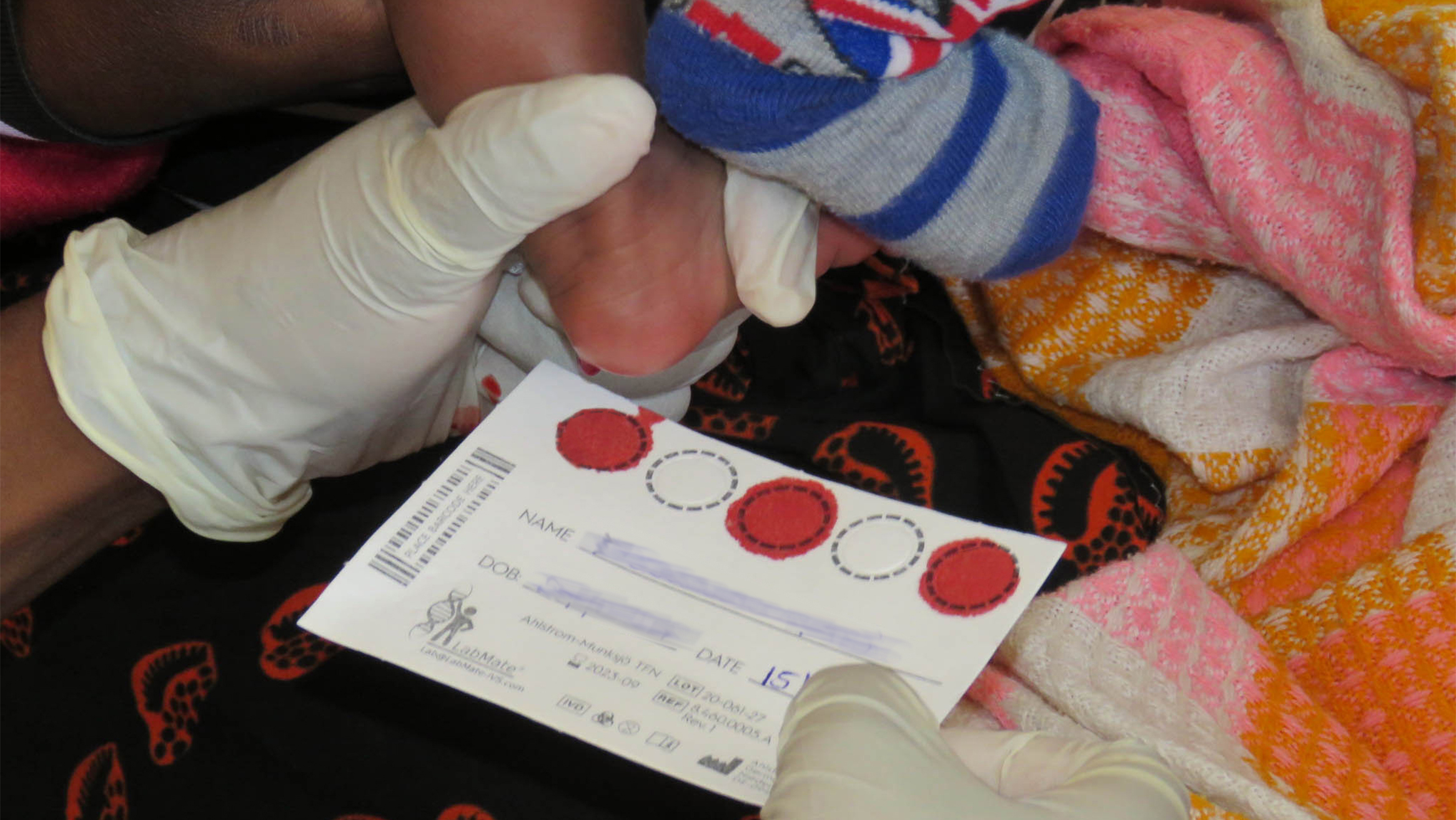
- Immediate initiation of lifelong ART for pregnant and breastfeeding women diagnosed with HIV, in addition to follow up postpartum care for mothers and infants—including infant prophylaxis, and regular HIV testing at 6 weeks, 9 months, 12 months, 18 months, and 3 months after breastfeeding ends.
- Stronger supply chains to prevent gaps in supply of HIV test kits and antiretroviral medications.
- Standardized registers and electronic health systems to track women and infants across the full PMTCT cascade.
- Weekly facility-level data reviews to ensure that every pregnant woman diagnosed with HIV is initiated on treatment and retained in care.
Expanding beyond HIV: Integrating syphilis screening
Building on gains with HIV prevention and treatment, Tanzania has integrated syphilis screening into routine pregnancy care services as part of a dual elimination strategy. CDC worked with the MOH and implementers to introduce the universal "opt-out" screening using dual HIV/syphilis rapid tests, enabling same-day diagnosis and treatment.
PEPFAR-supported facilities now use a comprehensive model to ensure women diagnosed with syphilis receive immediate treatment. CDC strengthened supply chains, healthcare worker training, data systems, and partner notification services to further reduce reinfection and adverse outcomes.
By integrating HIV and syphilis services, Tanzania maximizes each pregnancy care visit as an opportunity to prevent multiple infections and improve maternal and newborn health outcomes.
The road ahead
In 2024, more than 1.5 million pregnant women at PEPFAR-supported sites in Tanzania were tested for HIV and screened for syphilis. Nearly 50,000 babies with mothers living with HIV were born HIV-free. These achievements underscore the country's expanding capacity to deliver comprehensive, integrated services at scale.
Tanzania's dramatic drop in mother-to-child transmission shows that early testing, immediate treatment, integrated services, and community-based retention strategies, including Mentor Mothers like Geah, are working. However, to achieve elimination, CDC is focused on:
- Ensuring maternal HIV viral suppression throughout pregnancy and breastfeeding.
- Increasing 18-month confirmatory testing coverage.
- Strengthening long-term retention systems.
- Maintaining high-quality data to accurately measure outcomes.
With continued focus on mother- and infant-centered care, Tanzania is well-positioned to further reduce preventable deaths and reach an HIV-free generation. Tanzania's experience shows that elimination requires a sustained system-wide commitment over time, rather than a single intervention.
CDC strengthens Tanzania's maternal health system through HIV testing, lifelong treatment for mothers, and early diagnosis for infants. These targeted actions and ongoing collaborations sustain Tanzania's progress toward eliminating new HIV infections and ensuring healthy, HIV-free mothers and babies.