



At a glance
Some of the world’s most dangerous disease outbreaks never make the headlines—and you may never hear about them at all. They don’t close airports. They don’t overwhelm hospitals. They don’t disrupt daily life—or rattle the global economy. That’s often because CDC and its global health security experts are on the frontlines—working with countries to quickly detect, respond to and contain outbreaks. These rapid efforts help stop outbreaks before they become full-blown emergencies, before they can cross borders, and before they reach the United States. This is what American-led global health security looks like in action. And keeping Americans safe is our #1 goal.
CDC’s Global Health Heroes: Protecting Americans from Deadly Threats
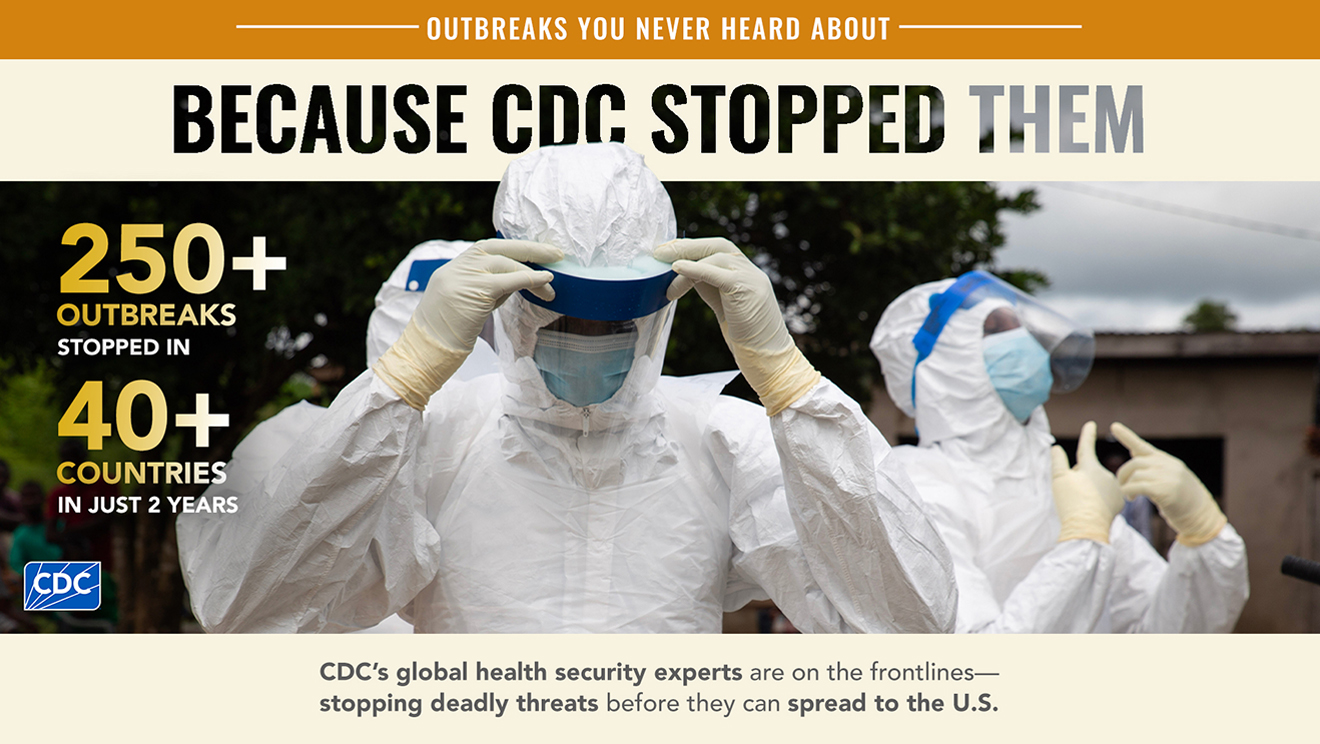
This is What American-led Global Health Security Looks Like.
In today's world—where a health threat overseas can reach U.S. communities in just 36 hours—stopping outbreaks at their source is part of our efforts to protect Americans at home and abroad.
In the past two years alone, CDC global health security experts helped contain more than 250 outbreaks across over 40 countries—from cholera to monkeypox, and Marburg to measles.
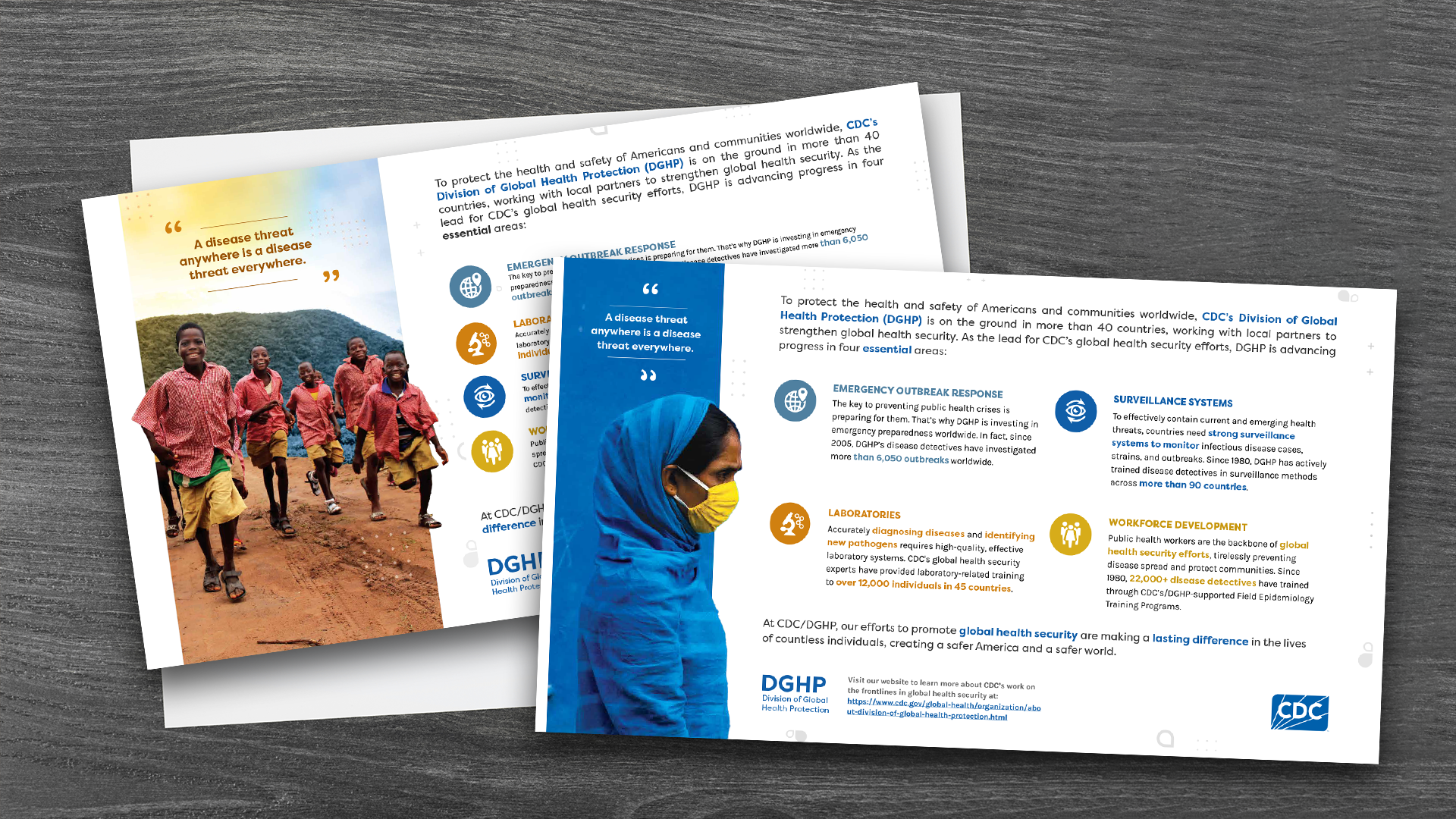
These experts are based overseas and at CDC headquarters and form a critical part of CDC’s global health security work to ensure U.S. leadership in protecting our nation’s security. Together with partners across the U.S. government and around the globe, these world-class experts are on the frontlines in more than 40 countries keeping Americans safe. They not only lead emergency responses but also strengthen the systems that stop local disease outbreaks from becoming global crises: bolstering laboratories to quickly detect deadly pathogens, improving surveillance to track emerging threats, and training disease detectives to investigate and swiftly contain outbreaks.
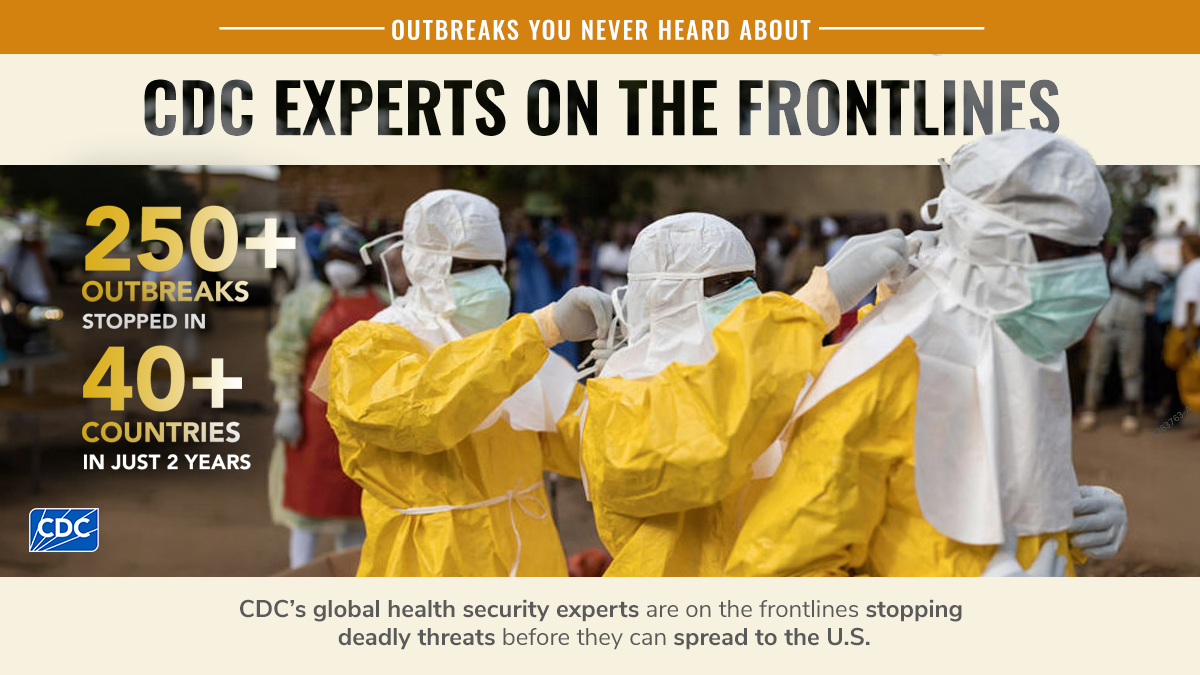
Outbreaks You Never Heard About: Stories from the Frontlines
Yet most of these outbreaks never make the news because they never escalate into global threats.
And that’s the point.
These real-world examples with measurable results show how CDC’s American-led expertise helps move outbreaks from crisis to control before they reach U.S. communities, protecting Americans’ health, safety, and livelihoods.
Early Detection of a Deadly Threat
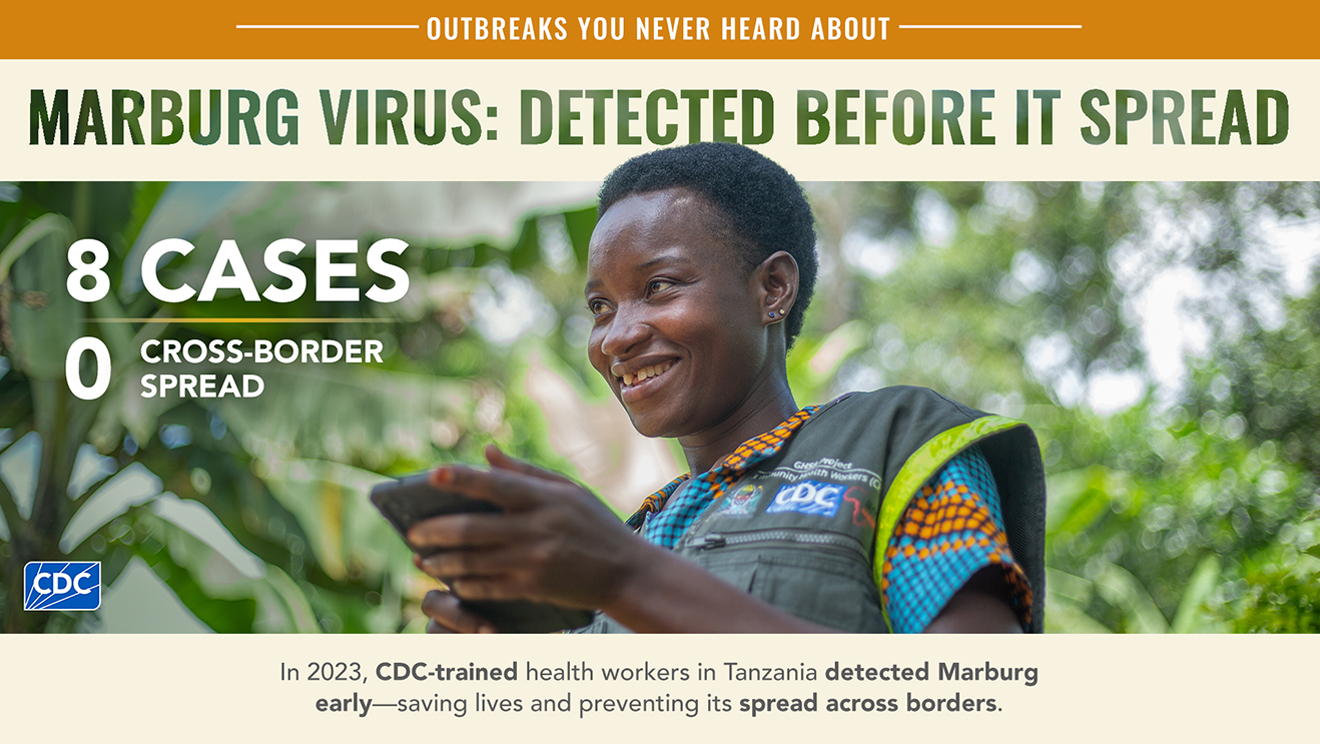
In 2023, Tanzania confirmed its first outbreak of Marburg virus—a fatal illness similar to Ebola. With a death rate as high as 90 percent, even a handful of cases could be devastating. If the virus had circulated just a few days longer without detection, it could have crossed borders and sparked an international health emergency.
CDC's Rapid Response
Thanks to CDC-supported event-based surveillance, a community health worker spotted the signs early—triggering an immediate national response. CDC experts partnered with Tanzania's Ministry of Health to guide case investigations, implement contact tracing, and support safe treatment for patients. The outbreak was swiftly contained.
Global Action. Local Impact.
In total, the outbreak resulted in nine cases—with no international spread. Further deaths were prevented.
Thanks to this swift response, the threat was stopped early, before it could spread or reach beyond the region—including to the United States.
Containing Ebola Before It Crossed Borders
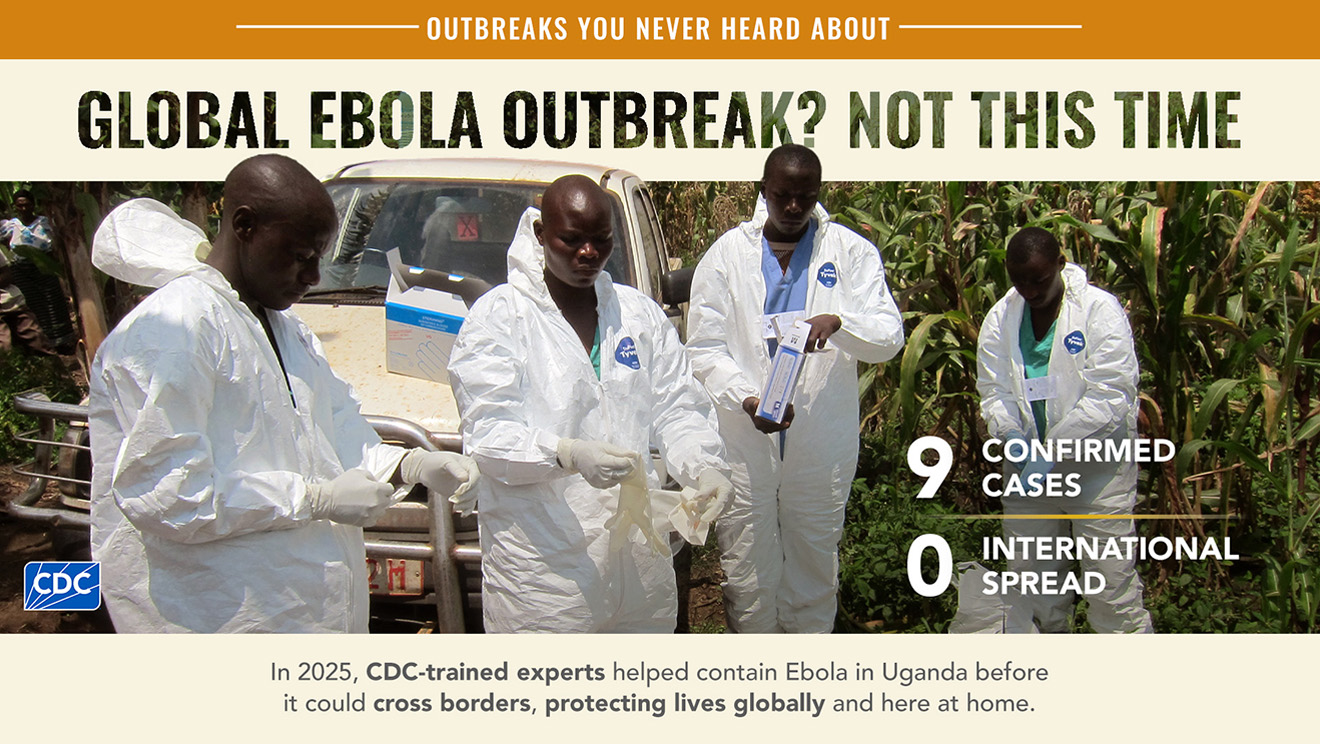
Earlier this year, when Ebola — a viral hemorrhagic fever marked by internal bleeding and high death rates — surfaced in Uganda, the threat was serious and immediate. With its high death rate and its potential to spread rapidly, Ebola can quickly overwhelm healthcare systems, cross borders and threaten global security, if not controlled.
CDC's Rapid Response
To help stem the outbreak's spread, CDC experts worked side-by-side with Ugandan teams to investigate cases, coordinate contact tracing, and strengthen screening at key locations—building on years of CDC investment in Uganda's emergency preparedness and expertise in Ebola.
Global Action. Local Impact.
The result? The outbreak was halted at just nine confirmed cases. With a team of CDC scientific experts and country office staff alongside CDC-trained Ugandan field epidemiologists leading the response, the virus was shut down swiftly—before it had a chance to reach beyond Uganda.
This was yet another example of how CDC's readiness and trusted relationships on the ground made the difference between a local outbreak and a global emergency—and ultimately helped protect American communities.
Stopping a Deadly Zoonotic Outbreak in a Tourist Hotspot
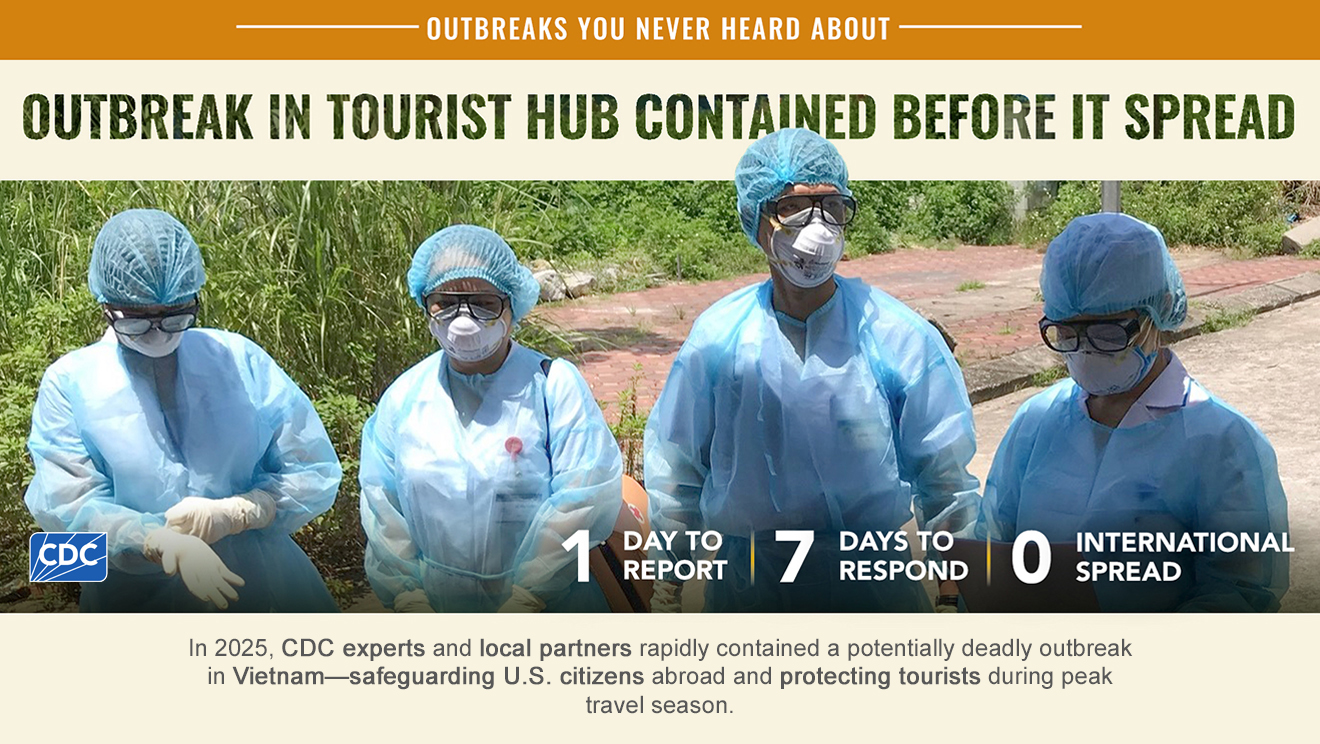
In late May 2025, a dangerous outbreak of Streptococcus suis began spreading in Hue, Vietnam—just as millions of tourists flooded the city for peak travel season. The bacteria, transmitted from pigs to people, can cause meningitis – or swelling of the brain, sepsis, and even death. As the disease spread, fueled by food safety challenges, the threat to both the local community and the 1.7 million international tourists visiting Hue was real.
CDC’s Rapid Response
CDC moved fast. Working with the Pasteur Institute Nha Trang, local health officials, and veterinary partners, CDC experts helped launch a full-scale investigation. The outbreak was reported within one day and an on-the-ground response launched within seven days. CDC's global health security experts also supported case tracking, field investigations, and conducted market visits to observe and identify potential hygiene concerns —uncovering major food safety risks. Local labs, equipped and trained with CDC support, confirmed 38 cases, and health teams quickly launched targeted messaging to stop the spread.
Global Action. Local Impact.
Thanks to this rapid response, the outbreak remained confined to Hue City, with no cross-border spread and no reported cases among tourists, despite the peak travel season.
While five people tragically died, swift action likely prevented many more deaths. Because of CDC’s expert support and strong local partnerships, the outbreak was effectively contained—safeguarding U.S. travelers and preventing the disease from following them home.
Turning the Tide on Ebola in DRC
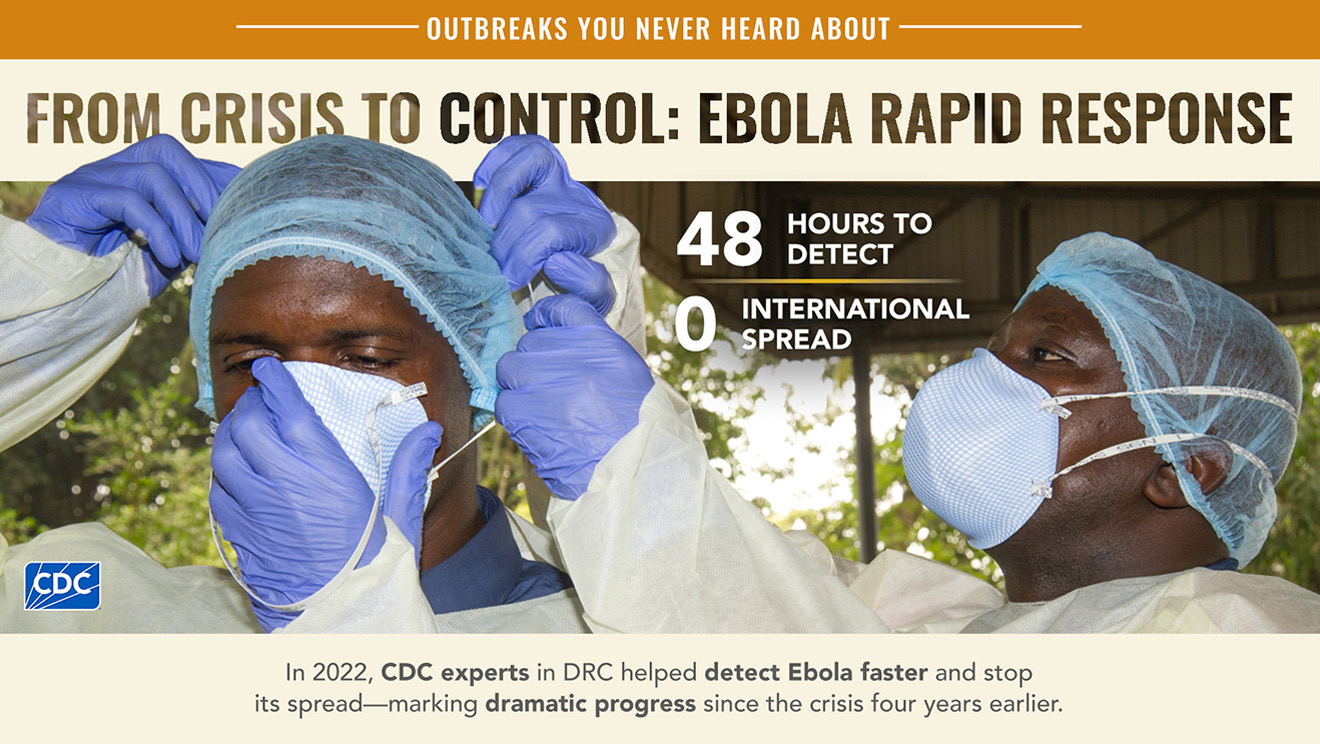
The Democratic Republic of the Congo (DRC) has experienced more Ebola outbreaks than almost any other country. In 2018, one outbreak went undetected for four months, leading to more than 2,200 deaths. Without stronger detection and response systems, future outbreaks risked becoming deadly crises.
CDC's Rapid Response
CDC worked alongside the DRC's Ministry of Health to change that. Through sustained partnership, CDC helped train frontline disease detectives, build emergency operations systems, and improve detection timeliness. The result was transformational.
Global Action. Local Impact.
In a 2022 outbreak, Ebola-related deaths resulted in six deaths, a stark contrast to the scale of fatalities recorded in the 2018 event. Outbreaks that once took months to detect were being identified within 48 hours. When Ebola struck again in 2025, the systems CDC helped strengthen made it possible to swiftly detect the virus and launch a rapid mobilization and response. Thanks to these efforts, the Ministry of Health, CDC, and partners on the ground were able to contain the outbreak and advance the country’s progress toward a sustainable public health future. By accelerating detection and response, CDC is stopping outbreaks before they grow—saving lives and helping protect Americans from deadly threats.
Why It Matters: Outbreaks You Never Heard About—Because CDC Was There
Keeping Americans safe is our #1 goal.
Behind many of the outbreaks you never hear about is a team of CDC global health security and infectious disease experts. They are disease detectives deployed to the far corners of the globe and are often the first call when dangerous pathogens emerge overseas. From the moment a threat is detected, these frontline heroes work with partners across countries—and across CDC, from country offices to headquarters—to investigate, respond, and contain it before it can reach U.S. communities.
Through American-led global health security and decades of partnership, CDC helps detect outbreaks earlier, respond faster, and stop threats at their source. Yet, you won't see most of this work splashed across headlines or breaking news alerts. But that's the point.
Over the past two years alone, because CDC was there, Marburg didn't cross borders, Ebola didn't overwhelm cities, and a dangerous bacterial threat did not escalate into a global crisis. Because CDC was there, American families were protected—without even knowing it.
Stopping outbreaks before they spread isn't just smart public health. It's national security. It's economic security. And it's what CDC's global health experts do every single day to keep Americans safe.
This page was last updated on this date. Updates may include minor edits, image changes, or other modifications to page content.
The information on this page was last reviewed by subject matter experts to ensure accuracy.