



Key points
- Folic acid is a type of folate (vitamin B9) that helps your body make new cells.
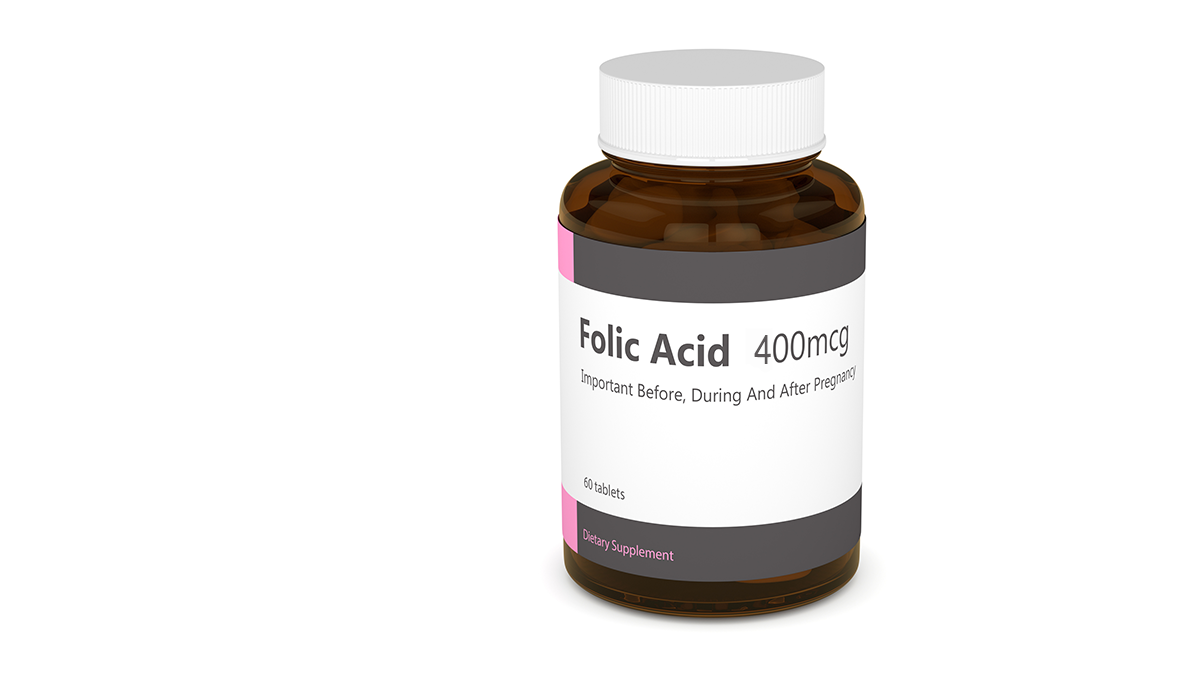
- All women capable of becoming pregnant should get 400 micrograms (mcg) of folic acid daily.
- Getting 400 mcg of folic acid daily can help prevent serious birth defects called neural tube defects.
Why it's important
Folic acid is a type of folate (vitamin B9) that helps your body make new cells (such as blood cells, brain cells, skin, hair, and nails). Every new cell in the body needs folate.
Folic acid is especially important during early pregnancy, because it helps the neural tube, which becomes the brain and spine, develop. It is the only type of folate shown in studies to help prevent serious birth defects called neural tube defects (NTDs). NTDs are major birth defects of a baby's brain (such as anencephaly) and spine (such as spina bifida).
NTDs happen in the first few weeks of pregnancy, often before you know you are pregnant. By the time you realize you're pregnant, it might be too late to prevent an NTD. That is why getting 400 mcg of folic acid before and during early pregnancy is important to help prevent NTDs.
Even if you're not planning to become pregnant, getting 400 mcg of folic acid daily is important. Your body uses folic acid to make new cells. Start a healthy habit today by getting 400 mcg of folic acid every day.

Terms to know
The terms folate and folic acid are often used interchangeably. However, folate is a general name for all the different types of vitamin B9. This includes food folates found in foods you eat, like leafy greens and beans, and man-made types, such as:
- Dihydrofolate (DHF)
- Tetrahydrofolate (THF)
- 5, 10-methylenetetrahydrofolate (5, 10-methylene-THF)
- 5-methyltetrahydrofolate (5-methyl-THF or 5-MTHF)
- Folic acid
Folic acid is a type of folate that is used in supplements (vitamins) and fortified foods, such as breakfast cereals. It is the only type of folate shown to help prevent NTDs.
Recommendations
General recommendation
If you could become pregnant, the U.S. Public Health Service recommends that you get 400 mcg of folic acid daily to help prevent NTDs.1This recommendation is also supported by the Institute of Medicine and the US Preventive Services Task Force.
Planning a pregnancy after having a baby with an NTD
If you had a past pregnancy with an NTD and you're planning to become pregnant again, talk with your doctor first. The current recommendation is to get 4,000 mcg of folic acid every day. You should start taking folic acid 1 month before becoming pregnant again and keep taking folic acid through the first 3 months of pregnancy. If you're not planning a pregnancy, you should get 400 mcg of folic acid daily.
What the science shows
Researchers have studied the link between low folate levels and NTDs since 1965. These studies showed that low folate in the blood increased the risk of NTDs.2
In the 1990s, two large randomized control trials showed that taking vitamins with folic acid helped lower the risk of NTDs. One trial focused on preventing another NTD-affected pregnancy among women who had already had an NTD-affected pregnancy. The other looked at preventing NTDs among women who did not have a history of an NTD-affected pregnancy. Both trials showed that taking folic acid before and during early pregnancy helped lower the chance of having a baby affected by an NTD.
Additional studies have looked at
- How taking folic acid daily raises blood folate levels
- When taking folic acid helps prevent NTDs, and
- How adding folic acid to foods affects occurrence of NTDs.
Overall, these studies show that getting enough folic acid can help prevent NTDs. These findings led to and have supported the recommendation that women who can become pregnant should take 400 mcg of folic acid daily.
What you can do
- Start a healthy habit: Get 400 mcg of folic acid daily, even if you're not planning a pregnancy.
- Plan ahead: If you're thinking about becoming pregnant, start taking folic acid at least 1 month before conception. Continue taking folic acid during pregnancy.
- Check supplement and nutrition labels: Be sure to look at your vitamin and fortified foods labels to ensure they contain folic acid.
- Eat folate-rich foods: Add folate-rich foods like leafy greens, beans, or oranges to your meals.
- Talk with your doctor: Ask your doctor about folic acid and any questions you may have.
This page was last updated on this date. Updates may include minor edits, image changes, or other modifications to page content.
The information on this page was last reviewed by subject matter experts to ensure accuracy.
- Recommendations for the use of folic acid to reduce the number of cases of spina bifida and other neural tube defects. MMWR Recomm Rep. 1992;41(RR-14):1–7
- Crider, K. S., Qi, Y. P., Yeung, L. F., Mai, C. T., Head Zauche, L., Wang, A., Daniels, K., & Williams, J. L. (2022). Folic acid and the prevention of birth defects: 30 years of opportunity and controversies. Annual Review of Nutrition, 42(1), 423–452.
- Centers for Disease Control and Prevention (CDC). Use of folic acid for prevention of spina bifida and other neural tube defects—1983–1991. MMWR Morb Mortal Wkly Rep. 1991;40(30):513–516.
- Institute of Medicine (US). Dietary reference intakes for thiamin, riboflavin, niacin, vitamin B6, folate, vitamin B12, pantothenic acid, biotin, and choline. Washington (DC): National Academies Press (US); 1998.
- US Preventive Services Task Force. Folic acid supplementation to prevent neural tube defects: preventive medication. Final Recommendation Statement (2023, August 1).