



Key points
Health departments provide important public health services including vector control. Environmental health professionals are on the frontline of helping individuals, institutions, and communities reduce threats from mosquitoes, ticks, and other vectors. Find resources to improve the performance and quality of the services your program offers.
Resources for environmental health
Integrated pest management
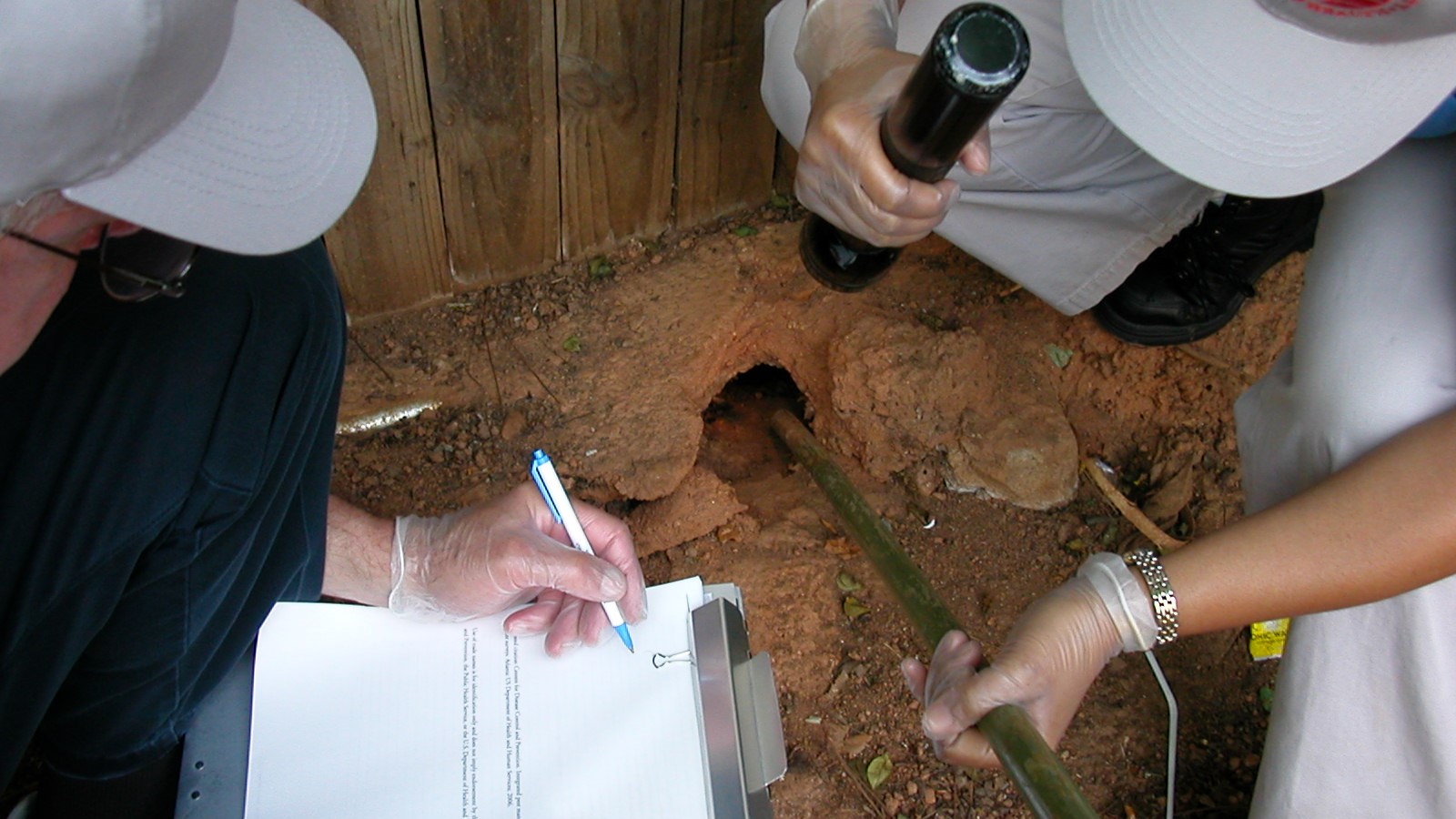
- Integrated pest management training manual: Conducting urban rodent surveys
- What is integrated pest management?
Vector control
- Vector Control for Environmental Health Professionals (VCEHP) Training (CDC)
- Gulf South VECTOR (Vector Educational Center for Training, Outreach & Resources)
- Vector Control Tools & Resources (VeCToR) toolkit (National Environmental Health Association, NEHA)
- Vector Control Menu: Building Capacity in Local Vector Control Programs (National Association of County and City Health Officials)
- Web-based review of environmental health vector control services in the United States (CDC)
The following CDC programs also have information on vector control:
- Environmental Public Health Online Courses
- Environmental Public Health Practice Gateway
- Environmental Health Training on Emergency Response
Rodent control
Ticks and mosquitoes
- Continuation of mosquito surveillance and control during public health emergencies and natural disasters (CDC)
- Mosquitoes (CDC)
- Stormwater management and vector breeding habits (CDC)
- The role of local environmental health departments in tick-related activities and services (NACCHO)
- Ticks (CDC)
More federal resources
Pictorial keys to arthropods, reptiles, birds, and mammals of public health significance (CDC, historical tool for teaching animal identification to personnel without special training in taxonomy)
Bed bugs
- About bed bugs (CDC)
- Bed bug information clearinghouse (U.S. Environmental Protection Agency)
- Collaborative strategy on bed bugs (Federal Bed Bug Workgroup)
- Health concerns about misuse of pesticides for bed bug control (CDC)
Other insects
- Fleas (CDC)
Publications
Access environmental health publications on vector control.
Bonnefoy X, Kampen H, Sweeney K. Public health significance of urban pests. Copenhagen: World Health Organization; 2008. (Sarisky J)
Centers for Disease Control and Prevention. Integrated pest management: conducting urban rodent surveys. Atlanta: US Department of Health and Human Services; 2006 [Internet publication].
Centers for Disease Control and Prevention. Pictorial keys to arthropods, reptiles, birds, and mammals of public health significance. Atlanta: US Department of Health and Human Services; 2006 [Internet republication].
Connelly CR, Gerding JA, Jennings SM, Ruiz A, Barrera R, Partridge S, et al. Continuation of mosquito surveillance and control during public health emergencies and natural disasters. MMWR. 2020;69:938-40.
Drexler N, Miller M, Gerding J, Todd S, Adams L, Dahlgren FS, et al. Community-based control of the brown dog tick in a region with high rates of Rocky Mountain spotted fever, 2012-2013. PLoS One. 2014;9(12):e112368. doi:10.1371/journal.pone. 0112368.
Gerding J, Kirshy M, Moran JW, Bialek R, Lamers V, Sarisky J. A performance management initiative for local health department vector control programs. Environ Health Insights. 2016;7(10):113-8.
Hall S, Gridley-Smith C, Chang A, Ullman A. Report summary: The role of local environmental health departments in tick-related activities and services. [commentary] J Environ Health. 2020;82(8):38-40.
Ruiz A, Gerding J, Cruz M, Laco J, Funk R. Centers for Disease Control and Prevention National Center for Environmental Health/Agency for Toxic Substances and Disease Registry roles in hurricane response and postdisaster mosquito control. J Am Mosquito Control Assoc. 2020;36(2S):78-81.
Ruiz A, Vanover C, Parale A, Gerding J. Web-based review of environmental health vector control services in the United States. [commentary] J Environ Health. 2018;80(8):36–8.
Vanover C, Ruiz A. Tick talk: Keeping environmental health up with current trends. [commentary] J Environ Health. 2019;81(7):36-8.
This page was last updated on this date. Updates may include minor edits, image changes, or other modifications to page content.
The information on this page was last reviewed by subject matter experts to ensure accuracy.