



At a glance
- This page includes information about attention-deficit/hyperactivity disorder (ADHD) in children and adolescents from different data sources.
- CDC uses datasets from parent surveys and healthcare claims to better understand diagnosis and treatment patterns for ADHD.
- Estimates for diagnosis and treatment can vary due to different factors.

Data for action
CDC works with partners to use the data we collect to help children and adolescents with ADHD and their families get the right care, at the right time.
CDC turns ADHD data into ACTION through
- Using national surveys, including the Health & Resources Administration (HRSA)'s National Survey of Children's Health (NSCH), to understand how many children have ADHD, and the types of treatment they are receiving.
- Learning more about how children with ADHD are diagnosed.
- Funding and working with CHADD's National Resource Center on ADHD to provide evidence-based information about ADHD to families and professionals.
ADHD diagnosis
Millions of U.S. children have been diagnosed with ADHD
- An estimated 7 million (11.7%) U.S. children aged 3–17 years have a current ADHD diagnosis, according to data collected in 2024 from a national survey of parents.

ADHD estimates by sex, race, and ethnicity (2022-2023)
- Boys (13%) were more likely to be diagnosed with ADHD than girls (7%).1
- Black children and White children were more often diagnosed with ADHD (both 11%) than Asian children (3%). American Indian/Alaska Native children (8%) were also more often diagnosed with ADHD than Asian children.1
- Approximately 6% of Native Hawaiian/Pacific Islander children were diagnosed with ADHD.2
- Overall, non-Hispanic children (11%) were diagnosed with ADHD more often than Hispanic children (8%).12
ADHD symptoms can vary in severity
- About 6 in 10 children had moderate or severe ADHD.2
- Children with both ADHD and another co-occurring condition, such as behavioral or conduct problems, learning disorders, anxiety, or depression, more often had severe ADHD than children with ADHD without other co-occurring conditions.2
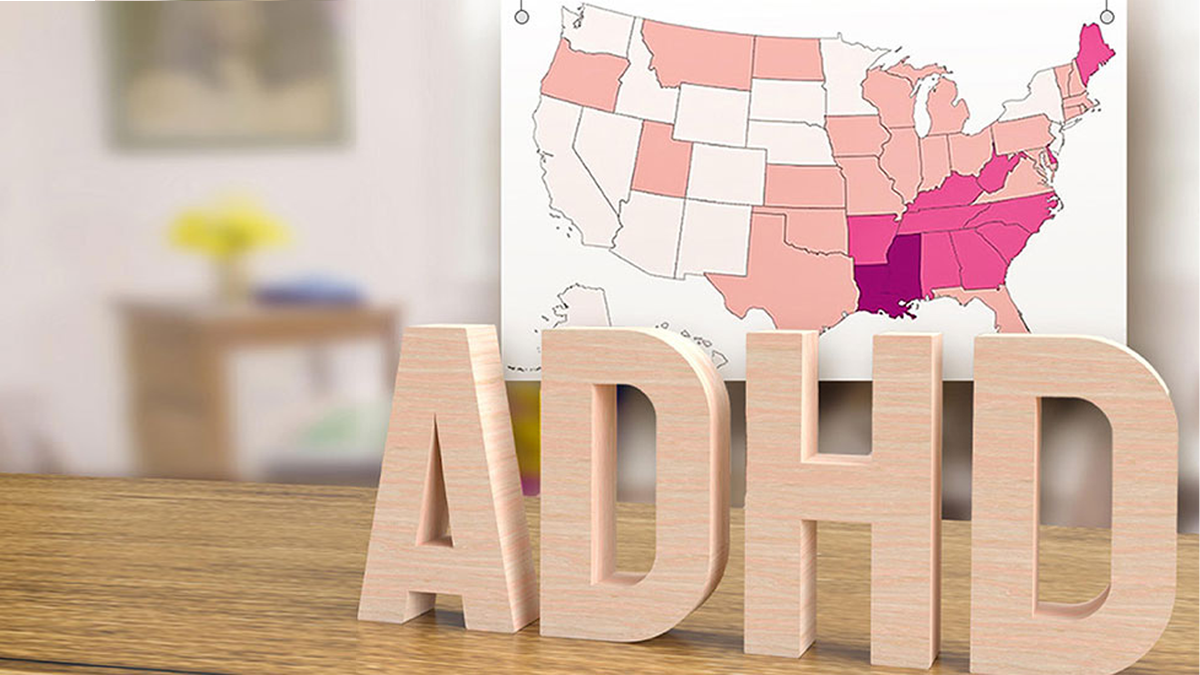
ADHD diagnosis and treatment estimates vary by state
State-based ADHD diagnosis estimates (2020–2023)
- Estimates among U.S. children aged 3–17 years who have been diagnosed with ADHD vary across states.
State-based ADHD treatment estimates (2020–2023)
- Estimates for receiving any ADHD treatment among children with current ADHD vary from 58% to 80% across states.
ADHD Behavior Therapy
Vary from 36% to 57%
ADHD Medication
Vary from 38% to 72%
More findings


Other concerns and conditions with ADHD
Many children with ADHD also have other co-occurring conditions
According to a national parent survey, nearly 78% of children with ADHD had at least one other co-occurring condition:2
- Almost half of the children with ADHD had a behavior or conduct problem.
- About 4 in 10 of the children with ADHD had anxiety.
Other conditions affecting children with ADHD include depression, autism spectrum disorder, and Tourette syndrome.
Interactive Data Charts - Co-occurring conditions with ADHD2
Treatment of ADHD

Nearly 2 million U.S. children with ADHD did not receive ADHD-specific treatment in 20222
A national parent survey reported on medication and behavior treatment for children 3–17 years of age with current ADHD:2
- About 30% of children with ADHD did not receive medication treatment or behavior treatment, compared with 23% of children 3–17 years of age with ADHD in 2016.23
- About 32% children with ADHD received both medication treatment and behavior treatment.
- Overall, the total number of children receiving behavior treatment increased from 2016 (2.5 million) to 2022 (2.8 million).
Interactive Data Charts - Treatment of ADHD2
ADHD care is provided by many different healthcare professionals
In addition to parent-reported data, healthcare claims data from Medicaid or employer-sponsored insurance provide another way to understand treatment patterns. In 2021, among U.S. children ages 3–17 years:4
- Many children received ADHD care from a primary care clinician, such as a pediatrician or family doctor. Almost half of children covered through private insurance and about 1 in 4 children with Medicaid received ADHD care from a pediatrician.
- Nurse practitioners and psychiatric nurses also play an important role in ADHD care for children, providing care for nearly 1 in 5 children with Medicaid.
- Children with Medicaid were less likely to receive ADHD care from a healthcare specialist, such as a psychologist or psychiatrist.
More data on ADHD

Data sources
- MarketScan® Commercial Claims and Encounters (CCE) Database & MarketScan® Multi-State Medicaid Database | Merative™
- National Survey of Children's Health (NSCH) | MCHB (hrsa.gov)
- National Survey of the Diagnosis and Treatment of ADHD and Tourette Syndrome
- "Ever" diagnosis: Refers to when an individual has received an ADHD diagnosis from a provider at any point in their life.
- "Current" diagnosis: Refers to when an individual with an ADHD diagnosis is currently experiencing symptoms and, in many cases, requires ongoing treatment or management.
- Katz SM, Claussen AH, Alberto CK, et al. Trends in Parent-Reported ADHD Diagnosis and Treatment Among U.S. Children, 2016-2023. J Clin Child Adolesc Psychol. Published online February 13, 2026.
- Danielson ML, Claussen AH, Bitsko RH, et al. ADHD Prevalence Among U.S. Children and Adolescents in 2022: Diagnosis, Severity, Co-Occurring Disorders, and Treatment. J Clin Child Adolesc Psychol. 2024;53(3):343-360.
- Danielson ML, Holbrook JR, Bitsko RH, et al. State-Level Estimates of the Prevalence of Parent-Reported ADHD Diagnosis and Treatment Among U.S. Children and Adolescents, 2016 to 2019. J Atten Disord. 2022;26(13):1685-1697.
- Danielson ML, Claussen AH, Arifkhanova A, Gonzalez MG, Surman C. Who Provides Outpatient Clinical Care for Adults With ADHD? Analysis of Healthcare Claims by Types of Providers Among Private Insurance and Medicaid Enrollees, 2021. J Atten Disord. 2024;28(8):1225-1235.