



Key points
- Sunburns increase your risk of getting skin cancer.
- Protect your skin from the sun when outdoors.
- If you see signs of a sunburn, stay out of the sun until the sunburn has healed.
What sunburn is and who can get it
Sunburn is a sign that the sun has damaged your skin. It's caused by spending too much time exposed to ultraviolet (UV) rays from the sun. Anyone can get a sunburn no matter their race, ethnicity, or skin tone. Sunburn at any age increases a person's risk of getting skin cancer.
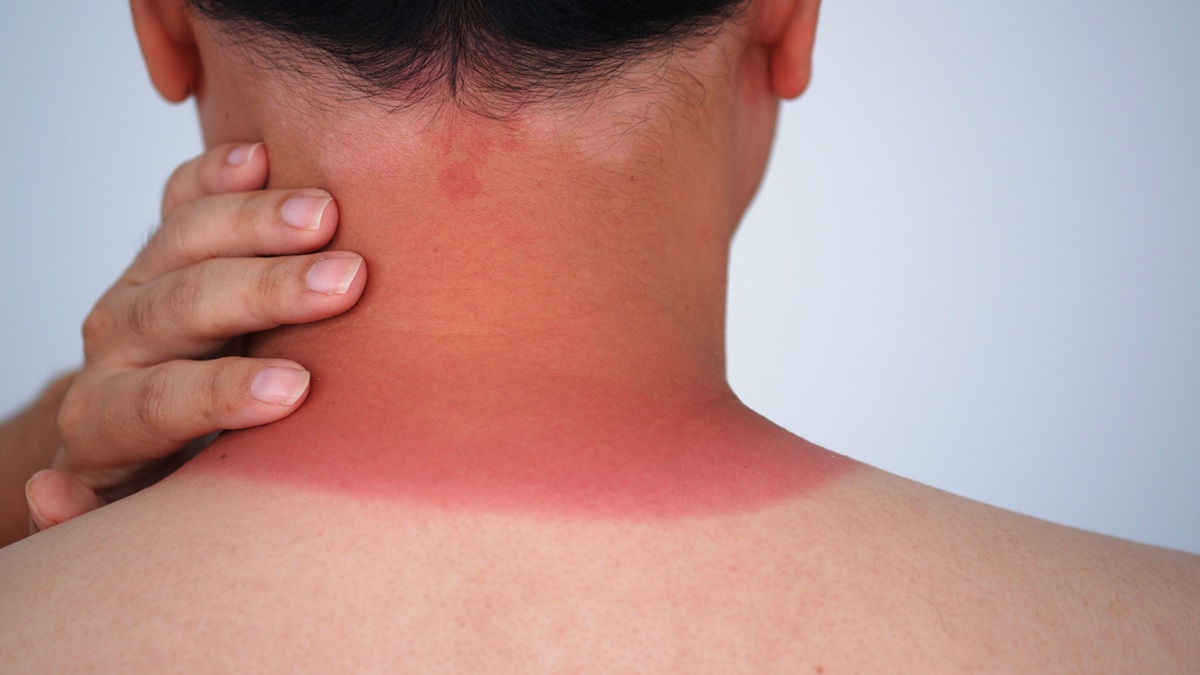
The first sign of sunburn is when an area of skin looks redder than normal. How long it takes to burn depends on several things like your skin tone, the altitude, time of day, and time of year. Sunburns usually get worse for 24 to 36 hours and heal in 3 to 5 days.
How to prevent sunburn
Protection from the sun is important all year, not just during the summer. The sun's rays can reach you on cloudy and cool days, and they reflect off of surfaces like water, cement, sand, and snow.
To prevent sunburn and lower your risk of getting skin cancer:
- Stay in the shade.
- Wear clothing that covers your arms and legs.
- Wear a hat with a wide brim to shade your face, head, ears, and neck.
- Wear sunglasses that wrap around and block both UVA and UVB rays.
- Use a broad-spectrum sunscreen with a sun protection factor (SPF) of 15 or higher.
Recent CDC studies have shown that each year, more than one-third of U.S. adults and more than half of U.S. high school students get at least one sunburn. Many people get sunburned while they are spending time in, on, or near water or being physically active. That's why it's important to protect your skin when having fun outdoors.

Symptoms of sunburn
Sunburn symptoms can vary, depending on how bad the sunburn is and the person's skin tone.
- The area of skin that is sunburned is usually pink or red, warm, and tender or painful.
- If the sunburn is severe, the area may be swollen or have blisters.
- A person with sunburn may also have a headache or fever and feel very tired or sick to their stomach.
If you see signs of a sunburn, stay out of the sun until the sunburn has healed.
What to do if you get a sunburn
You can reduce the symptoms of a sunburn by:
- Applying a moisturizing cream, aloe, or 1% hydrocortisone cream to the sunburned area.
- Taking a cool bath or putting a cool wet cloth on the sunburned area.
- Taking a pain reliever to help with pain, headache, and fever.
- Drinking plenty of water.
If you have blisters:
- Lightly bandage the area to prevent infection. Broken blisters take longer to heal and can get infected.
- When the blisters break and the skin peels, remove dried skin. Apply an antibiotic ointment or hydrocortisone cream.
See a doctor if you:
- Have serious sunburns on more than 15% of your body (your whole back or leg, or both arms).
- Are dehydrated.
- Have a fever higher than 101°F (38.3 °C).
- Are in extreme pain for more than 2 days.
- See signs that blisters may be infected, such as pus or red streaks.
Things that increase your risk of getting a sunburn
Anyone can get sunburn, but people with certain physical traits are at greater risk:
- A lighter natural skin color.
- Blue or green eyes.
- Blond or red hair.
Some medicines increase a person's risk of getting a sunburn because they make skin more sensitive to sunlight. These include:
- Aspirin, ibuprofen, naproxen, and other nonsteroidal anti-inflammatory drugs.
- Birth control pills.
- Certain types of antibiotics called tetracyclines (such as doxycycline) and sulfa antibiotics.
- Water pills (diuretics).
- Many chemotherapy drugs (fluorouracil, dacarbazine, methotrexate, nab-paclitaxel, and vinblastine).
- Hydroquinone.
Some skin care products have ingredients that can make skin more sensitive to the sun, including:
- Retinol, tretinoin, and other retinoids.
- Glycolic acid, lactic acid, and other alpha hydroxy acids.
- Beta hydroxy acids, including salicylic acid.
- Benzoyl peroxide.
More information
- Sun Safety Facts (CDC)
- Protecting Yourself from Sun Exposure (National Institute for Occupational Safety and Health [NIOSH])
- Sun Exposure at Work (NIOSH)
- Sunburn (MedlinePlus)
- Sunburn statistics (National Cancer Institute)