



Key points
This outbreak is over. CDC and public health officials in several states investigated a multistate outbreak of Salmonella infections linked to moringa leaf powder. Epidemiologic, traceback, and laboratory data showed that moringa leaf powder products were contaminated and made people sick. Although this outbreak is over, moringa leaf powder has a long shelf-life. If you still have any of the recalled products in your home, throw them out or return them.
Final update - July 22, 2026
CDC, public health and regulatory officials in several states, and the U.S. Food and Drug Administration (FDA) collected different types of data to investigate a multistate outbreak of Salmonella Typhimurium, Salmonella Newport, and Salmonella Richmond infections.
Epidemiologic, traceback, and laboratory data showed that moringa leaf powder was contaminated with Salmonella and made people sick.
Epidemiologic data
Cases
Illnesses started on dates ranging from August 22, 2025, to June 14, 2026. The true number of sick people in this outbreak was likely much higher than the number reported, and this outbreak may not have been limited to the states with known illnesses. This is because many people recover without medical care and are not tested for Salmonella.
Total Cases
131
States
Hospitalizations
36 of 121 people with information available
Deaths
No deaths were reported
Demographics
Public health officials collected many different types of information from sick people, including their age, race, ethnicity, other demographics, and the foods they ate in the week before they got sick. This information provided clues to help investigators identify the source of the outbreak.
The table below has information about sick people in this outbreak ("n" is the number of people with information available for each demographic).
Age
(n=125)
Range from less than 1 to 81 years
Median age of 45
Sex
(n=131)
46% female
54% male
Race
(n=106)
92% White
5% African American/Black
2% Native American or Alaska Native
1% Asian
Ethnicity
(n=101)
98% non-Hispanic
2% Hispanic
Products consumed
State and local public health officials interviewed people about the foods they ate in the week before they got sick.
Of the 84 people interviewed:
- 74 (88%) reported eating a product containing moringa leaf powder
- 63 who reported Live it Up Super Greens supplement powders only
- 5 who reported Why Not Natural moringa powder capsules only
- 1 person who reported consuming both products
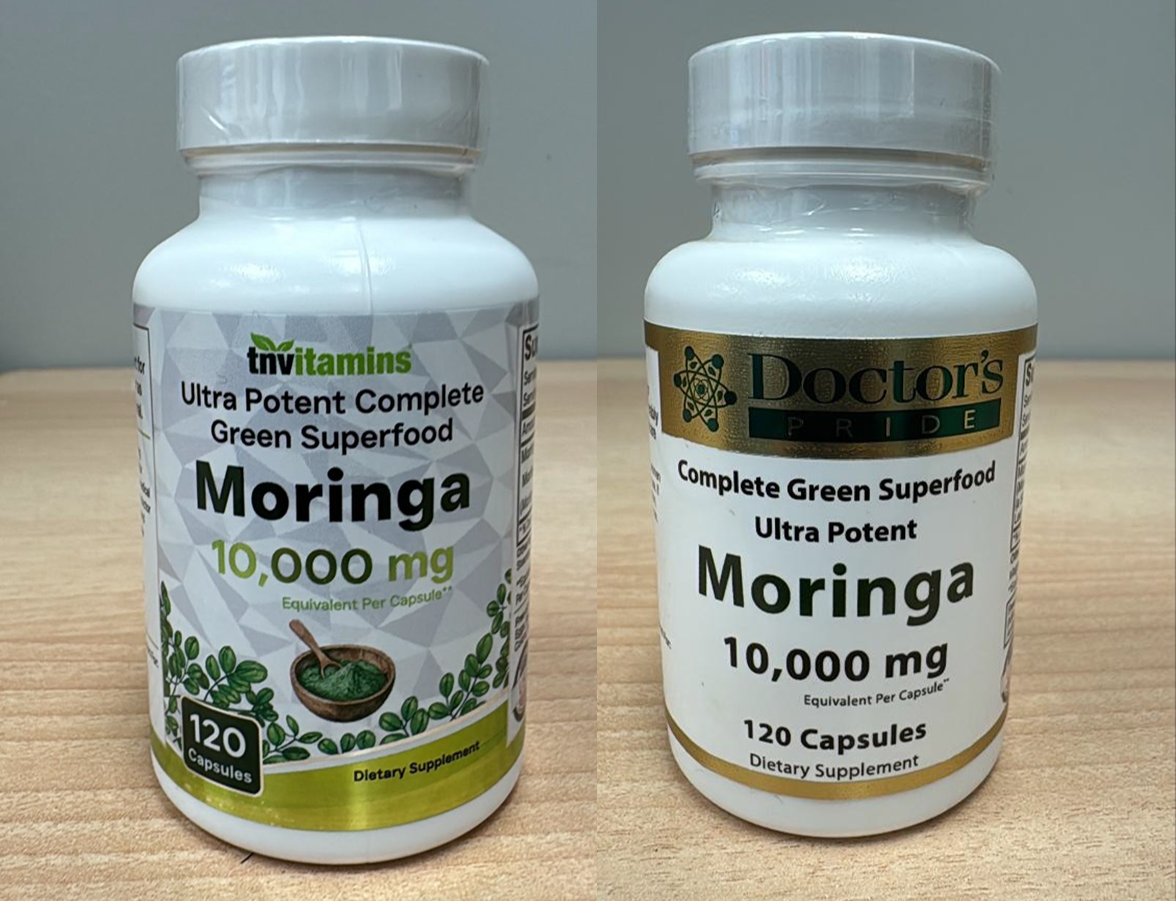
- 5 who reported TNvitamins moringa powder capsules only
Laboratory and traceback data
Public health investigators used the PulseNet system to identify illnesses that may have been part of this outbreak. CDC PulseNet manages a national database of DNA fingerprints of bacteria that cause foodborne illnesses. DNA fingerprinting is performed on bacteria using a method called whole genome sequencing (WGS). WGS showed that bacteria from sick people's samples were closely related genetically. This suggested that people in this outbreak got sick from the same food.
Based on WGS analysis, bacteria from 128 people's samples, 13 food samples, 3 dietary supplement samples, and one environmental sample had no predicted resistance. Bacteria from 3 people's samples were predicted to be resistant to ampicillin; 1 of these was also predicted to be nonsusceptible to ciprofloxacin. More information is available at the National Antimicrobial Resistance Monitoring System (NARMS) site.
FDA's traceback investigation revealed a common manufacturer between Live it Up Super Greens supplement powder and Why Not Natural Pure Organic Moringa Green Superfood capsules. As part of the investigation, FDA and state partners from Illinois, Massachusetts, Minnesota, South Dakota, and Wisconsin collected finished product and ingredient samples from sick people's homes and firms in the supply chain. A total of 12 samples tested positive for Salmonella, and 11 samples detected at least one of the outbreak strains of Salmonella during WGS analysis.
Previous updates
Investigation details
As part of the outbreak investigation FDA collected and analyzed samples from an ingredient supplier of Total Nutrition Inc. Two ingredient samples tested positive for Salmonella, but did not match the outbreak strain. While not connected to the outbreak, these ingredients do contain Salmonella, and as a result Total Nutrition Inc. recalled TNVitamins Organic Moringa Capsules 1,200 mg lot 2800 Exp: 2/2028 and TNVitamins-brand 100% Moringa Powder lot 2782 Exp: 5/2028.
Investigation details
CDC, public health and regulatory officials in several states, and the U.S. Food and Drug Administration (FDA) are collecting different types of data to investigate a multistate outbreak of Salmonella Typhimurium and Salmonella Newport infections.
Epidemiologic, traceback, and laboratory data show that moringa leaf powder is contaminated with Salmonella and is making people sick.
Epidemiologic Data
Since the investigation was closed on March 17, 2026, 22 new illnesses from 4 states have been reported. The investigation has since been reopened, and as of May 27, 2026, a total of 119 people infected with one of the outbreak strains of Salmonella have been reported from 36 states. Illnesses started on dates ranging from August 22, 2025, to April 26, 2026. Of 109 people with information available, 32 have been hospitalized. No deaths have been reported.
The true number of sick people in this outbreak is likely much higher than the number reported, and this outbreak may not be limited to the states with known illnesses. This is because many people recover without medical care and are not tested for Salmonella. In addition, recent illnesses may not yet be reported as it usually takes 3 to 4 weeks to determine if a sick person is part of an outbreak.
Public health officials collect many different types of information from sick people, including their age, race, ethnicity, other demographics, and the foods they ate in the week before they got sick. This information provides clues to help investigators identify the source of the outbreak.
The table below has information about sick people in this outbreak ("n" is the number of people with information available for each demographic).
Age
(n=64)
Range from less than 1 to 81 years
Median age of 45
Sex
(n=65)
43% female
57% male
Race
(n=101)
92% White
5% African American/Black
2% Native American or Alaska Native
1% Asian
Ethnicity
(n=96)
98% non-Hispanic
2% Hispanic
State and local public health officials are interviewing people about the foods they ate in the week before they got sick. Of the 79 people interviewed, 70 (89%) reported eating a product containing moringa leaf powder, including 60 who reported Live it Up Super Greens supplement powders only, 5 who reported Why Not Natural moringa powder capsules only, 1 person who reported consuming both Live it Up Super Greens supplement powder and Why Not Natural moringa powder capsules, and 4 who reported TNVitamins moringa powder capsules only.
Laboratory and Traceback Data
Public health investigators are using the PulseNet system to identify illnesses that may be part of this outbreak. CDC PulseNet manages a national database of DNA fingerprints of bacteria that cause foodborne illnesses. DNA fingerprinting is performed on bacteria using a method called whole genome sequencing (WGS).
WGS showed that bacteria from sick people's samples are closely related genetically. This suggests that people in this outbreak got sick from the same food.
Based on WGS analysis, bacteria from 119 people's samples, 7 food samples, 3 dietary supplement samples, and 1 environmental sample had no predicted resistance. Bacteria from one person's sample had predicted resistance to ampicillin. More information is available at the National Antimicrobial Resistance Monitoring System (NARMS) site.
Investigation details
CDC, public health and regulatory officials in several states, and the U.S. Food and Drug Administration (FDA) collected different types of data to investigate a multistate outbreak of Salmonella Typhimurium and Salmonella Newport infections.
Epidemiologic, traceback, and laboratory data showed that moringa leaf powder was contaminated with Salmonella and made people sick.
Epidemiologic Data
A total of 97 people infected with one of the outbreak strains of Salmonella have been reported from 32 states. Illnesses started on dates ranging from August 22, 2025, to February 27, 2026. Of 90 people with information available, 26 (29%) were hospitalized. No deaths were reported.
The true number of sick people in this outbreak was likely much higher than the number reported, and this outbreak may not have been limited to the states with known illnesses. This is because many people recover without medical care and are not tested for Salmonella.
Public health officials collect many different types of information from sick people, including their age, race, ethnicity, other demographics, and the foods they ate in the week before they got sick. This information provides clues to help investigators identify the source of the outbreak.
The table below has information about sick people in this outbreak ("n" is the number of people with information available for each demographic).
Age
(n=93)
Range from 2 to 81 years
Median age of 44
Sex
(n=97)
39% female
61% male
Race
(n=82)
91% White
5% African American/Black
4% Native American or Alaska Native
Ethnicity
(n=80)
98% non-Hispanic
2% Hispanic
State and local public health officials interviewed people about the foods they ate in the week before they got sick. Of the 67 people interviewed, 59 (88%) reported eating a product containing moringa leaf powder, including 55 who reported Live it Up Super Greens supplement powders only, 3 who reported Why Not Natural moringa powder capsules only, and 1 person who reported consuming both products.
Laboratory Data
Public health investigators used the PulseNet system to identify illnesses that may have been part of this outbreak. CDC PulseNet manages a national database of DNA fingerprints of bacteria that cause foodborne illnesses. DNA fingerprinting is performed on bacteria using a method called whole genome sequencing (WGS).
WGS showed that bacteria from sick people's samples were closely related genetically. This suggested that people in this outbreak got sick from the same food.
FDA and state partners collected product and ingredient samples for analysis. Sample analysis detected the outbreak strains of Salmonella Typhimurium or Newport in six samples.
- FDA detected the outbreak strain of Salmonella Newport in two moringa leaf powder ingredient samples and the outbreak strain of Salmonella Typhimurium in one opened product sample of Why Not Natural Pure Organic Moringa Green Superfood capsules.
- Three state partners detected the outbreak strain of Salmonella Typhimurium in three state samples.
- The Illinois Department of Public Health and the Wisconsin Department of Health Services each detected the outbreak strain in opened Live it Up-brand Super Greens product samples.
- The Minnesota Departments of Agriculture and Health detected the outbreak strain of Salmonella in an unopened Live it Up-brand Super Greens product sample.
Based on WGS analysis, bacteria from 96 people's samples, 7 food samples, and 1 environmental sample had no predicted resistance. One person's sample predicted resistance to ampicillin. More information is available at the National Antimicrobial Resistance Monitoring System (NARMS) site.
FDA's traceback investigation revealed a common manufacturer between Live it Up Super Greens supplement powder and Why Not Natural Pure Organic Moringa Green Superfood capsules.
Investigation details
CDC, public health and regulatory officials in several states, and the U.S. Food and Drug Administration (FDA) are collecting different types of data to investigate a multistate outbreak of Salmonella Typhimurium and Salmonella Newport infections.
Epidemiologic, traceback, and laboratory data show that moringa leaf powder is contaminated with Salmonella and is making people sick.
Epidemiologic Data
Since the last update on January 15, 2026, a total of 20 new illnesses have been reported, including a new outbreak strain of Salmonella Newport. As of January 29, 2026, 65 people infected with one of the outbreak strains of Salmonella have been reported from 28 states. Illnesses started on dates ranging from August 22, 2025, to January 11, 2026. Of 55 people with information available, 14 have been hospitalized. No deaths have been reported.
The true number of sick people in this outbreak is likely much higher than the number reported, and this outbreak may not be limited to the states with known illnesses. This is because many people recover without medical care and are not tested for Salmonella. In addition, recent illnesses may not yet be reported as it usually takes 3 to 4 weeks to determine if a sick person is part of an outbreak.
Public health officials collect many different types of information from sick people, including their age, race, ethnicity, other demographics, and the foods they ate in the week before they got sick. This information provides clues to help investigators identify the source of the outbreak.
The table below has information about sick people in this outbreak ("n" is the number of people with information available for each demographic).
Age
(n=64)
Range from 3 to 81 years
Median age of 45
Sex
(n=65)
37% female
63% male
Race
(n=50)
98% White
Ethnicity
(n=54)
98% non-Hispanic
2% Hispanic
State and local public health officials are interviewing people about the foods they ate in the week before they got sick. Of the 40 people interviewed, 35 (88%) reported eating a product containing moringa leaf powder, including 31 who reported Live it Up Super Greens supplement powders only, 3 who reported Why Not Natural moringa powder capsules only, and 1 person who reported consuming both products.
Laboratory Data
Public health investigators are using the PulseNet system to identify illnesses that may be part of this outbreak. CDC PulseNet manages a national database of DNA fingerprints of bacteria that cause foodborne illnesses. DNA fingerprinting is performed on bacteria using a method called whole genome sequencing (WGS).
WGS showed that bacteria from sick people's samples are closely related genetically. This suggests that people in this outbreak got sick from the same food.
Public health officials in Illinois collected and tested open samples from a sick person's Live it Up Super Greens powder. Analysis of WGS data confirmed the Salmonella identified in the powder is the outbreak strain of Salmonella Typhimurium.
Based on WGS analysis, bacteria from 64 people's samples did not predict resistance to any antibiotics. More information is available at the National Antimicrobial Resistance Monitoring System (NARMS) site.
FDA's traceback investigation revealed a common manufacturer between Live it Up Super Greens supplement powder and Why Not Natural Pure Organic Moringa Green Superfood capsules. FDA is working with the firms to determine a root cause of the contamination and whether additional products that may be affected.
CDC, public health and regulatory officials in several states, and the U.S. Food and Drug Administration (FDA) are collecting different types of data to investigate a multistate outbreak of Salmonella Typhimurium infections.
Epidemiologic data show that Live it Up Super Green supplement powders may be contaminated with Salmonella Typhimurium and may be making people sick.
Epidemiologic Data
As of January 14, 2026, 45 people infected with the outbreak strain of Salmonella have been reported from 21 states. Illnesses started on dates ranging from August 22, 2025, to December 30, 2025. Of 41 people with information available, 12 have been hospitalized. No deaths have been reported.
The true number of sick people in this outbreak was likely much higher than the number reported, and this outbreak may not have been limited to the states with known illnesses. This is because many people recover without medical care and are not tested for Salmonella. In addition, recent illnesses may not yet be reported as it usually takes 3 to 4 weeks to determine if a sick person is part of an outbreak.
Public health officials collect many different types of information from sick people, including their age, race, ethnicity, other demographics, and the foods they ate in the week before they got sick. This information provides clues to help investigators identify the source of the outbreak.
The table below has information about sick people in this outbreak ("n" is the number of people with information available for each demographic).
(n=44)
Range from 16 to 81 years
Median age of 45
(n=45)
38% female
62% male
(n=38)
100% White
(n=36)
97% non-Hispanic
3% Hispanic
State and local public health officials are interviewing people about the foods they ate in the week before they got sick. Of the 20 people interviewed, 16 (80%) reported eating Live it Up Super Greens supplement powders.
Laboratory Data
Public health investigators are using the PulseNet system to identify illnesses that may be part of this outbreak. CDC PulseNet manages a national database of DNA fingerprints of bacteria that cause foodborne illnesses. DNA fingerprinting is performed on bacteria using a method called whole genome sequencing (WGS).
WGS showed that bacteria from sick people's samples are closely related genetically. This suggests that people in this outbreak got sick from the same food.
Based on WGS analysis, bacteria from 45 people's samples had no predicted resistance. More information is available at the National Antimicrobial Resistance Monitoring System (NARMS) site.
FDA is conducting a traceback investigation of products sick people consumed before getting sick and is working with state partners to sample products of concern.
Public health actions
On January 14, 2026, the company informed FDA that they would initiate a voluntary recall. CDC is advising people not to eat, sell, or serve recalled Live it Up brand super greens supplement powders.