Key points
- Young children need help managing their emotions.
- Stay calm, ensure safety, and model self-regulation.
- Practice emotion coaching: notice, connect, listen, name, and find good solutions.
- Validate feelings but set limits on behavior when needed.

Overview
Toddlers and preschoolers may struggle to understand or manage their emotions and behavior without guidance from a parent or caregiver. Just because they are little does not mean their emotions are unimportant.
Emotions such as anger and sadness can feel very intense for children this age. Therefore, tantrums and other emotional outbursts are common. Toddlers and preschoolers may act out when they become overwhelmed or distressed and don’t know how to manage their emotions. This is a normal behavior and a healthy way for toddlers and preschoolers to release emotional energy and return to a calmer state.
Children often need help with how to respond to their emotions. Parents who listen and communicate understanding help their children learn to notice and name their emotions, fostering the development of healthy emotional well-being.
Practice emotion coaching
Emotion coaching means guiding your child to recognize all of their emotions, both positive and negative, by creating a supportive environment for expressing emotions.
Use emotion coaching when your child appears to be experiencing an intense emotion, like anger or sadness, but is still able to engage with you and is not in distress.
When toddlers and preschoolers are distressed or experiencing a tantrum, remember to first ensure your child and others are safe. Avoid distractions, keep your hands free, and focus your eyes and attention on your child so you can recognize their emotions. Remain close by and offer your child time and space to calm down. Wait until both you and your child are calm before emotion coaching.
Steps for emotion coaching
Emotion coaching involves five steps for parents and caregivers to follow.
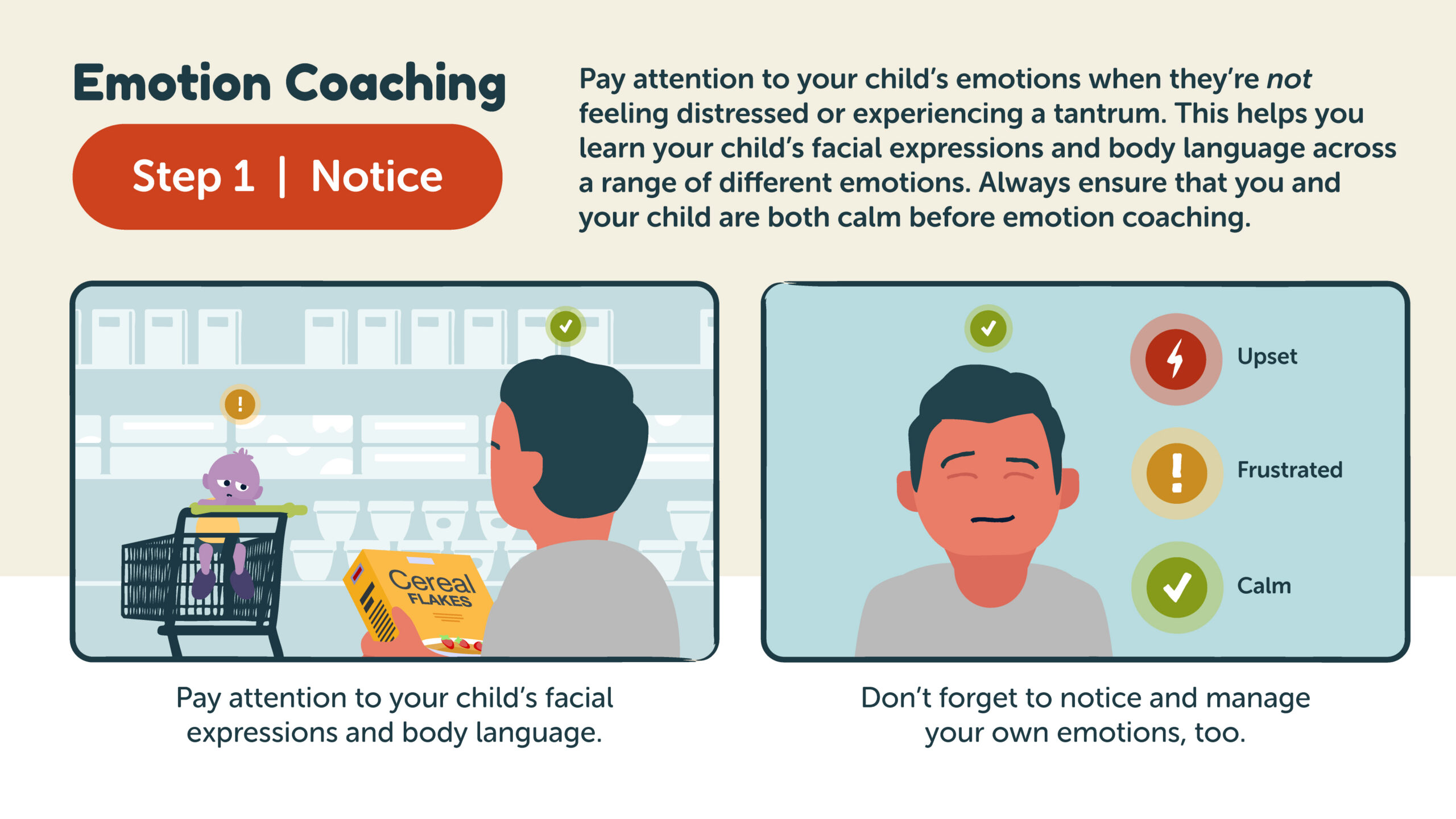
Practice noticing your child’s emotions throughout the day. Ideally, you would start by noticing your child’s emotions when they are low intensity, before reaching distress or tantrum. This allows you to learn your child’s facial expressions and body language across different emotions.
Notice and manage your own emotions too and take a pause if needed. If your child is expressing a less intense emotion and you’re feeling calm, this might be a good time for emotion coaching.
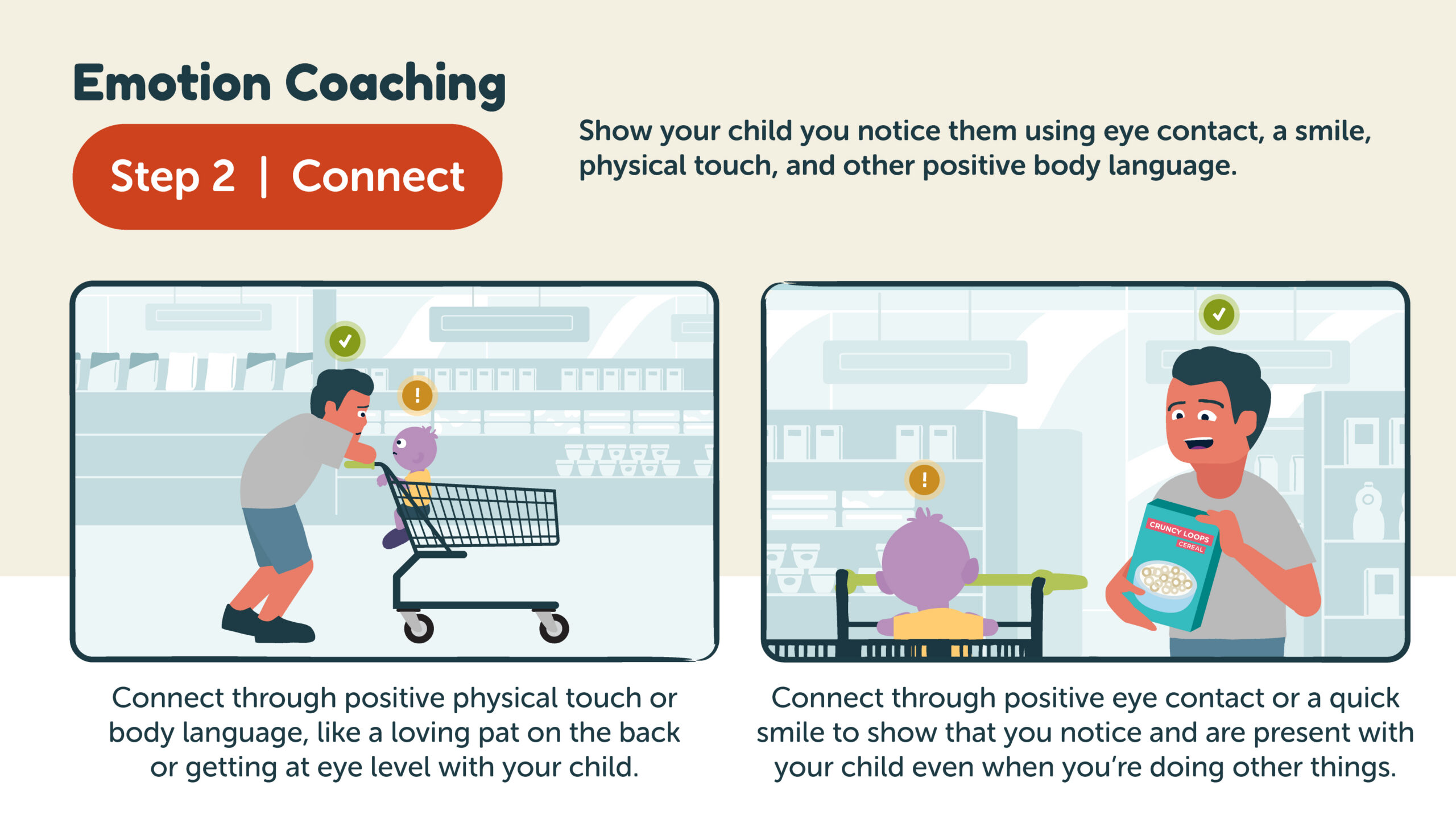
Show your child you notice them by using eye-contact, a quick smile, or through positive physical touch like a gentle pat on the back.
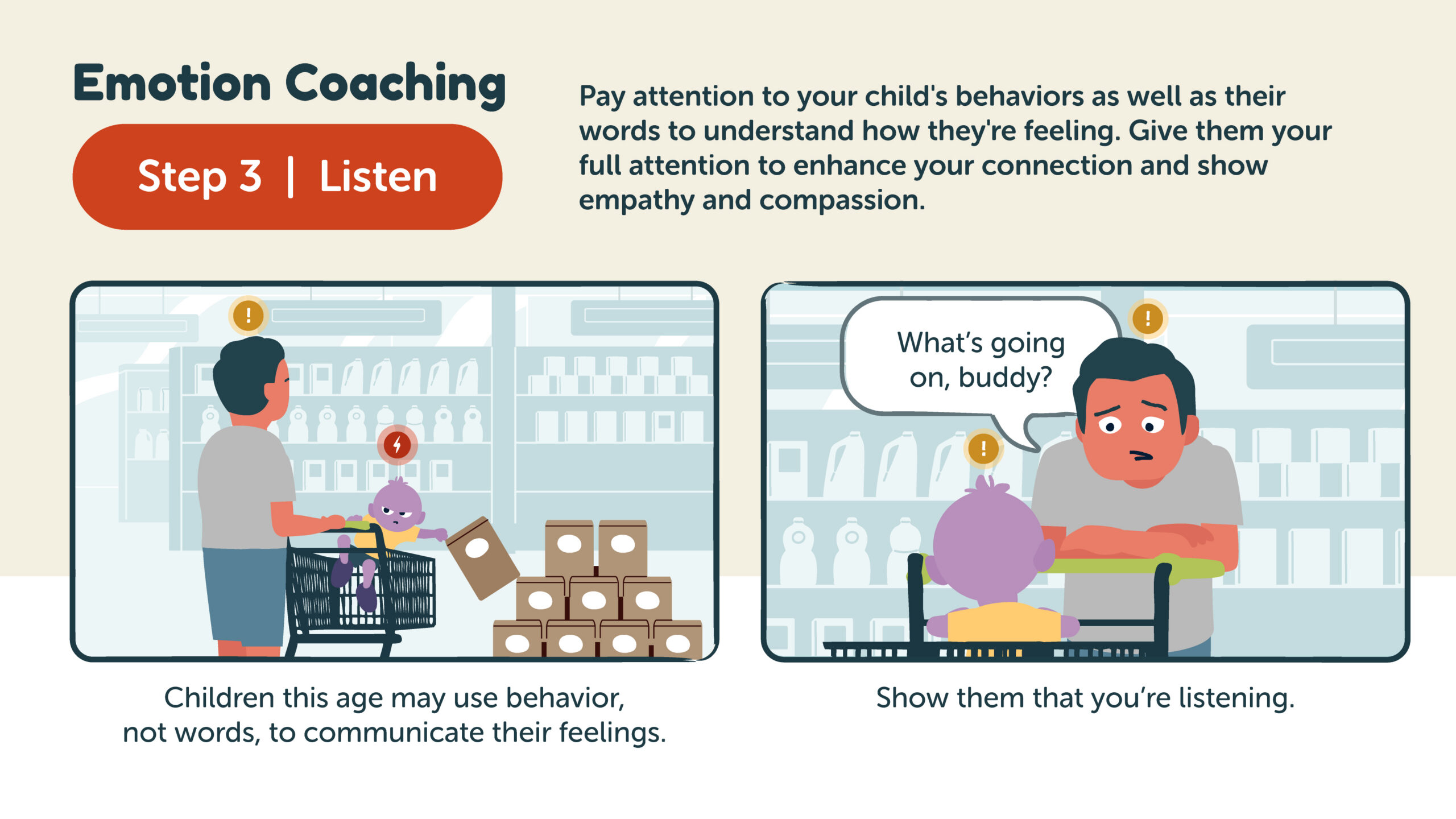
Listen to your child and use your words, tone, and body language to show empathy and compassion. Remain calm and avoid criticizing or judging their emotions. Remember your child may also be using their behavior to communicate with you.
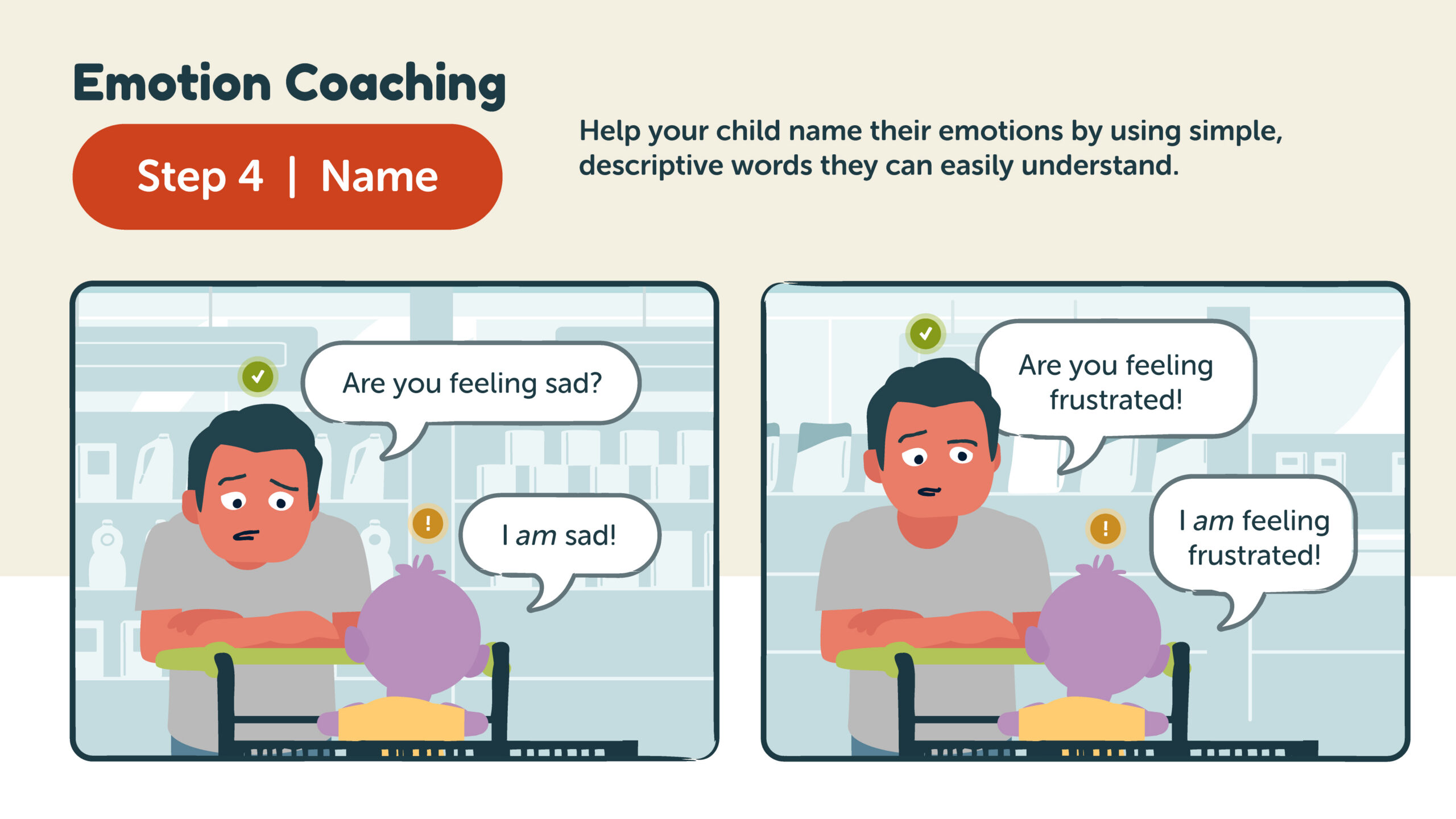
Name the emotion out loud, with simple, descriptive words, to help your child use words to describe their emotions. For example: “I see that your blocks fell. Are you feeling angry?”
You can use a feelings chart to help with naming emotions. Let your child know you understand and accept all their emotions, not just the positive or happy ones. See tips for reflecting your child’s emotions.
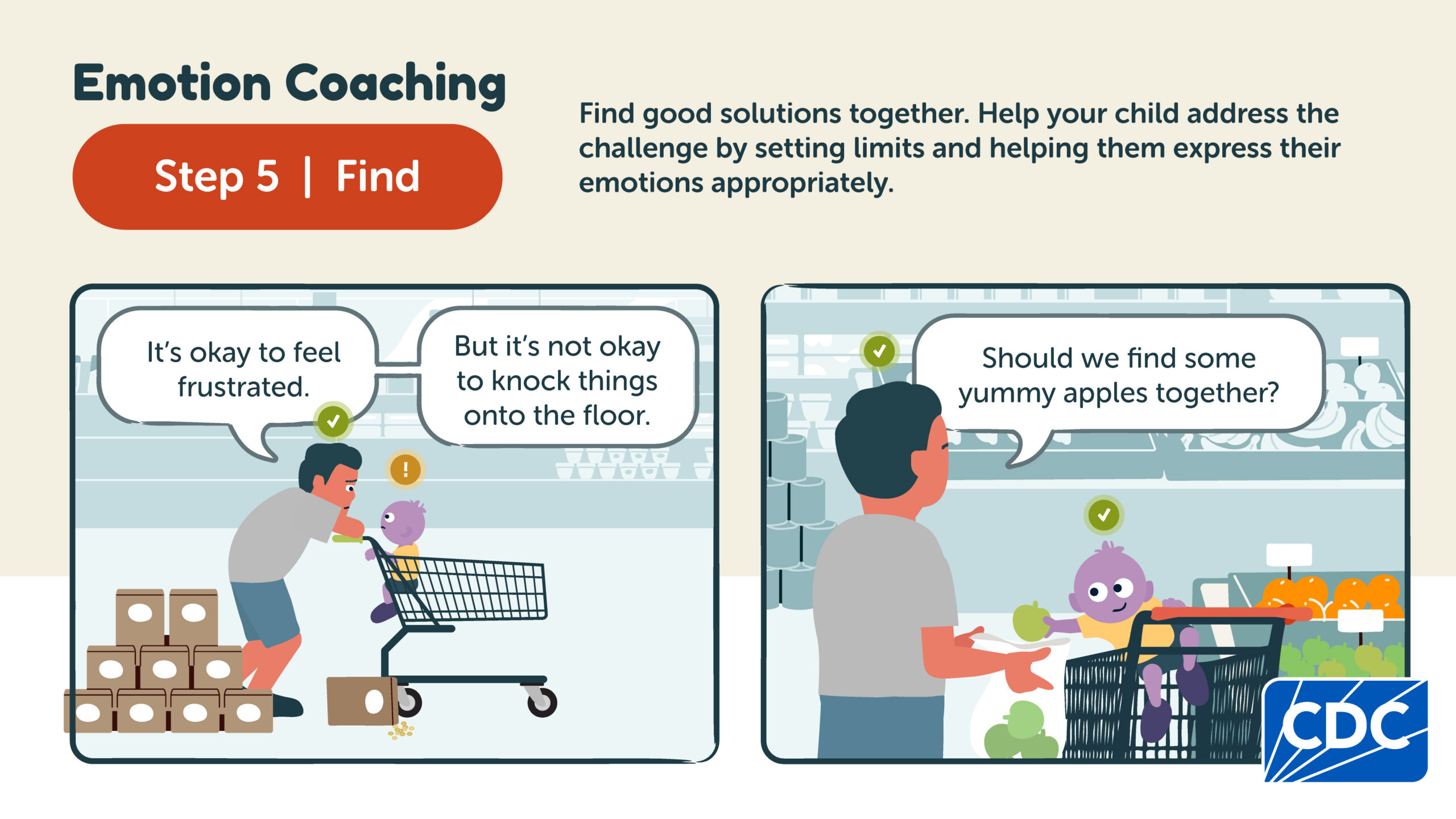
Rushing into problem-solving too soon can unintentionally dismiss your child’s emotions, and escalate the situation. Acknowledge and accept your child’s emotions first and then set limits on hurtful behavior in this step if needed. Remind your child that while all emotions are acceptable, not all behaviors are.
For example, you might say: “It’s ok to feel angry, but it’s not ok to throw our blocks” and follow up with simple suggestions like: “Should we try stacking the blocks again? Or should we start a puzzle?”
Reflecting your child's emotions
Reflecting your toddler’s emotions is not always easy. Here are some tips to make it easier.
There may be times when you are unsure what your child is feeling. For example, your child may be crying but you may not know if they are angry, scared, or sad. Let them know you are paying attention by saying, “It seems like you are upset” or “It looks like something is bothering you”.
You can let your child know you are paying attention to how they feel by what you do even if you don’t say anything. You can sit with your child while they are upset or stay physically close to hold or comfort them. Read more on how to communicate nonverbally.
Sometimes it is difficult to summarize your child’s feelings because you think they should be responding differently. Telling your child to stop feeling a particular way does not show your child you are trying to understand how they feel. Help them deal with and understand their feelings by talking with them about their feelings without judgment.
Children may have several emotions at the same time. For example, your child might feel sad and afraid at the same time. Show your child you care by talking about all their feelings.
Sometimes parents worry that they will incorrectly summarize and label their child’s feelings. Children may correct their parents if their feelings are described incorrectly. If your child corrects you, try again. Repeat what your child said to you and expand on it to give them more words and to learn ways to describe their feelings.
Pause and calm your emotions
Parenting is hard work, and emotion coaching can also come with its own set of challenges. It is common for parents to experience a range of emotions, even negative ones, when their child is distressed. When this happens, remember to pause and take a deep breath before interacting with your child.
If you’re frustrated or stressed, it’s important to calm your own emotions before you can practice emotion coaching with your child. There may be situations where you cannot use emotion coaching because you are managing your own emotions. This is called “self-regulating.” If you attempt to address your child’s emotions before self-regulating, you may unintentionally dismiss your child’s emotions.
Pausing will look different depending on the situation, what you and your child are experiencing, and the available options. A pause can be as simple as taking three deep breaths. Pauses can also be longer, like getting a snack or going for a walk or a jog. If you’re taking a longer pause, ensure your child is being cared for by another trusted caregiver.
As long as there is no immediate safety concern, it’s okay to just sit quietly with each other. You can pick up the interaction or playtime later. It’s better to return to an interaction or playtime after a short break when you can support your child calmly.
Children can learn from watching their parents’ behavior. Toddlers and preschoolers love to imitate you, even when you’re not looking. If you want your child to learn to pause and take deep breaths, use your behavior as an example.
Ensure your child is watching when you model the behavior. You can also ask your child if they would like to try taking deep breaths with you. When your child sees you pause and self-regulate your own emotions, it can reinforce the benefits of emotion coaching for them.