



Key points
- The 2026 Nutrition Report provides information on 131 biochemical indicators (such as vitamins and nutrients) in the U.S. population.
- The report covers NHANES data from 1999 to August 2023.
- CDC scientists measured biochemical indicator levels in blood and urine samples following the NHANES protocol.
- This report provides data stratified by dietary supplement use for the first time.
- Starting in 2011, NHANES data also included all Hispanic and non-Hispanic Asian persons in addition to non-Hispanic Black and non-Hispanic White persons.
Background
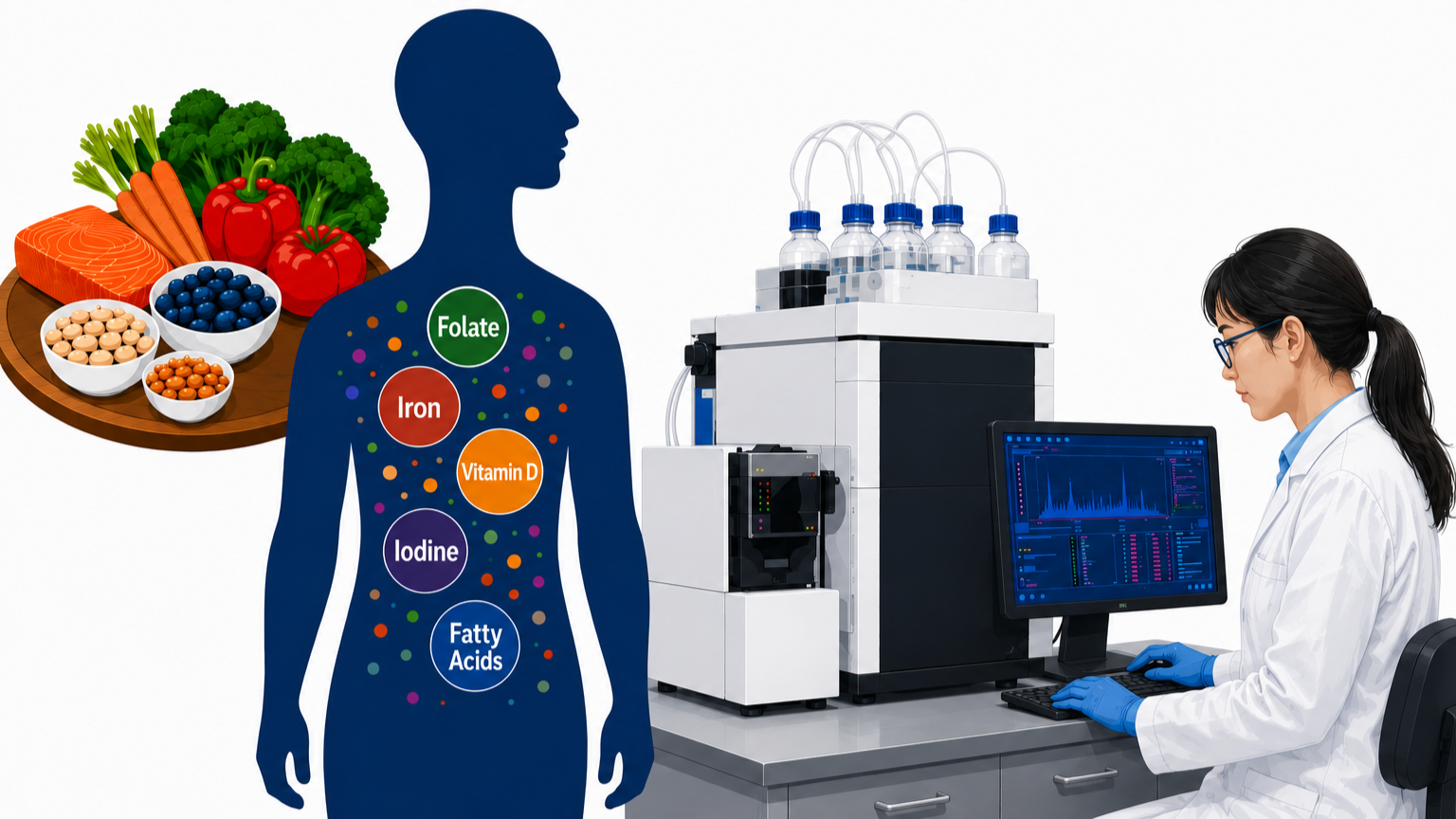
The Report offers a snapshot of the U.S. population's nutrition status by assessing a wide range of biochemical indicators. The results are presented by supplement use, age, sex, and race and Hispanic origin. The goal of the report is to improve understanding about the levels of biochemical indicators that represent the nutrition status of the U.S. population and of selected population groups, like children and women of childbearing age.
An Executive Summary is also available.
Key findings
- CDC scientists conducted statistical analyses for a deeper interpretation of the descriptive data presented in the Nutrition Report. These supplemental analyses have been published in a series of journal articles, to be found here.
- Biomarkers for four nutrients––folate, vitamin D, iron, and iodine––were monitored nearly continuously for more than two decades. The ongoing monitoring allows scientists to assess long-term trends. Since the early 2000's, mean serum folate, red blood cell folate, and urine iodine concentrations decreased 10–30%. Mean serum 25-hydroxyvitamin D concentrations increased approximately 20%. Learn more here.
- The prevalence of deficiency of vitamin B12, vitamin D, and vitamin E changed only minimally over time. The prevalence of folate insufficiency and iron deficiency increased nearly 6 percentage points in women of reproductive age. Further prevalence data can be found here.
- The prevalence of excess vitamin D increased from less than 1% to 8% in persons ages 6 years and older. The highest prevalence was in adult supplement users, women, and non-Hispanic White persons in the most recent NHANES cycle. Further prevalence data can be found here.
- We assessed the predictive power of 3 conventional biomarkers using a new combined indicator of vitamin B12 status, 3cB12. The new indicator integrates 3 conventional biomarkers (serum/plasma vitamin B12, methylmalonic acid, and homocysteine) for a more comprehensive interpretation of B12 status. More about 3cB12 can be found here.
- We calculated the omega-3 index using data collected for the first time. The data captures fatty acids in red blood cells, which is an indicator for overall heart health. More than half of the U.S. population has an undesirable omega-3 index and about 98% of the population falls below optimal levels (omega-3 index <8%). More on the omega-3 index can be found here.
What CDC is doing
CDC plans to update this report as new NHANES data become available. Updates may include the same or new biochemical indicators. Over time, the report will
- Track trends in the biochemical indicators
- Assess characteristics of new biochemical indicators added to future reports
- Help determine the effectiveness of public health efforts to improve the diet and nutrition status of the U.S. population