Key points
- Enterovirus D68 (EV-D68) typically causes respiratory illness, which can be mild (like a common cold) or more serious.
- Children with asthma may have a higher risk for severe respiratory illness caused by EV-D68 infection.
- EV-D68 can also cause acute flaccid myelitis (AFM), an uncommon but dangerous neurological condition that mostly affects children.
- There are no vaccines to prevent EV-D68 infections.

What it is
EV-D68 is one of more than 100 non-polio enteroviruses. Non-polio enteroviruses are common. Most infections cause no symptoms or only mild symptoms.
Infections with enteroviruses are more likely during summer and fall, but can happen year-round.
Signs and symptoms
EV-D68 can cause mild to severe respiratory illness or no symptoms at all. Mild symptoms may include runny nose, sneezing, cough, and body and muscle aches. Serious symptoms may include wheezing, difficulty breathing, or pneumonia.
EV-D68 can also cause acute flaccid myelitis (AFM), an uncommon but dangerous neurological condition that mostly affects children. Onset of AFM symptoms can start several weeks after an EV-D68 infection. AFM causes the muscles and reflexes in the body to become weak. Symptoms include:
- Arm or leg weakness
- Loss of muscle tone and reflexes
- Pain in the neck, back, arms, or legs
- Difficulty swallowing or slurred speech
- Difficulty moving the eyes or drooping eyelids
- Facial droop or weakness
Call your doctor right away if:
Who is at risk
In general, infants, children, and teenagers are most likely to get infected with enteroviruses and become ill. This is because they do not yet have immunity (protection) from previous exposure to these viruses, including EV-D68.
Adults can get infected with enteroviruses, but they are more likely to have no symptoms or mild symptoms.
Children with underlying medical conditions may be at higher risk for more severe illness from EV-D68 and other respiratory illnesses.
Children with asthma
Children with asthma may be at higher risk for severe symptoms from EV-D68 and other respiratory illnesses. Families should follow CDC guidance to maintain control of symptoms during enterovirus season. The season occurs each year in the United States during summer and fall.
How it spreads
Since EV-D68 causes respiratory illness, the virus can be found in an infected person’s respiratory secretions, such as:
- Saliva
- Nasal mucus
- Sputum (mucus-like secretions from the lungs)
EV-D68 likely spreads from person to person when an infected person:
- Coughs
- Sneezes
- Touches a surface that is then touched by others
Prevention
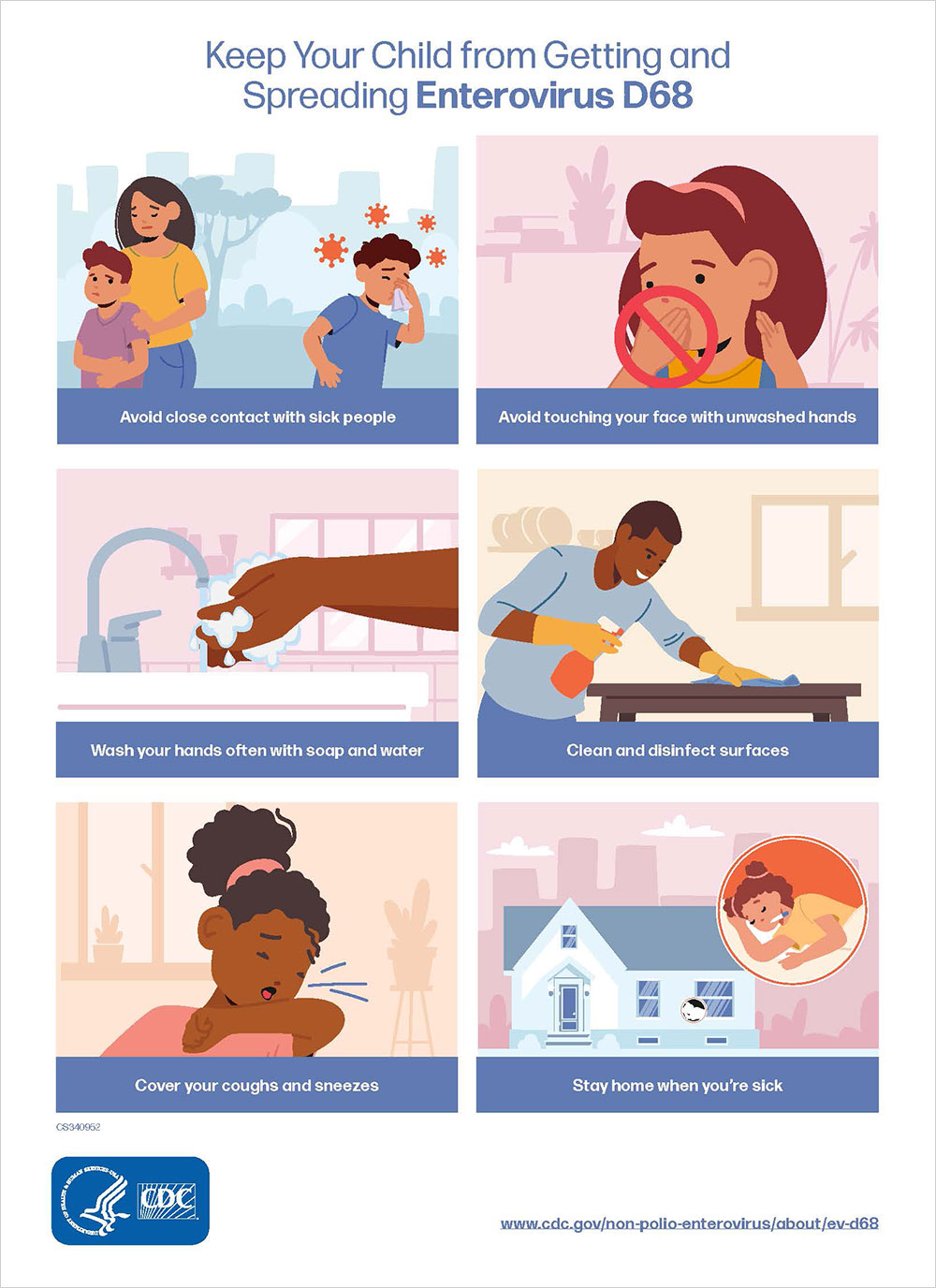
There are no vaccines to prevent EV-D68 infections. However, you can take certain actions to help protect yourself and others from health risks caused by respiratory viruses, including EV-D68. CDC's Respiratory Virus Guidance provides practical recommendations and information to help lower your risk.
To prevent severe illness from EV-D68, children and adults with asthma should also follow CDC's guidance on how to manage their asthma.
Testing and diagnosis
Many hospitals and some doctors can test ill patients to see if they have an enterovirus or rhinovirus infection. However, most hospitals and doctors cannot do specific testing to determine the type of enterovirus, like EV-D68. CDC and some state health departments can determine different enterovirus types by doing specialized tests.
Managing EV-D68 and asthma
CDC recommends the following:
- Discuss and update your asthma action plan with your primary care provider.
- Take your prescribed asthma medications, especially long-term control medications.
- Be sure to keep your reliever medication with you.
- Get a flu vaccine each year and talk to your healthcare provider about getting a COVID-19 vaccine.
- If you develop new or worsening symptoms, follow your asthma action plan.
- If your symptoms do not go away, call your doctor right away.
- If you support a child with asthma, be sure other caregivers and/or teachers are aware of the child's condition and know how to help.
Treatment and recovery
There is no specific treatment or antiviral available for people with respiratory illness caused by EV-D68. Talk to a doctor about your symptoms and how to best manage them.
Some people with a serious respiratory illness may need to be hospitalized and receive intensive supportive therapy.