



About
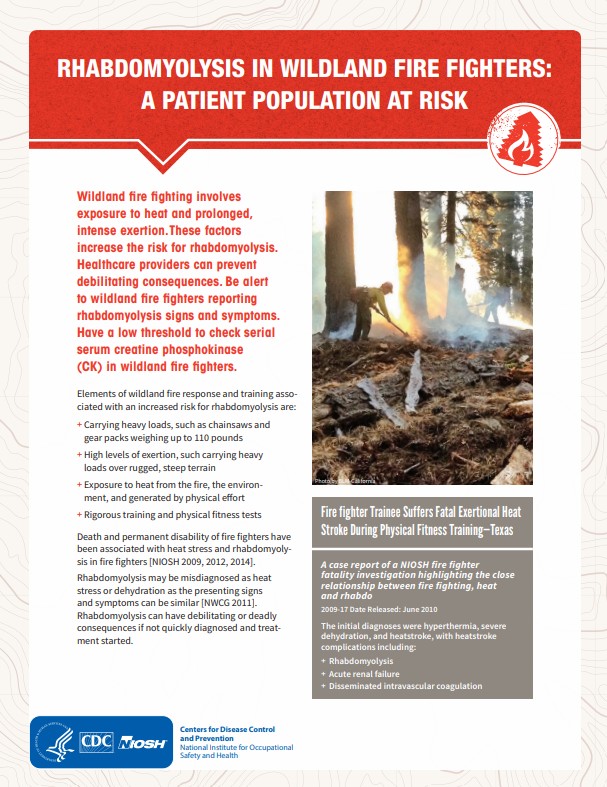
Wildland fire fighting involves exposure to heat and prolonged, intense exertion. These factors increase the risk for rhabdomyolysis. Healthcare providers can prevent debilitating consequences. Be alert to wildland fire fighters reporting rhabdomyolysis signs and symptoms. Have a low threshold to check serial serum creatine phosphokinase (CK) in wildland fire fighters.
Others in this series
Suggested citation
NIOSH [2018]. Rhabdomyolysis in Wildland Fire Fighters: A Patient Population at Risk. Cincinnati, OH: U.S. Department of Health and Human Services, Centers for Disease Control and Prevention, National Institute for Occupational Safety and Health, DHHS (NIOSH) Publication No. 2018-132, https://www.cdc.gov/niosh/docs/2018-132/default.html.
This page was last updated on this date. Updates may include minor edits, image changes, or other modifications to page content.
The information on this page was last reviewed by subject matter experts to ensure accuracy.