



About
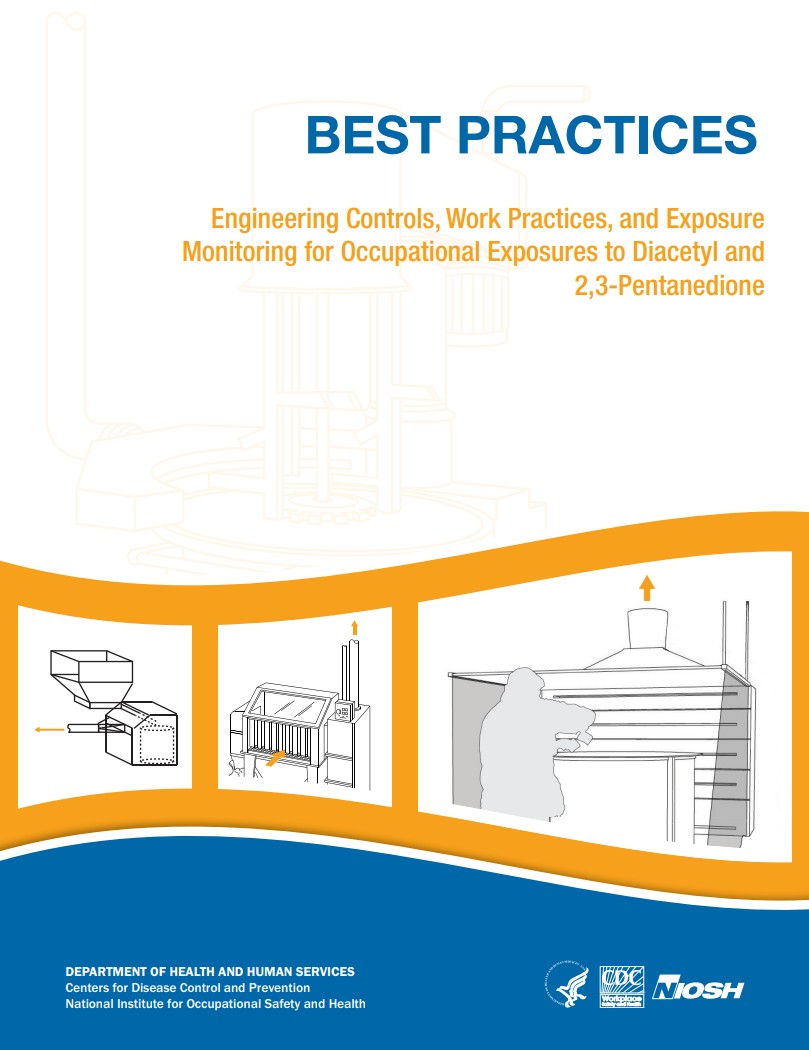
Workers who handle diacetyl or work in areas where diacetyl exposure occurs are at risk of developing severe lung disease if their exposures are not properly controlled. NIOSH has developed guidance in a variety of areas to reduce workers' exposures to diacetyl through engineering controls, best work practices, and techniques for monitoring airborne diacetyl exposures. Although these guidelines emphasize diacetyl, they can be applied to reduce exposures to diacetyl substitutes such as 2,3-pentanedione and other alpha-diketones.
Suggested citation
NIOSH [2015]. Best practices: engineering controls, work practices and exposure monitoring for occupational exposures to diacetyl and 2,3-pentanedione. By Dunn KH, McKernan LT, Garcia A. Cincinnati, OH: U.S. Department of Health and Human Services, Centers for Disease Control and Prevention, National Institute for Occupational Safety and Health, DHHS (NIOSH) Publication 2015-197.