



About
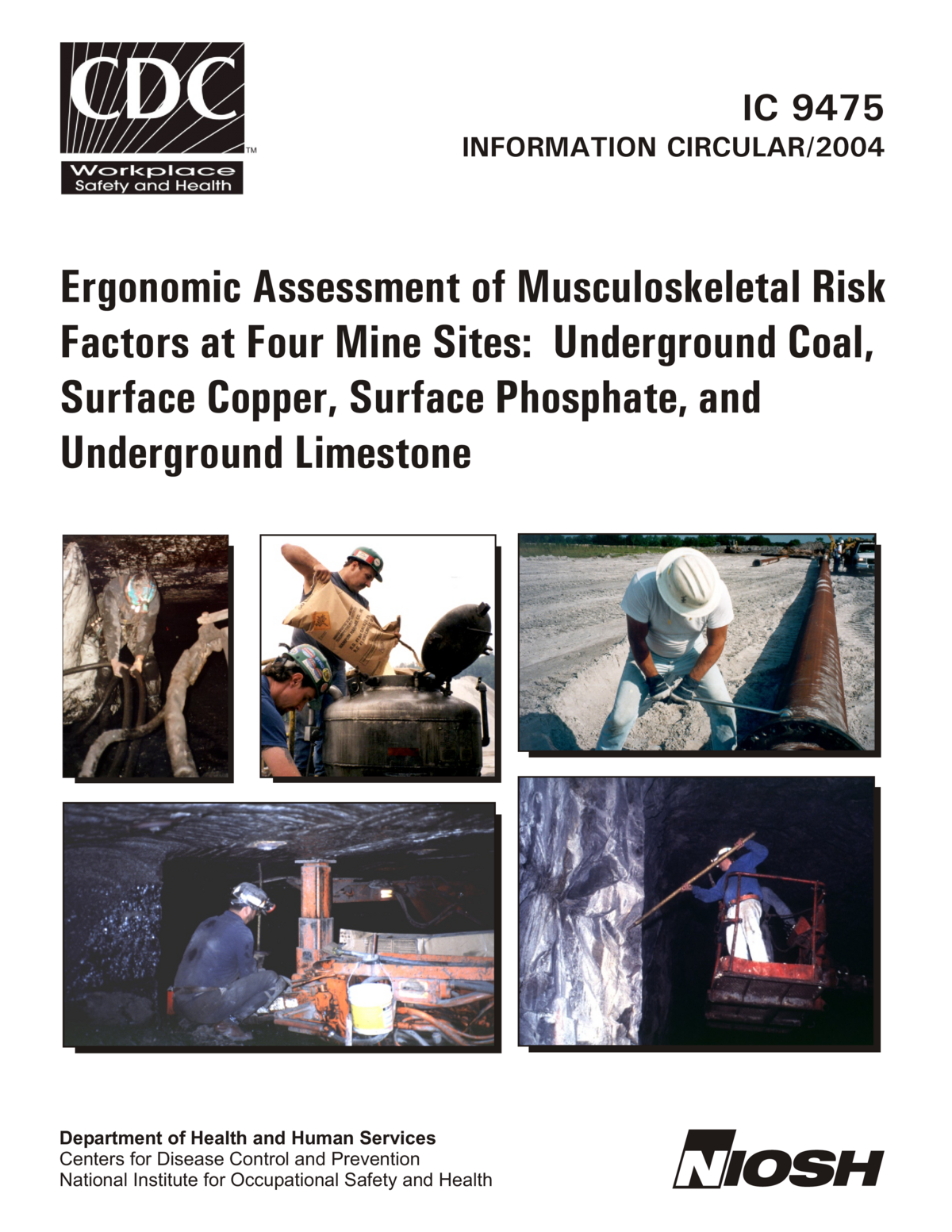
This study examined musculoskeletal injury risk at four mining sites: underground coal, underground limestone, surface copper, and surface phosphate. Each site offered opportunities to investigate musculoskeletal disorder (MSD) injury risks and how those risks might be identified and categorized. The National Institute for Occupational Safety and Health (NIOSH) worked with these sites to (1) identify work activities that showed evidence of MSD injury risk, (2) examine physical risk factors that can lead to MSDs for a handful of work tasks at each site, and (3) develop a set of ideas for problem-solving to help reduce risk factors for examined work tasks. For each site, NIOSH implemented a plan that was refined over the time period of this study. A final report of findings was presented to mine management and workforce representatives at each site. The risk factors and ideas for improvement identified for each site were specific to the target tasks examined. These target tasks were diverse, but there were some key similarities. For instance, jobs were found at each site that required a significant amount of manual work involving the upper extremities and low back. Handling heavy and awkward objects, forceful arm and shoulder exertions, and working in awkward postures were common for a variety of jobs across the four sites.
Suggested citation
NIOSH [2004]. Ergonomic assessment of musculoskeletal risk factors at four mine sites: Underground coal, surface copper, surface phosphate, and underground limestone. By Wiehagen WJ, Turin FC. Pittsburgh, PA: U.S. Department of Health and Human Services, Centers for Disease Control and Prevention, National Institute for Occupational Safety and Health, DHHS (NIOSH) Publication No. 2004-159.
This page was last updated on this date. Updates may include minor edits, image changes, or other modifications to page content.
The information on this page was last reviewed by subject matter experts to ensure accuracy.