



At a glance
- NIOSH conducts research and makes recommendations to support the safe use of chemicals in the workplace.
- The NIOSH Pocket Guide to Chemicals Hazards includes information and recommendations for approximately 700 chemicals.
- NIOSH and partners have developed other resources for chemical safety in the workplace.
Overview
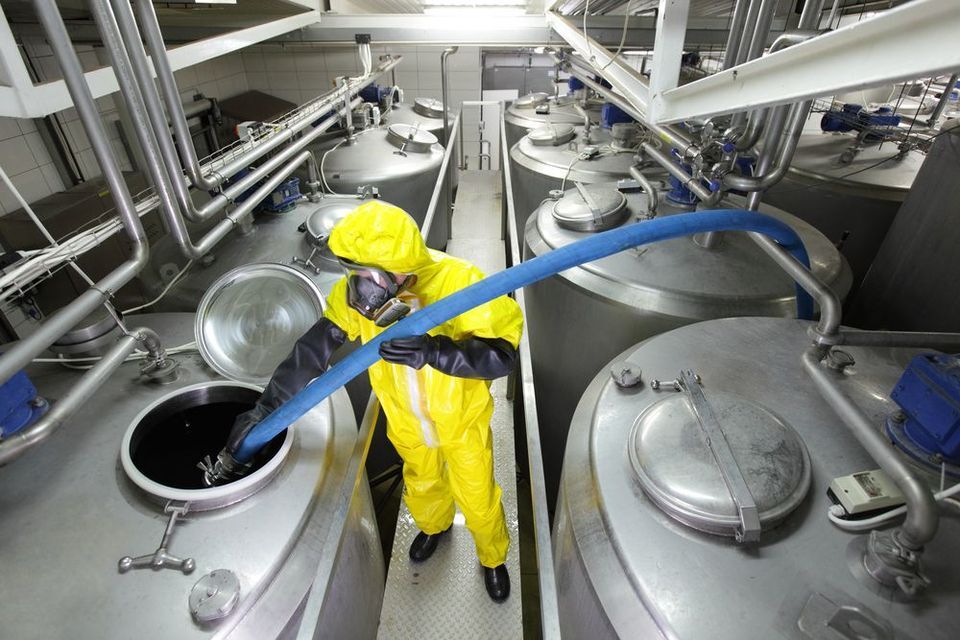
Chemicals are an important part of nearly every workplace, from specialized industrial chemicals to everyday cleaning products.
Ensuring the safe use of workplace chemicals has been a focus of NIOSH research since its founding in 1970. NIOSH research related to chemicals includes:
- Toxicity studies
- Occupational epidemiology
- Studies of how to measure chemicals in the work environment
- Studies of engineering controls and personal protective equipment (PPE)
- Risk assessment
- Health Hazard Evaluations (HHEs)
- Communication tools for understanding and managing chemicals safely at work
Best practices
The resources below provide information on best practices for working safety with and around chemicals.

International Chemical Safety Cards
The International Chemical Safety Cards (ICSCs) provide essential safety and health information in a clear and concise way. Workers and occupational safety and health professionals can use ICSCs to understand and prevent harmful exposures. More than 1,700 ICSCs are available in English, Spanish and 13 additional languages. All cards are available on the multilingual search interface.
An international group of scientists from institutions concerned with occupational safety and health draft and review ICSCs. NIOSH helped initiate the ICSC effort and continues to support ICSC development by participating actively in all scientific peer review meetings.
Resources
NIOSH
Publications
NIOSH Chemical Carcinogen Policy describes the methods NIOSH uses to classify chemicals as carcinogens, identify control levels, and address analytical feasibility
NIOSH Manual of Analytical Methods (NMAM) contains about 300 methods for the collection and analysis of samples for hazards in the workplace. NIOSH or its partners developed or adapted the methods and in NMAM. NIOSH also evaluates them according to established experimental protocols and performance criteria.
The NIOSH Occupational Exposure Banding Process for Chemical Risks Management can be used by occupational safety and health professionals to assess chemicals that lack an occupational exposure limit. The process allows users to quickly and accurately assign chemicals into specific categories (bands). Management can then make timely decisions based on the best available scientific information.
Databases
Engineering Controls Database is a repository of NIOSH information on engineering control technology. Many of the engineering controls in this database involve controlling chemical hazards in the workplace.
NIOSHTIC-2 Bibliographic Database is a searchable database of occupational safety and health publications, documents, grant reports, and other communication products supported in whole or in part by NIOSH.
Other Federal resources
Frank R. Lautenberg Chemical Safety for the 21st Century Act requires the Environmental Protection Agency (EPA) to evaluate workplace chemical exposures as well as environmental exposures. NIOSH works with EPA to provide information on occupational uses of chemicals, chemical exposures, occupational risk assessment methods, and other information.