



What to know
Summary
Construction automation and robotics are increasingly used to perform hazardous and physically demanding tasks, including material handling, inspection, project layout, earthmoving, demolition, and other repetitive construction activities. Additionally, robots in construction increasingly rely on advanced technologies such as integrated sensors, software, and wireless communication. These technologies have the potential to eliminate riskier tasks or reduce worker exposure to hazards. However, increased use of technology for human-robot interaction and other purposes may lead to other safety hazards requiring new safety strategies. Employers can reduce risks by using Prevention through Design (PtD). These principles are important while planning, conducting task-specific risk assessments, monitoring leading indicators, and continually evaluating how workers and robots interact as site conditions change.
Robots in construction
Construction robotics are rapidly evolving beyond machines that can perform only one task. These technologies have the potential to reduce worker exposure to hazardous tasks but also introduce new considerations for human–robot interaction, software reliability, communication, sensing, and system coordination. This is further described in the NIOSH bulletin Transforming Construction: Automation and Robotics for a Safer Future.
Examples include:
- Autonomous earthmoving and material-hauling equipment
- Collaborative robots that assist workers with repetitive or physically demanding tasks
- Robotic additive construction (3D concrete printing)
- Climbing robots for bridge, façade, and infrastructure inspection and maintenance
- Digital twins integrated with robotic systems for work planning and monitoring
- Coordinated multi-robot (fleet/swarm) systems that perform interconnected tasks
- Robotic systems that adapt to changing worksite conditions
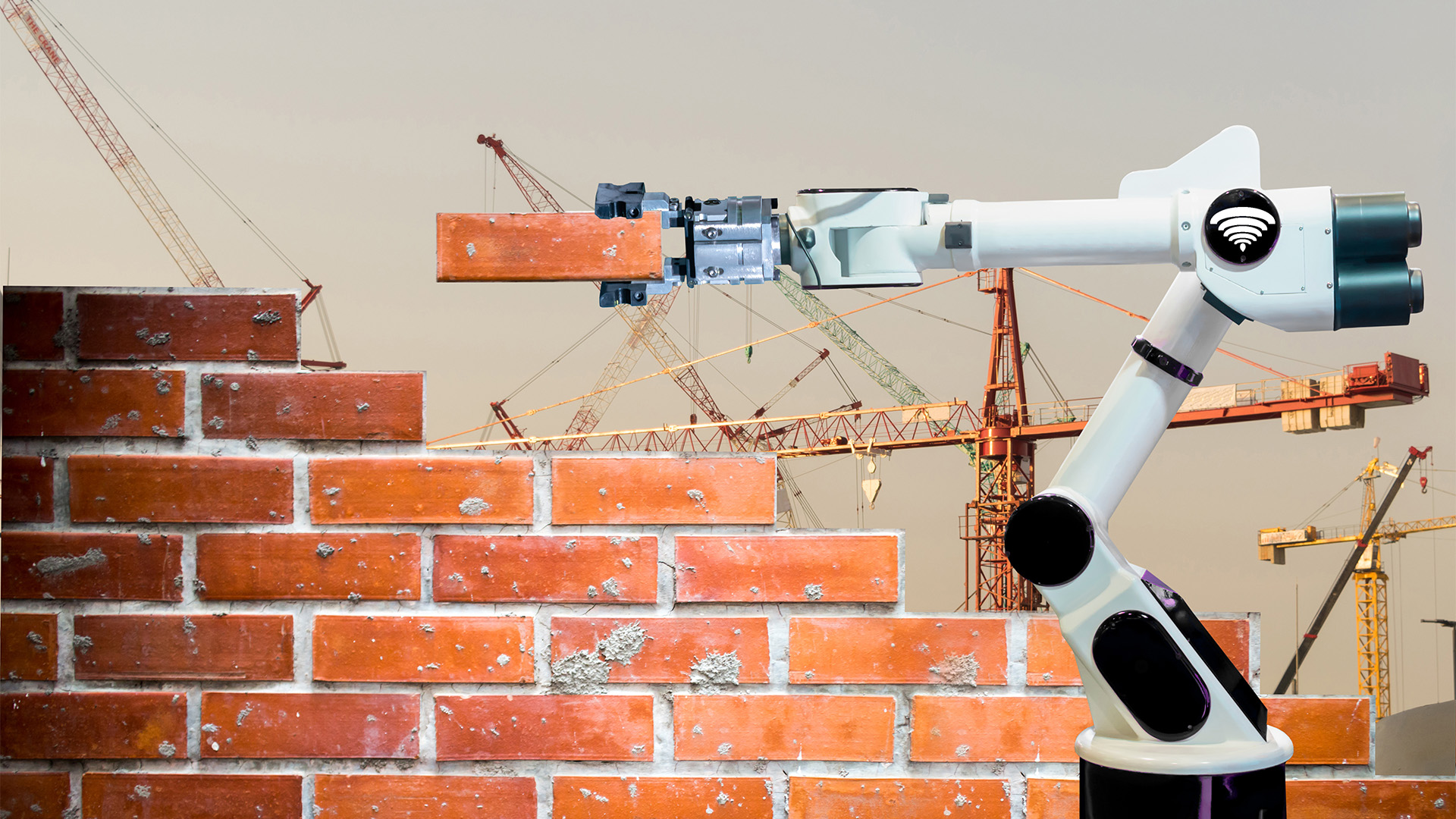
In another example, NIOSH research is investigating collaborative masonry robots designed to help workers lift and position heavy concrete masonry units while allowing the mason to guide the task. The research is developing robot controls that follow the mason's movements. Computer-vision systems detect workers, objects, and human motion so the robot can slow or stop when collision hazards occur. A separate automated inspection system is being developed to identify masonry alignment conditions that could contribute to collapse hazards. Ultimately, the research aims to inform safer human-robot collaboration and future robotics standards and construction applications.
Robots in changing workspaces
These technologies can reduce worker exposure to falls, heavy lifting, repetitive motion, hazardous environments, and other high-risk activities. At the same time, introducing robots into active construction sites creates new situations for workers and automated equipment to occupy the same workspace. Safe implementation depends not only on the capabilities of the robot but also on how work is organized, how workers interact with robotic systems, and how changing site conditions are managed throughout the project. Specifically, many robot safety practices were developed for manufacturing environments where production lines, workspaces, and worker access remain relatively stable, as noted in the NIOSH-funded Assessment of the Automation Impact on Worker Safety and Health.
Construction sites differ from other work environments in several ways, including:
- Work areas are continually reconfigured as projects progress
- Multiple employers and trades often perform overlapping tasks near one another
- Environmental conditions (e.g., uneven terrain, weather, dust, changing lighting, and visual obstructions) can affect robot sensing, navigation, and worker visibility
- Workers who are not robot operators may enter robotic work areas without being familiar with the equipment or its operating characteristics
For these reasons, safety strategies that rely solely on fixed barriers or permanent exclusion zones may not provide adequate protection. Effective risk management includes continuous assessment of changing work conditions and coordination among all employees working on site.
Robot-related hazards
Construction robots share many hazards already documented in manufacturing, mining, and mobile equipment operations. These are discussed in the article Robotics and Automation Safety Risks in Construction and NIOSH's guidance on Preventing Worker Injuries and Deaths from Backing Construction Vehicles and Equipment.
Common hazards include:
- Struck-by incidents involving mobile robots or robotic equipment
- Caught-in or caught-between hazards
- Crushing injuries during robot movement or positioning
- Unexpected equipment movement
- Blind spots and limited worker visibility
- Dropped or unstable loads
Further, as autonomous systems continue to become more prevalent across the industry, other examples of technology-related hazards that employers can consider include:
- Sensor degradation caused by dust, rain, glare, or poor lighting
- Communication failures
- Software or firmware changes affecting system behavior
- Limitations of object recognition or obstacle detection
- Unexpected behavior following system faults or recovery from interruptions
- Stored electrical, hydraulic, pneumatic, or mechanical energy
- Fire hazards from charging large battery systems
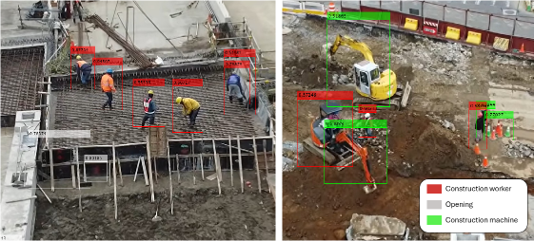
Although employers must be aware of the potential hazards around integrating robotics and other advanced technologies, automation can also support hazard recognition on construction sites. For example, NIOSH research is exploring the use of robotic drones and automated sensing to identify hazards as construction work evolves. This ongoing research is exploring computer-vision approaches in real-time from construction-site aerial videos during flights. These videos can identify workers, construction equipment, and physical openings that create a fall or entry hazard. By continuously detecting these changing conditions, automated systems could provide earlier warning of potential struck-by, caught-between, or fall hazards and support timely intervention (see Figure 1). This illustrates how emerging automation can be used not only to perform work, but also to monitor dynamic environments and strengthen hazard recognition and risk reduction.
Robot safety leading indicators
In addition to conducting advanced research in this area, the manufacturing and mining industries provide lessons for managing robot-related hazards. Industrial robot safety standards emphasize engineering controls such as safeguarding, emergency stops, speed limits, safety-rated monitored stops, and task-based risk assessments. Mining has also demonstrated the value of removing workers from hazardous areas through remote and autonomous operation whenever practical. These approaches remain relevant for construction but must be adapted to dynamic worksites where workers, equipment, and work zones frequently change.
Finally, traditional injury statistics measure events that have already occurred. Leading indicators provide opportunities to identify and address hazards before injuries happen. Monitoring these indicators can help employers identify changing risks, improve work planning, and evaluate whether existing controls remain effective as projects evolve as discussed in the NIOSH-funded article Assessment of the Automation Impact on Worker Safety and Health.
Examples include:
- Near misses involving workers and robots
- Errors and emergency stop activations
- Manual overrides or unexpected autonomous disengagements
- Sensor faults or repeated localization failures
- Maintenance events involving safety systems
- Unauthorized entry into robot operating areas
Future directions
Construction robotics are rapidly evolving beyond single-task automation. Emerging technologies include autonomous equipment fleets, collaborative robots, robotic additive construction, rebar (reinforcing bar) systems, climbing robots, drones, and digital twins. These technologies allow robots to operate more autonomously and coordinate with workers and other machines in real time. These technologies also have the potential to eliminate risky tasks or reduce worker exposure to hazards.
Robotic systems are becoming increasingly connected and capable of autonomous decision-making. New safety challenges may emerge involving software integrity, communication failures, sensing limitations, cybersecurity, and coordination among multiple robots operating in shared workspaces. Future research, surveillance, and standards development will be needed to address these evolving risks and support safe implementation across diverse construction environments.
Continued evaluation of robot-related incidents can help identify emerging injury patterns and inform evidence-based prevention strategies. This includes lessons learned through NIOSH Fatality Assessment and Control Evaluation (FACE) investigations and other surveillance efforts. Collaboration between groups is essential to ensure that automation continues to improve worker safety while reducing exposure to hazards associated with construction tasks. These groups include equipment manufacturers, contractors, workers, researchers, standards organizations, professional societies, and government agencies.
Author information
Asa Castleberry, MS, Consultant, Office of Construction Safety and Health at NIOSH.
Emily J. Haas, PhD is Associate Director for Science in the NIOSH Division of Safety Research and Co-coordinator for the NIOSH Construction Program in the Office of Construction Safety and Health.
Christina Socias-Morales, DrPH is a Research Epidemiologist in the NIOSH Division of Safety Research and Co-Coordinator for the Construction Program in the NIOSH Office of Construction Safety and Health.
Marvin Cheng, PhD is a General Research Engineer in the NIOSH Division of Safety Research and the Coordinator for the Center for Occupational Robotics Research.
Donald R. Peterson, PhD is the Director of the NIOSH Division of Safety Research and the Acting Director for the NIOSH Construction Program in the Office of Construction Safety and Health.
This page was last updated on this date. Updates may include minor edits, image changes, or other modifications to page content.
The information on this page was last reviewed by subject matter experts to ensure accuracy.