



What to know

Summary
A data story from the National Center for Health Statistics
Authors: Amanda E. Ng, MPH, and Dzifa Adjaye Gbewonyo, PhD
Get the data story
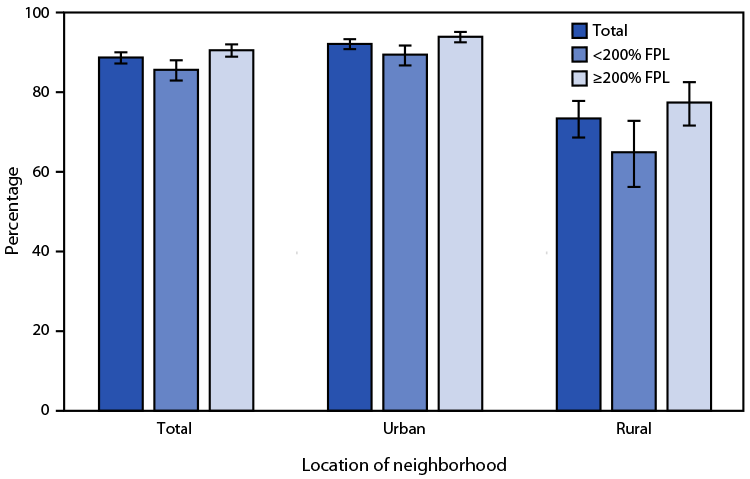
During 2020, 88.7% of children and adolescents aged 6–17 years had roads, sidewalks, paths, or trails in their neighborhood or near their home where they could walk or ride a bicycle.
Availability of these spaces was less common among children and adolescents who lived in families with incomes <200% of FPL (85.6%) than among those in families with incomes ≥200% of FPL (90.5%) and was consistent among children and adolescents in both urban (89.4% versus 93.9%) and rural (64.9% versus 77.4%) areas.
Regardless of income, availability of spaces to walk or ride a bicycle was lower among children and adolescents living in rural areas (73.4%) than among those in urban areas (92.1%).
https://www.cdc.gov/mmwr/volumes/71/wr/mm7135a5.htm
Source: National Center for Health Statistics, National Health Interview Survey, 2020. https://www.cdc.gov/nchs/nhis.