 An official website of the United States government




Newsletter
July 2025
Arboviral Diseases

In 2023, arboviral disease cases were reported from all contiguous U.S. states; most occurred during April–December. West Nile virus (WNV) cases (n = 2,628) were most common, followed by Powassan virus disease cases (n = 49), which increased from the previous record high in 2022. Three WNV disease cases were reported among patients infected through organ transplantation from two donors. La Crosse virus was the most common cause of arboviral disease among children, with most cases classified as neuroinvasive.
|
Bottom Line:
|
|
MMWR: West Nile Virus and Other Nationally Notifiable Arboviral Diseases — United States, 2023 | MMWR
Other:
Guidelines for West Nile Virus Surveillance and Control | West Nile Virus | CDC
Preventing Mosquito Bites | Mosquitoes | CDC
Preventing Tick Bites | Ticks | CDC
Blood Safety Basics | Blood Safety | CDC
Obesity Medications

Obesity medications are recommended as part of evidence-based, multicomponent treatment for obesity in adolescents. In 2022, the Food and Drug Administration expanded its approval of extended-release phentermine/topiramate and of semaglutide in adults to include use in adolescents aged 12–17 years. Then in January 2023, the American Academy of Pediatrics released a clinical practice guideline recommending that clinicians offer obesity medications for adolescents with obesity as an adjunct to health behavior and lifestyle treatment. This report found that despite increased prescribing of obesity medications among adolescents with obesity, fewer than 1% received a prescription in 2023. Most of those who did – 83% – had severe obesity. Prescribing prevalence was higher for girls, White adolescents, those aged 15–17 years, and adolescents with severe obesity.
|
Bottom Line:
|
| Continued monitoring of the use of obesity medications could guide strategies to ensure that all adolescents have access to evidence-based obesity treatment, including medications and health behavior and lifestyle interventions. |
Mycoplasma pneumonia
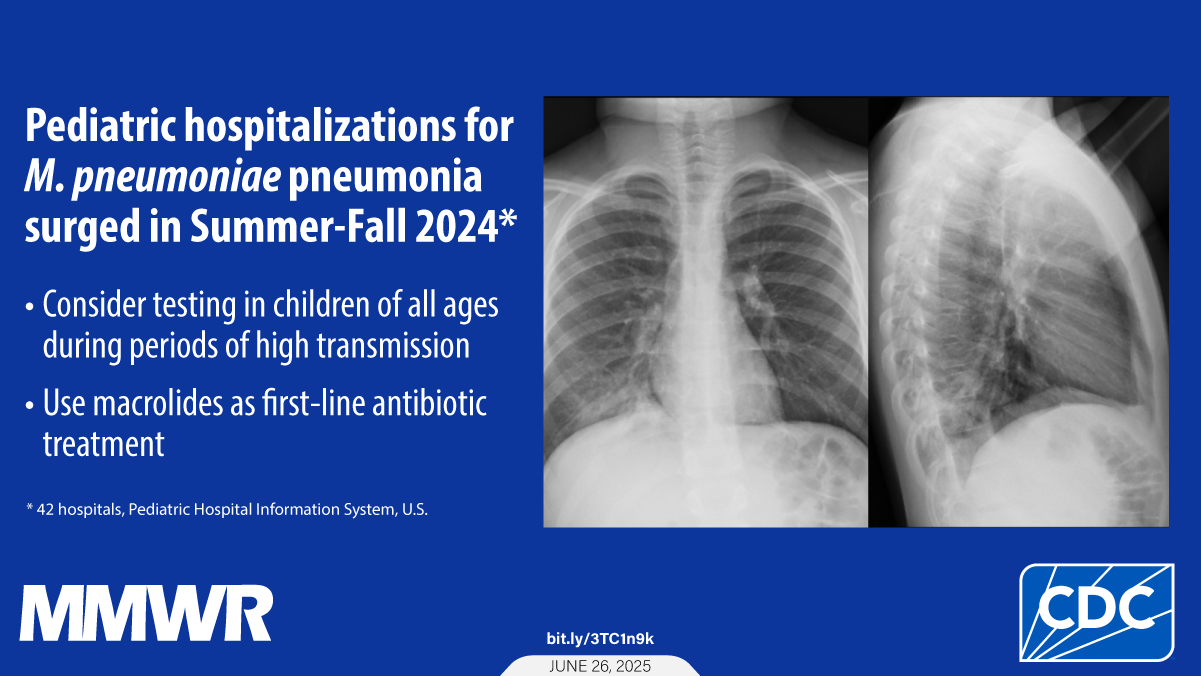
The number of hospital discharges of children with M. pneumoniae–associated community-acquired pneumonia (CAP) from U.S. pediatric hospitals increased sharply in 2024, accounting for approximately half of hospitalized children with CAP. The increase included children aged <5 years, a group in which M. pneumoniae infections have historically been less commonly reported. Data on length of hospitalization and intensive care unit admissions indicate that M. pneumoniae infections in 2024 were not more severe than 2018–2023 infections. Health care providers should be aware of increases in M. pneumoniae CAP, which might occur in summer and fall when circulation of other common respiratory pathogens is low.
|
Bottom Line:
|
|
MMWR: Mycoplasma pneumoniae Infections in Hospitalized Children — United States, 2018–2024 | MMWR
Other: About Mycoplasma pneumoniae Infection | M. pneumoniae | CDC
Did you know? Medscape & MMWR have FREE CME activities

Continuing medical education credits are available from Medscape on select MMWRs.
Subscribe to our newsletter
Get our monthly newsletter delivered to your email inbox.