Key points
- Leprosy is caused by slow-growing bacteria.
- Symptoms mainly affect the skin, nerves, and lining of the nose.
- People may lose feelings of touch and pain in affected areas, so injuries may not be noticed.
Signs and symptoms throughout the body
The bacteria that causes leprosy grows very slowly. It may take up to 20 years after contact with the bacteria to develop signs of the disease.
Symptoms mainly affect the skin, nerves, and lining of the nose. If it's left untreated or treated late, it can cause serious complications and disabilities.
Signs and symptoms include:
Skin and face
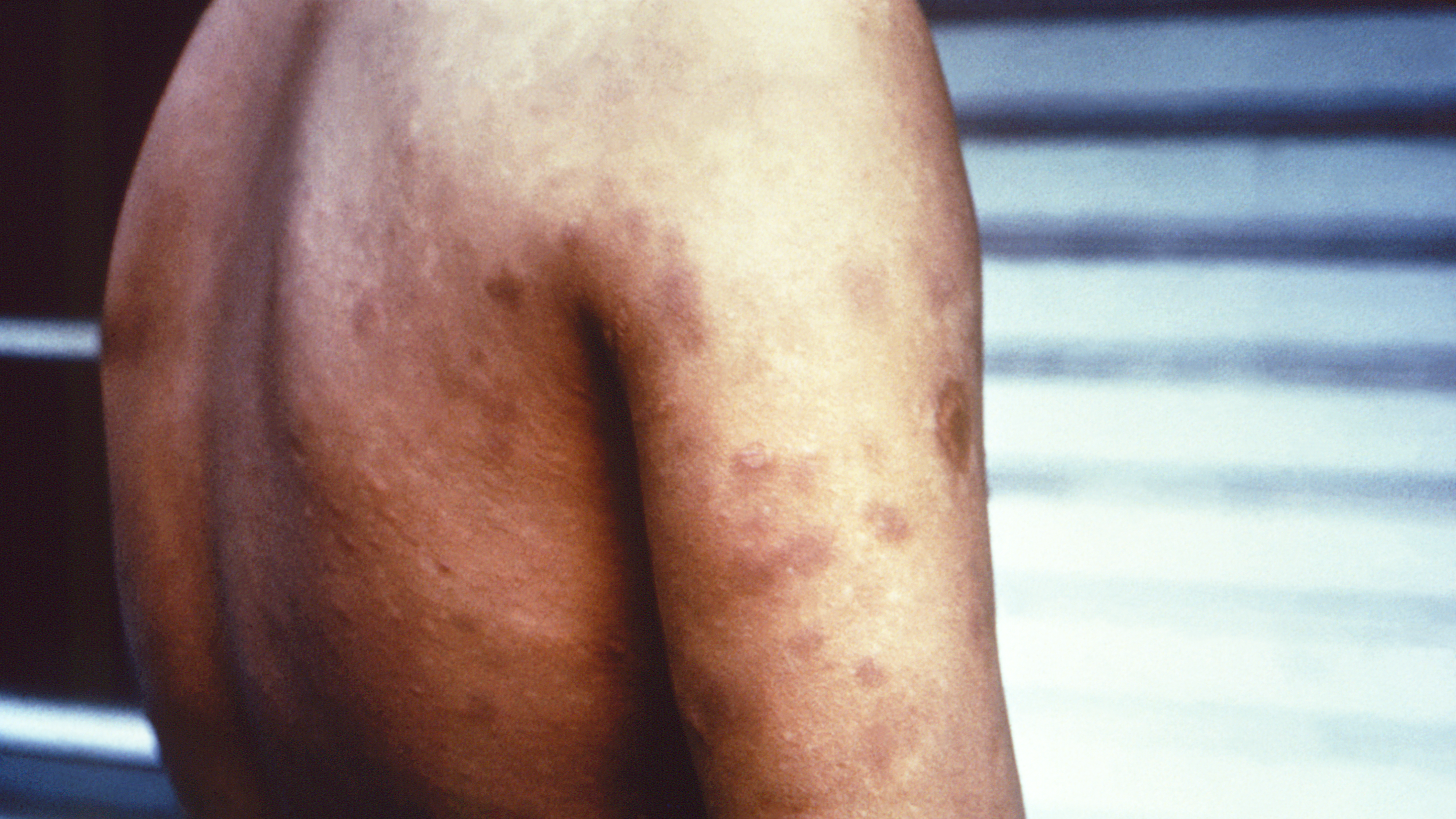
- Discolored or lighter patches of skin
- Firm, rounded bumps under the skin
- Thick, stiff, or dry skin
- Painless ulcers on the soles of feet
- Painless swelling or lumps on the face or earlobes
- Loss of eyebrows or eyelashes
Nose
- Stuffy nose
- Nosebleeds
Nerve damage
- Numbness of the skin in affected areas
- Muscle weakness or paralysis, especially in the hands and feet
- Enlarged nerves, usually around the elbows, knees, and side of the neck
- Eye problems that may lead to blindness

Complications
If it's not treated, advanced leprosy can cause:
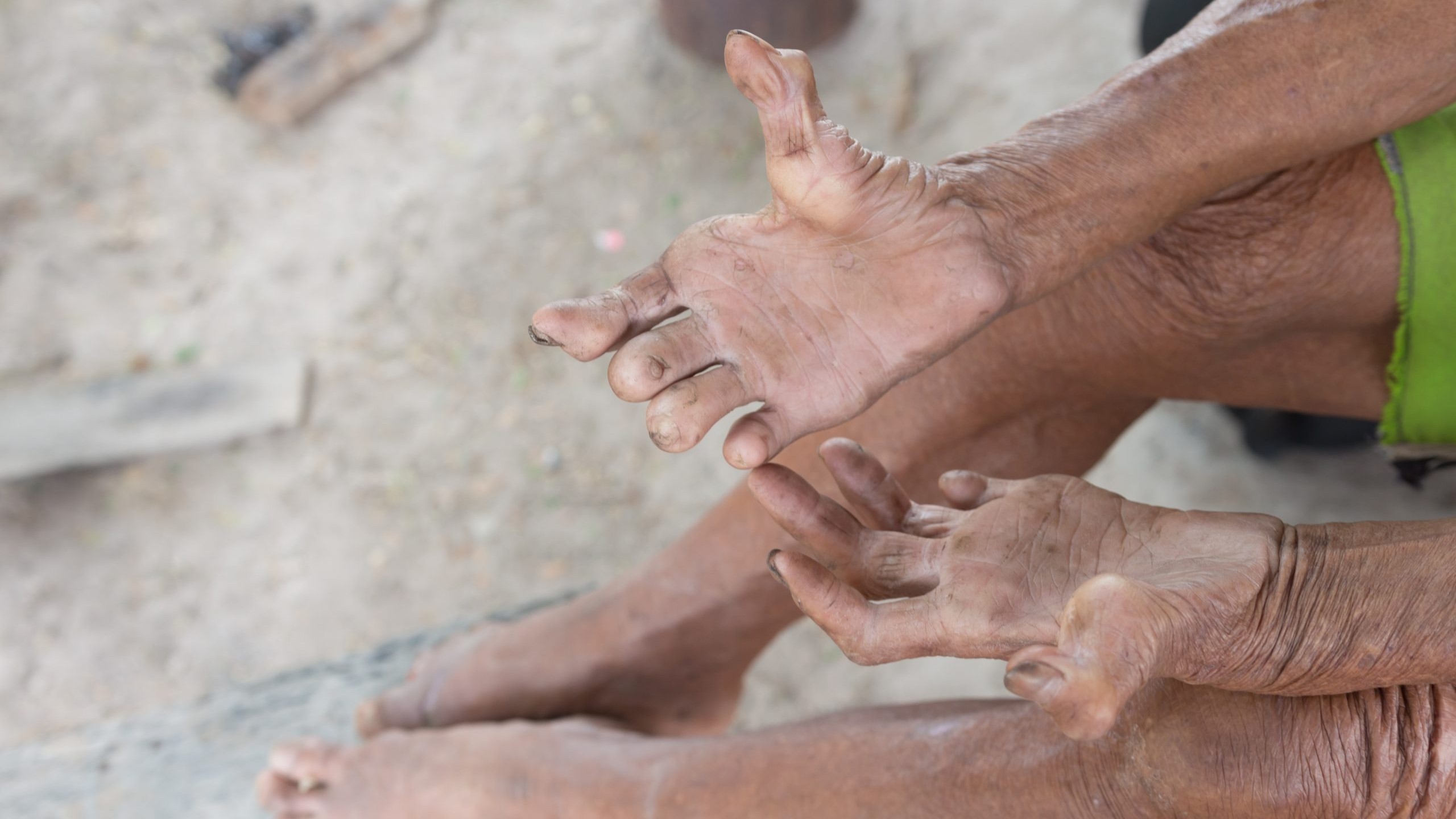
- Paralyzed, disabled hands and feet
- Shortened toes and fingers due to the body trying to reabsorb the tissue
- Chronic open sores on the bottoms of the feet that don't heal
- Blindness
- Loss of eyebrows
- Disfigured or damaged nose
- Painful or tender nerves
- Redness and pain around the affected area
- Burning sensation in the skin