



At a glance
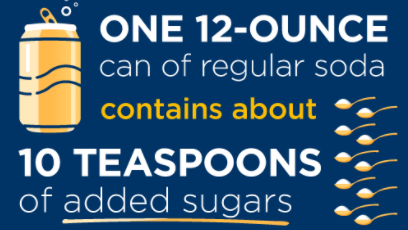
The problem
Americans consume too much added sugar, which can put their health at risk.
On average each day, adult men consume 19 teaspoons of added sugars, and adult women consume 15 teaspoons of added sugars.

Main sources of added sugar
Drinks
24% from sugary drinks, such as soft drinks, fruit drinks, sports drinks, and energy drinks.
11% from coffee and tea that is sweetened before sale or added later.
Food
19% from desserts and sweet snacks.
9% from candy and sugars.
7% from breakfast cereals and bars.
Consequences of too many sugary drinks
Consuming too many sugary drinks is associated with:
- Weight gain and obesity
- Type 2 diabetes
- High blood pressure
- Tooth decay
Recommendations
The Dietary Guidelines for Americans recommends that children younger than 11 do not have any added sugar. Adolescents and adults should also limit sugar consumption.
While no amount of added sugars or non-nutritive sweeteners is recommended or considered part of a healthy or nutritious diet, one meal should contain no more than 10 grams of added sugars.
Public health strategies to reduce added sugars
Where food and beverages are sold or served

Places where food and beverages are sold or served can improve the availability, promotion, and consumption of healthier foods and drinks. Examples of how to do this, following the Food Services Guidelines, are to:
- Offer a variety of at least 3 fruit options daily, with no added sugars.
- Provide free access to chilled drinking water.
- Offer 100% juice with no added sugars.
Early Care and Education (ECE) settings

ECE settings can support healthy eating and drinking habits in young children by following the 2010 Caring for Our Children Child Care Standards to:
Avoid high-sugar foods and sugary drinks, including candy, cake, cookies, sodas, fruit drinks, and sports and energy drinks.
Ensure access to drinking water and other healthier drinks in ECE programs, including:
- Human milk and/or iron-fortified infant formula for infants 12 months and younger.
- Unflavored whole milk for children 1 to 2.
- No more than 4–6 oz of 100% juice per day for children 1 to 6.
Help people rethink their drink
Water has zero calories. Replacing sugary drinks with unsweetened water can help reduce the amount of added sugars people drink.
Offer healthier drink options, including:
- Water, including tap water, sparkling water, seltzers, and sugar-free flavored waters.
- Unsweetened coffee or teas.
- Milk and fortified dairy alternatives with no added sugars.
- 100% fruit or vegetable juice in limited amounts.
CDC supports healthy nutrition by:
Providing data on U.S. consumption of added sugars to inform programs and policies.
Funding and supporting states and communities to implement nutrition standards that can help reduce intake of added sugars.
Providing resources and information to early care and education providers to help reduce high consumption of added sugars.
Educating the public by implementing mass communication and social media campaigns to reduce high consumption of added sugars, including those from sugary drinks.
Download the Be Sugar Smart fact sheet.
This page was last updated on this date. Updates may include minor edits, image changes, or other modifications to page content.
The information on this page was last reviewed by subject matter experts to ensure accuracy.
- Added sugars are sugars and syrups put in food or drinks when they are processed or prepared. Soda and packaged cookies are examples of processed drinks or food. Putting sugar in tea is an example of a prepared drink. Added sugars contribute calories but no other nutritional value.