



At a glance
- Tuberculosis (TB) is preventable and curable, but it still causes 1 in 4 deaths in people living with HIV.
- The PROTECT study used HIV program data from six countries and further showed how to close the loop between research and practice in TB prevention.
- CDC supports countries to deliver TPT at scale and strengthen health data systems.

PROTECT shows the power of TB Prevention

Tuberculosis is preventable and curable. Yet it remains a leading cause of death among people living with HIV, causing about one in four AIDS-related deaths worldwide.
Clinical trials have long shown that TB preventive treatment (TPT) can lower the risk of TB and save lives for people living with HIV. Since 2018, CDC has worked with ministries of health and global partners to move TPT from scientific evidence into routine HIV care.
A new study published in The Lancet, called PROTECT (Preventing Occurrence of Tuberculosis by Expanding Coverage of TPT Among People with HIV) examined how well TPT works when delivered through everyday HIV programs. Researchers analyzed routine health data from 235,424 people receiving HIV care across six countries: Haiti, Kenya, Nigeria, Uganda, Ukraine, and Zimbabwe. The results were clear—people who started TPT soon after entering HIV care had 61% fewer TB cases and 45% fewer deaths.
- Anand Date, chief of CDC's Global TB Branch
Making prevention work in the real world
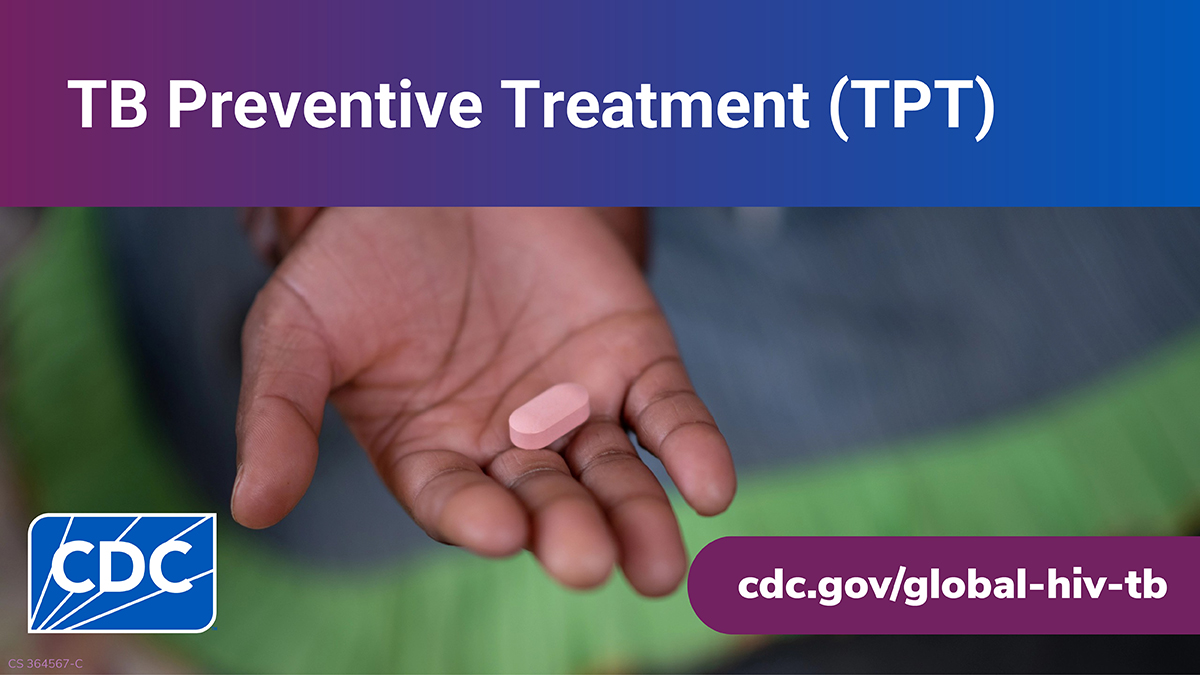
TPT is a course of medication that prevents TB in people who do not have the disease. For people living with HIV, who face an increased risk of developing TB, TPT adds an important layer of protection beyond HIV treatment alone.
Proving that a treatment works is one challenge. Countries also need to make treatment available to millions of people through real-world health systems. That means addressing challenges such as drug supply, provider practices, patient follow-up, monitoring systems, and other implementation barriers.
Through the U.S. President's Emergency Plan for AIDS Relief (PEPFAR), CDC has supported more than 9 million people with HIV to complete TPT between 2017 and 2024.In 2024 alone, CDC helped more than 950,000 people with HIV complete TPT. [1]
PROTECT closes the loop between research and practice. Clinical trials proved that TPT can prevent TB and reduce mortality. CDC and partners have worked with countries to translate that evidence into routine HIV programs at scale. Program data now show that the benefits seen in clinical trials are also evident under real-world conditions.
Country data shows the impact
PROTECT also highlights a less visible part of CDC's global health work. Countries and partners have spent years building and strengthening the electronic medical record and surveillance systems that support HIV services and public health programs.
To conduct this study, researchers used electronic medical record and surveillance data already generated through the global HIV program for people receiving HIV care. People continued to receive HIV and TB services according to their countries' guidelines.
Researchers compared outcomes among people who started TPT soon after entering HIV care with those who never started it. They analyzed the data in a way that allowed them to closely mimic how the groups would be compared in a clinical trial.
The benefit was seen across diverse settings and groups. Across the six-country study, TPT was associated with substantially lower TB incidence overall. Protective effects were also seen among important groups, including children with HIV, people with early-stage HIV disease, and people receiving newer dolutegravir-based HIV treatment.
- Macarthur Charles, CDC's Global TB Branch team lead
From evidence to lives saved
The value of preventing TB extends beyond the countries included in the PROTECT study. TB spreads through the air and crosses borders. In the United States, treating a person with drug-susceptible pulmonary TB costs an estimated $23,000, and treatment for multidrug-resistant TB can cost much more. [2]
Preventing TB can deliver substantial economic benefits. Every dollar invested in TB is projected to return $40 globally and $59 in low- and middle-income countries by 2050. [3].
PROTECT provides strong real-world evidence that TB prevention saves lives. Across six very different countries, people with HIV who started preventive treatment soon after entering care had substantially lower TB incidence and lower mortality overall.
- Anand Date, chief of CDC's Global TB Branch
Looking ahead, researchers will need to evaluate how well newer, shorter TPT regimens prevent TB and deaths under real-world conditions, while countries and partners continue addressing barriers that can delay people from starting preventive treatment. Research is also needed to understand how long TPT's protective effect lasts beyond the two years evaluated in PROTECT.
This page was last updated on this date. Updates may include minor edits, image changes, or other modifications to page content.
The information on this page was last reviewed by subject matter experts to ensure accuracy.