



At a glance
Overview
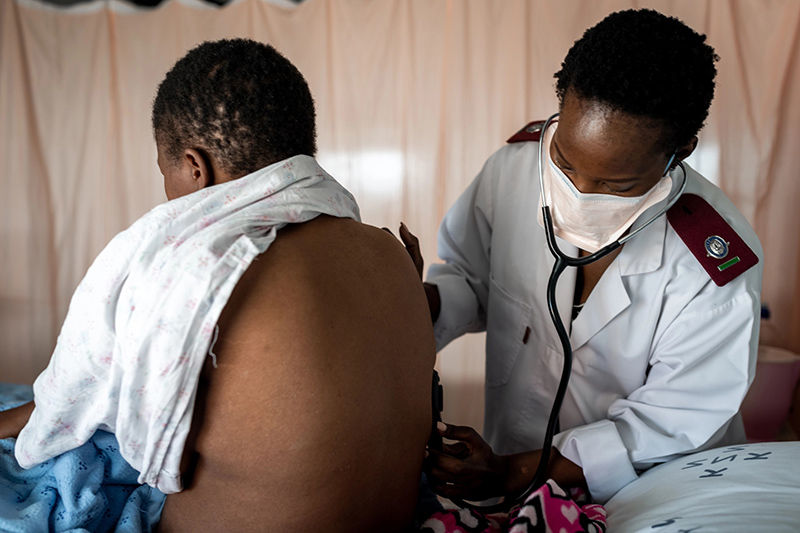
TB is the world's deadliest infectious disease, with 30,000 people becoming ill and 3,400 people losing their lives to TB each day.1 Nearly 2 billion people—one quarter of the world's population—may be infected with TB.
CDC works with governments and partners in high TB burden countries to apply new solutions to end this persistent health threat. CDC's efforts accelerate progress towards the global End TB Strategy to end the TB epidemic by 2035 and achieve a world free of TB, with zero deaths, disease, and suffering.
U.S. leadership in global TB prevention, detection, and treatment

CDC and other U.S. agencies have made substantial progress in addressing tuberculosis globally. Since 2003, programs supported by the U.S. President's Emergency Plan for AIDS Relief (PEPFAR) have averted an estimated 11 million TB cases and 2.1 million TB deaths among people living with HIV.2
Because TB is an airborne disease that spreads across borders, most TB cases in the U.S. occur among people born outside the country, reflecting the global nature of the epidemic. Investments in global TB prevention and treatment help reduce transmission worldwide and lower the risk of importation.
To sustain this momentum, CDC partners with national TB and HIV programs to expand screening, improve diagnosis, and implement innovative approaches to end TB. These efforts support implementation of the commitments adopted by United Nations (UN) Member States in the 2023 UN political declaration to end TB.3
Preventive treatment
TB is the leading cause of death among people living with HIV, who are 12 times more likely to develop active TB.4
TB preventive treatment (TPT), when combined with HIV treatment, can prevent TB disease and reduce TB deaths among people living with HIV by 80%.
CDC partnered with national HIV and TB programs across PEPFAR-supported countries to rapidly scale TPT for people living with HIV. In response to the UN political declaration to provide TPT to six million people living with HIV by 2022, CDC-supported programs more than surpassed this goal—initiating over 8.6 million people living with HIV between 2017-2022, saving millions of lives.
By October 2024, over 16 million people living with HIV had completed TPT in 38 PEPAR-supported countries.5 Through sustained technical leadership and close collaboration with national HIV programs, CDC helped establish TPT as the standard of care for people living with HIV across PEPFAR countries.
Infection prevention and control
Infection prevention and control (IPC) measures are key to decreasing the global TB burden. IPC measures reduce TB illness and death among patients, people living with HIV, and healthcare workers. These efforts improve the quality and safety of healthcare services.
Screening and diagnosis
In 2024, approximately 2.4 million people who developed active TB were either not diagnosed or not officially reported, representing about 22% of all new TB cases.6This gap results in poorer health outcomes, increased spread of TB in communities, and millions of preventable deaths.
CDC works with countries to:
- Expand access to more sensitive screening tools.
- Improve the identification of new TB cases.
- Evaluate and increase access to newer TB diagnostics.
- Provide training for reliable diagnostic tools.
CDC leads global efforts to screen all people living with HIV supported by PEPFAR for TB, resulting in earlier diagnosis to start life-saving treatment and stop ongoing transmission.
In 2025, approximately 15.2 million (75%) people living with HIV supported by PEPFAR were screened for TB. CDC screened 10.4 million people living with HIV for TB, accounting for 68% of all PEPFAR-supported TB screening among people living with HIV.5
Children and youth
Children and youth are five to ten times more likely to develop life-threatening TB disease than adults. Despite this, it is estimated that 96% of children who die from TB each year did not receive TB treatment.7
To bridge this gap, CDC incorporates HIV testing, TB screening, and TPT into routine services and programs for children. In 2025, 81% of children living with HIV were screened for TB at their most recent clinical encounter.5
Treatment
Although TB is curable with a combination of antibiotics, remaining on treatment can be challenging. To achieve cure and avoid drug-resistant TB (DR TB), daily medications need to be taken for four to six months (or longer in some cases).
By working closely with MOHs, CDC helps countries:
- Adopt the newest TB and DR TB treatments.
- Increase access to treatment.
- Implement high-quality treatment programs.
CDC also supports the use of patient-centered delivery models to help people complete treatment. This includes giving patients multiple months of medication at a time instead of requiring them to return to the clinic daily.
Drug-resistant TB
DR TB is found in every country, and it remains a challenge to achieving TB elimination.
In 2024, approximately 390,000 people developed DR TB6, which is more difficult and expensive to treat. CDC supports 30 countries with high TB and DR TB rates to build laboratory capacity and improve the diagnosis and treatment of DR TB. CDC also works with partners on genome sequencing to better understand new resistance and transmission patterns in countries with high rates of DR TB.
Closing remaining gaps
Strong TB responses increase global health security and pandemic preparedness, while saving lives, and improving health in the U.S. and abroad.
Because TB is an airborne disease that spreads across borders, the U.S. TB burden is closely linked to the global epidemic. Investing in global TB prevention and care helps reduce transmission internationally and lowers the risk of importation, while also avoiding substantially higher domestic costs.
Treating a case of TB in the United States costs approximately 25 times more than treating TB globally and treating multidrug-resistant TB costs about 37 times more. 910
TB efforts focus on children and people living with HIV, pregnant women, miners, mobile communities, and healthcare workers. Additional resources needed include scaling the use of existing tools, developing shorter treatments and more effective diagnostics, strengthening surveillance, expanding laboratory capacity, increasing IPC measures, and an effective vaccine.

This page was last updated on this date. Updates may include minor edits, image changes, or other modifications to page content.
The information on this page was last reviewed by subject matter experts to ensure accuracy.
- https://iris.who.int/server/api/core/bitstreams/e97dd6f4-b567-4396-8680-717bac6869a9/content
- https://www.nejm.org/doi/full/10.1056/NEJMc2506284
- https://digitallibrary.un.org/record/4025280?ln=en&v=pdf
- https://www.who.int/en/news-room/fact-sheets/detail/tuberculosis
- https://data.pepfar.gov/dashboard
- https://cdn.who.int/media/docs/default-source/global-tuberculosis-report-2025/global-tb-report-2025_factsheet.pdf
- https://tbksp.who.int/en/node/1755
- https://www.stoptb.org/sites/default/files/documents/global_plan_to_end_tb_2023-2030%20%283%29.pdf
- https://www.sciencedirect.com/science/article/pii/S2214109X25003213?via%3Dihub
- https://www.currytbcenter.ucsf.edu/sites/default/files/2023-06/SG3_2022_Chapter1_EpiBackground.pdf