



At a glance
- Women living with HIV are six times more likely to develop cervical cancer than those without HIV.
- In Tanzania, CDC-supported peer educators are using their personal experiences to educate women living with HIV about cervical cancer and the importance of treatment.
- This work helps women detect cancer earlier, access timely treatment, and save lives.
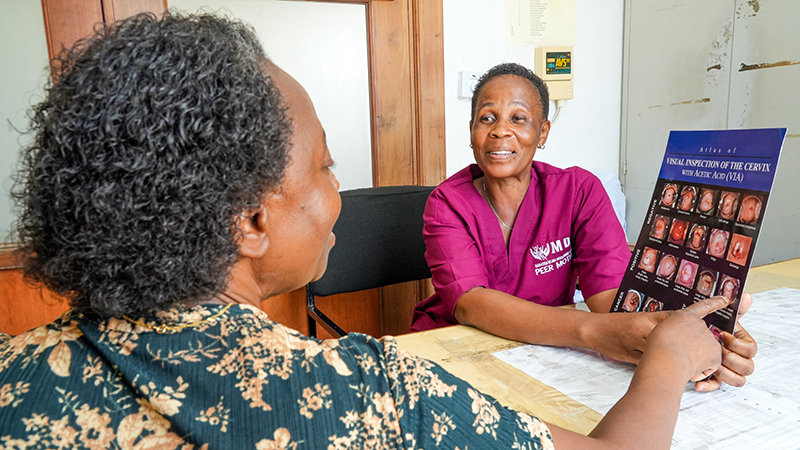
Integrating cervical cancer services with HIV care
Cervical cancer is a preventable and curable disease if diagnosed and treated early; yet it remains the leading cause of cancer-related deaths among women in Tanzania.
Combining cervical cancer services with HIV care is an opportunity to make both HIV and cervical cancer care more effective and easier to adhere to. Service integration aligns treatments, reduces complications, and supports patients through a complex journey—leading to better treatment outcomes and quality of life.
Many women are unaware of the importance of early cervical cancer screening, and in under-served communities, detection and treatment services are limited or nonexistent. For women living with HIV, the barriers can be even greater. Fear of facing another serious, long-lasting health condition can delay screening and early detection.
CDC is helping change that.
Since 2012, CDC through the U.S. President's Emergency Plan for AIDS Relief (PEPFAR), has supported the government of Tanzania to integrate cervical cancer detection and treatment into existing HIV platforms, where the most vulnerable women—those living with HIV—are already receiving HIV treatment.
Between October 2020 and September 2024, CDC Tanzania:
- supported almost 970,000 cervical cancer screenings, reaching over 675,000 women living with HIV for their first cervical cancer screening.
- detected nearly 25,000 precancer lesions (abnormal cervical cells that have the potential to develop into cancer) among women living with HIV, with 88% completing precancer treatment.
CDC-supported peer educators empower women through cervical cancer screening
Thanks to peer educators in Tanzania like Kissah and Nice, women living with HIV are learning about the importance of regular cervical cancer screening and early treatment, which is resulting in improved detection and successful treatment outcomes. CDC's support for peer educators and provision of life-saving care for both HIV and cervical cancer is saving lives and building long-term capacity within communities.
Kissah's journey: a champion for health
Kissah, a woman living with HIV, is a powerful champion who was diagnosed with cervical precancer and received timely treatment. She is now using her testimony to reach women living with HIV, raising awareness about the importance of cervical cancer screening and early treatment on their health. She also works to educate others about the actions women can take to ensure they, and their children, live healthy lives.
- Kissah
Nice's story: from fear to inspiration
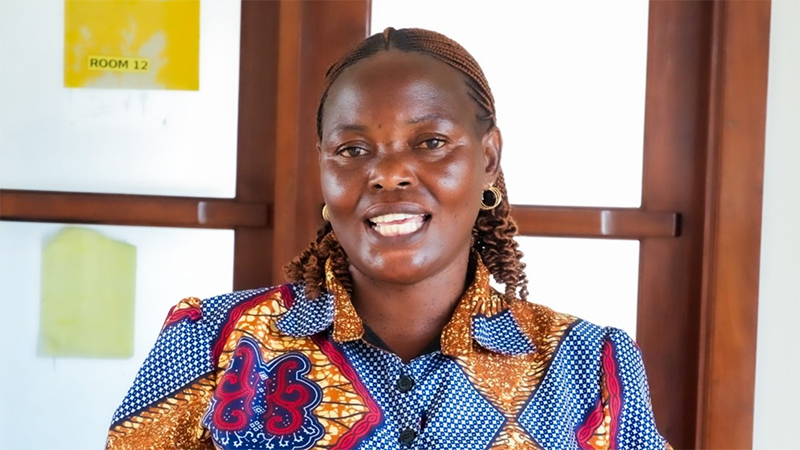
Nice's journey from fear to empowerment exemplifies the impact of screening and treatment. A mother of three, Nice was diagnosed with HIV in 2013. A year later, after learning about cervical cancer, she decided to get screened and tested positive for precancerous lesions. But thanks to timely cervical precancer treatment, and daily antiretroviral therapy to manage her HIV, she maintained her health and gave birth to an HIV-free baby a year later.
Nice, having experienced the fear and uncertainty of receiving two serious diagnoses, decided to become a peer educator to help other women. She now uses her personal story to raise awareness in her community, including at the hospital, local churches, and women's associations. Her dedication has resulted in a doubling of the number of women being screened for cervical cancer in her area and accessing lifesaving treatment.
- Nice
For the last 10 years, she has continually screened negative for cervical cancer. She encourages women living with HIV to get screened and seek treatment. Her work as a peer educator continues to inspire women in Tanzania to take control of their health and futures.
Towards a cancer-free future
The impact of CDC and the Government of Tanzania's efforts extends far beyond these individual stories. Kissah and Nice are showing what is possible when lifesaving cervical cancer services are integrated with HIV care and reinforced by trusted voices in the community.
By connecting women living with HIV to screening, treatment, and continued care, CDC is helping more women in Tanzania and across sub-Saharan Africa protect their health and move toward a future where women living with HIV no longer have to fear cervical cancer.
This page was last updated on this date. Updates may include minor edits, image changes, or other modifications to page content.
The information on this page was last reviewed by subject matter experts to ensure accuracy.