



What to know
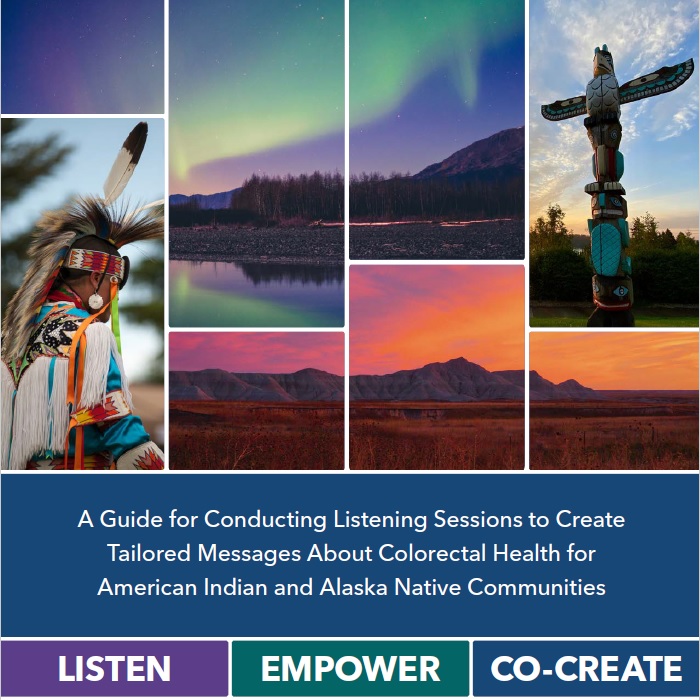
This guide helps public health programs develop tailored messages to increase colorectal cancer screening among American Indian and Alaska Native communities.
Overview
CDC's National Comprehensive Cancer Control Program funded development of this guide. It addresses cultural barriers to health communication such as community dynamics and language preferences, and builds on the communities' strengths and commitment to health. Health communication can be tailored by incorporating community stories that highlight culture and resilience. Tailored messages can increase health behaviors such as getting cancer screenings.
This guide explains how to conduct a community engagement session, also known as a Listening Session. It is designed to help public health programs:
- Learn from Indigenous populations about barriers to and gaps in care (listen).
- Share health information in a collaborative way (empower).
- Develop messages and materials that motivate community members to take control of their own health (co-create).
Who should use this guide?
This guide is intended for public health program leaders who are working to increase colorectal cancer screeningin American Indian and Alaska Native tribal communities. These individuals can use the community engagement process described in this guide to create tailored messages that promote colorectal cancer screening.
Additional resources (videos, clinic posters, and postcards) co-created with tribal communities to increase colorectal cancer screening are available.
This page was last updated on this date. Updates may include minor edits, image changes, or other modifications to page content.
The information on this page was last reviewed by subject matter experts to ensure accuracy.