500 Cities Project: Local data for better health

The 500 Cities project is a collaboration between CDC, the Robert Wood Johnson Foundation, and the CDC Foundation. The purpose of the 500 Cities Project is to provide city- and census tract-level small area estimates for chronic disease risk factors, health outcomes, and clinical preventive service use for the largest 500 cities in the United States. These small area estimates will allow cities and local health departments to better understand the burden and geographic distribution of health-related variables in their jurisdictions, and assist them in planning public health interventions. See bottom of page for the note for data users. Learn more about the 500 Cities Project.
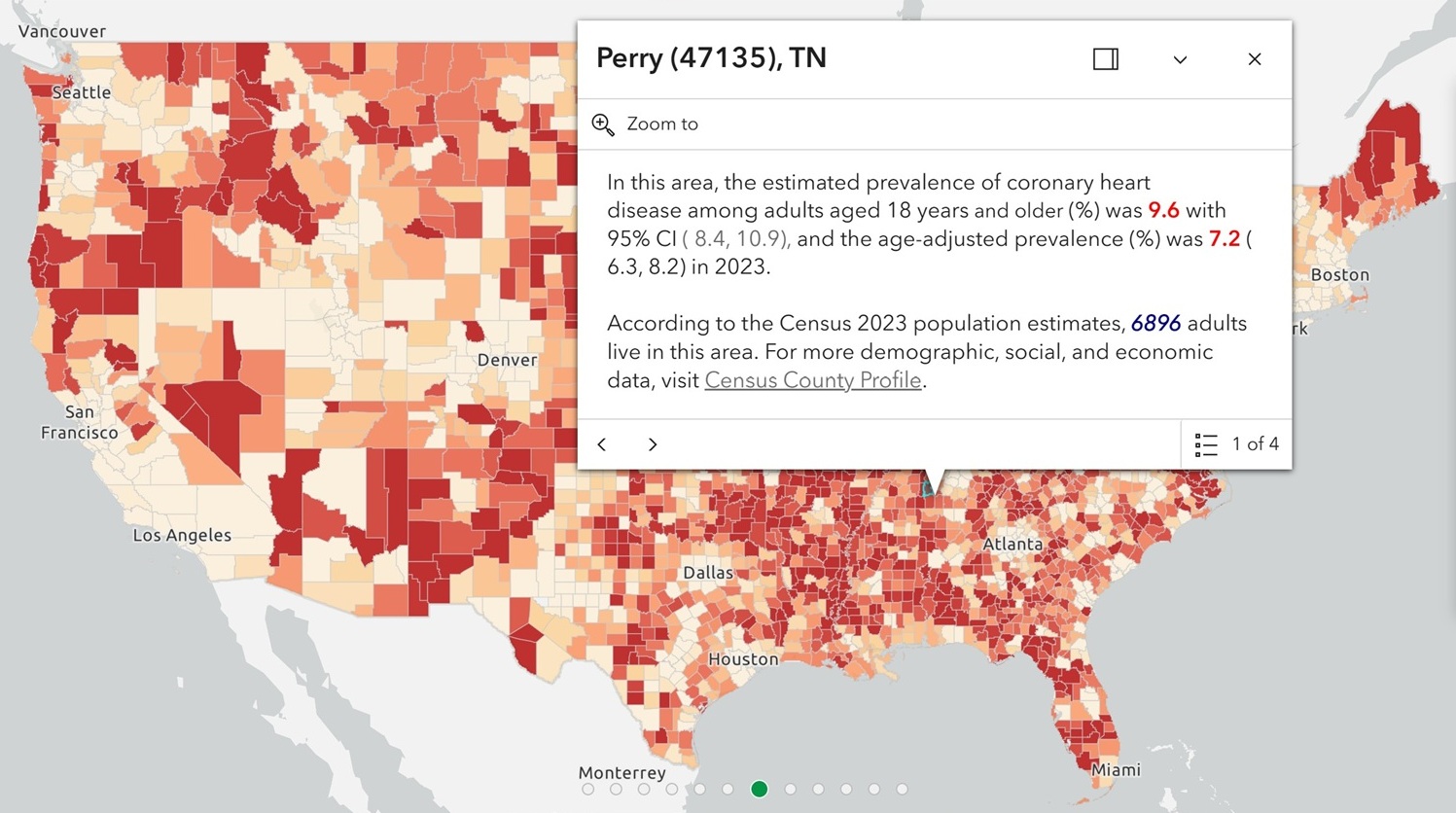
Select a measure to view data for the 500 largest cities in the United States and their census tracts.
Measure definitions(https://wwwdev.cdc.gov/500cities/measure-definitions.htm)
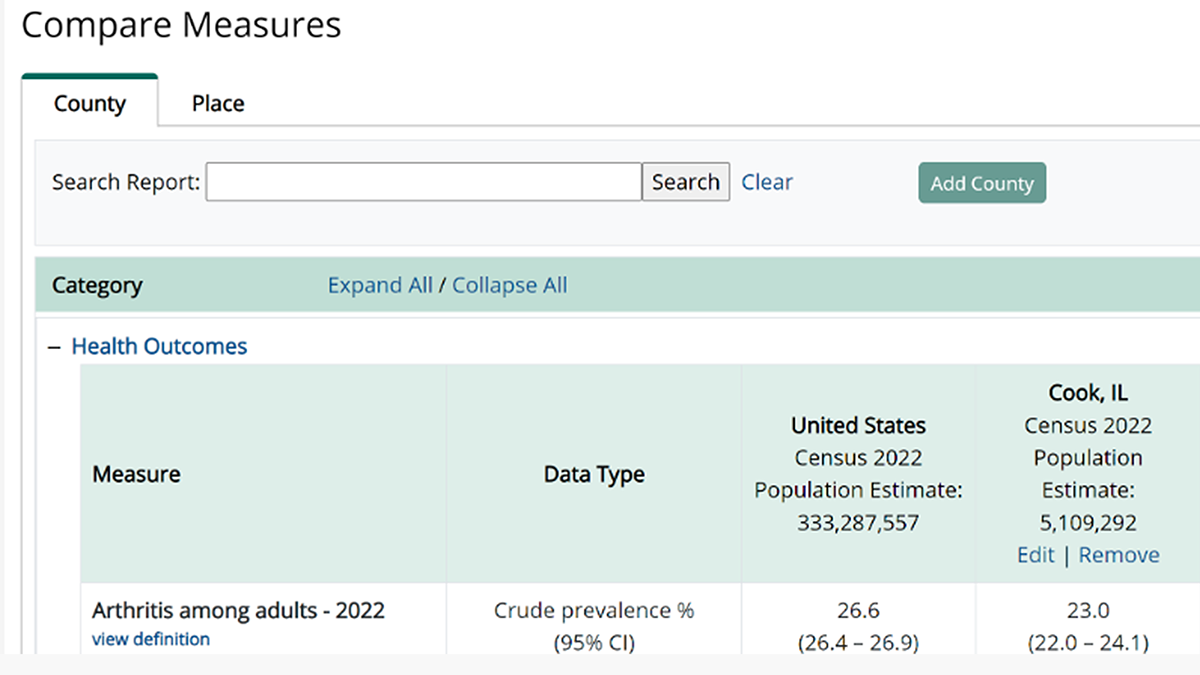
Compare up to three cities for all measures. Start by selecting one city.
Go to the 500 Cities Data Portal to download the data, create a custom report, customize visualizations, and more.
For the 2019 data release, 7 of the 27 measures based on BRFSS data could not be updated because the measures are only included in the even-year BRFSS administration. These 7 measures are: all teeth lost, dental visits, mammograms, Pap tests, colorectal cancer screening, core preventive services among older adults, and sleep less than 7 hours. However, earlier estimates based on 2016 BRFSS data for these 7 measures remain available.
Since the Pap tests data were carried over from the 2018 release, the same explanation applies to 2019 data as well. Data for Pap smear use among adult women aged 21-65 years were not available from the 2016 Behavioral Risk Factor Surveillance System for 8 states and were therefore not available for 47 cities and their census tracts in those 8 states for the 500 Cities project. The affected states are Arizona, Arkansas, Connecticut, Maryland, New Hampshire, Rhode Island, Vermont, and Washington.
In 2019, we were able to publish 500 Cities data as feature services for GIS users at ArcGIS Living Atlas of the Worldexternal icon. The services are:
- 2019 release at https://cdcarcgis.maps.arcgis.com/home/item.html?id=7f48652a35424b97b2bc2542c4ef26aeexternal icon
- 2018 release at https://cdcarcgis.maps.arcgis.com/home/item.html?id=04bd589e13c242d98de43e78f90d0d3fexternal icon
- 2017 release at https://cdcarcgis.maps.arcgis.com/home/item.html?id=2064702cb1fe47e5868333f56d4c99d0external icon
- 2016 release at https://cdcarcgis.maps.arcgis.com/home/item.html?id=ea8b721cf9034814bce067ddefd21eccexternal icon
A widget is an interactive web tool that displays the featured content directly on your web page. You can embed content in personalized home pages, blogs, and other sites. Once you’ve added the widget, there’s no technical maintenance. CDC.gov will update the content automatically.
- Programs and Interventions
More information about interventions and related efforts.
Please tell us how you are using 500 Cities data and the 500 Cities website. Your feedback is valued and greatly appreciated.