



Key points
- Do you have pain or burning when you urinate? You might have a urinary tract infection (UTI).
- UTIs are common infections that happen when bacteria enter the urethra and infect the urinary tract.
- Antibiotics treat UTIs. A healthcare professional can determine if you have a UTI and what antibiotic you need.
Overview
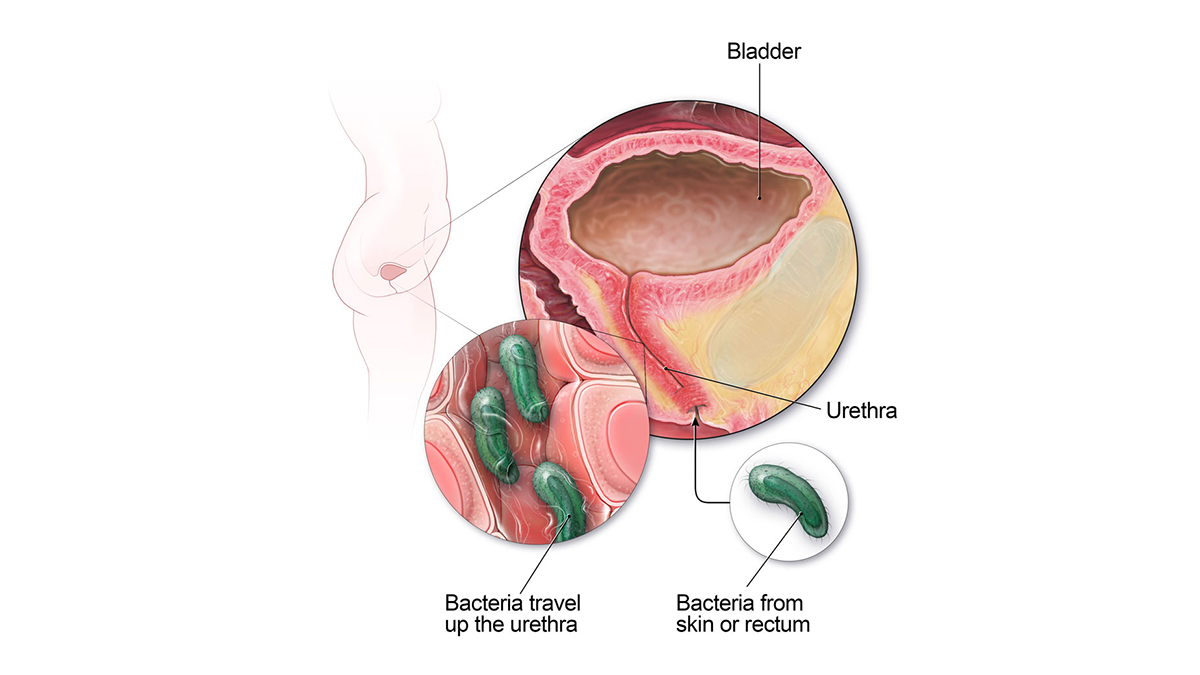
The urinary tract includes the bladder, urethra and kidneys (see figure). Urinary tract infections or UTIs are common infections that happen when bacteria, often from the skin or rectum, enter the urethra and infect the urinary tract.
Female urinary tract
Types
- A bladder infection (cystitis) is the most common type of UTI.
- A kidney infection (pyelonephritis) is less common than bladder infection but is more serious.
Symptoms
Symptoms of a bladder infection can include:
- Pain or burning while urinating
- Frequent urination
- Feeling the need to urinate despite having an empty bladder
- Bloody urine
- Pressure or cramping in the groin or lower abdomen
Symptoms of a kidney infection can include:
- Fever
- Chills
- Lower back pain or pain in the side of your back
- Nausea or vomiting
Risk factors
UTIs are more common in females because the urethra is shorter and closer to the rectum, making it easier for bacteria to enter the urinary tract. When infections occur frequently, this is called recurrent UTI. While recurrent UTIs are more common in females, males—particularly older males—can also develop them. Other risk factors include:
- Recent sexual activity (sexual activity can increase the risk for a UTI, but a UTI is not a sexually transmitted infection [STI])
- Changes in the bacteria that live inside the vagina or vaginal flora. For example, menopause or the use of spermicides can cause these bacterial changes
- Pregnancy
- Age (older adults and young children are more likely to get UTIs)
- Structural problems in the urinary tract, such as enlarged prostate
- A previous UTI
Prevention
There are important actions you can take to help prevent UTIs:
- Urinate after sexual activity
- Stay well hydrated
- Take showers instead of baths
- Minimize douching, sprays or powders in the female genital area
- When potty training girls, teach them to wipe front to back
If you have recurrent UTIs, a healthcare professional may recommend additional steps to help prevent them.
When to seek medical care
See a healthcare professional if you or your child has one or more symptoms of a UTI or for any symptom that is severe or concerning.
Urgent
Diagnosis
A healthcare professional may diagnose a UTI by:
- Asking about your symptoms
- Doing a physical exam
- Ordering urine tests, if needed
If you have recurrent UTIs, a healthcare professional may recommend additional tests, including a urine culture.
Asymptomatic Bacteriuria
Sometimes bacteria can be found in the urine without causing illness. This is called asymptomatic bacteriuria. People with asymptomatic bacteriuria do not have symptoms of a UTI. Asymptomatic bacteriuria is more common in females, older people, and people with certain health conditions.
Most people with asymptomatic bacteriuria do not need treatment. However, some people, such as pregnant women and people planning to have certain urologic procedures, may need treatment. If you do not have symptoms of a UTI, you usually do not need antibiotics.
Treatment
A healthcare professional will prescribe an antibiotic to treat your UTI. Some people with severe UTI may need additional testing and treatment in a hospital.
Impact of antibiotic use on the microbiome
Antibiotics kill harmful germs that cause infections, but they also affect helpful germs that make up your microbiome. The microbiome is the community of germs that live in and on your body. It helps keep you healthy and protects you from infections. When antibiotics disrupt the microbiome, harmful germs can sometimes grow more easily. Using antibiotics only when needed helps protect your microbiome.
How to feel better
- Drink plenty of water or other fluids.
- If a healthcare professional prescribes antibiotics:
- Take all doses as prescribed.
- Do not share them with others.
- Do not save them for later.
- Talk to a healthcare professional about safely discarding leftover antibiotics.
Talk with a healthcare professional if your symptoms do not improve after starting antibiotics, if they get worse, or if you have questions about your treatment.
Similar diseases
Among males, evaluation of the prostate for inflammation or infection (prostatitis) may be needed.
Resources
UTI
Clinical Overview of Urinary Tract Infections
Common Illnesses
For more information on treatment of common illnesses, visit CDC resources:
This page was last updated on this date. Updates may include minor edits, image changes, or other modifications to page content.
The information on this page was last reviewed by subject matter experts to ensure accuracy.