



At a glance
- Access to drinking water gives students a healthy alternative to sugar-sweetened beverages.
- Increasing access to water helps students stay hydrated.
- Staying hydrated may improve cognitive function in children and adolescents.
- Fluoridated drinking water plays a role in preventing dental cavities.
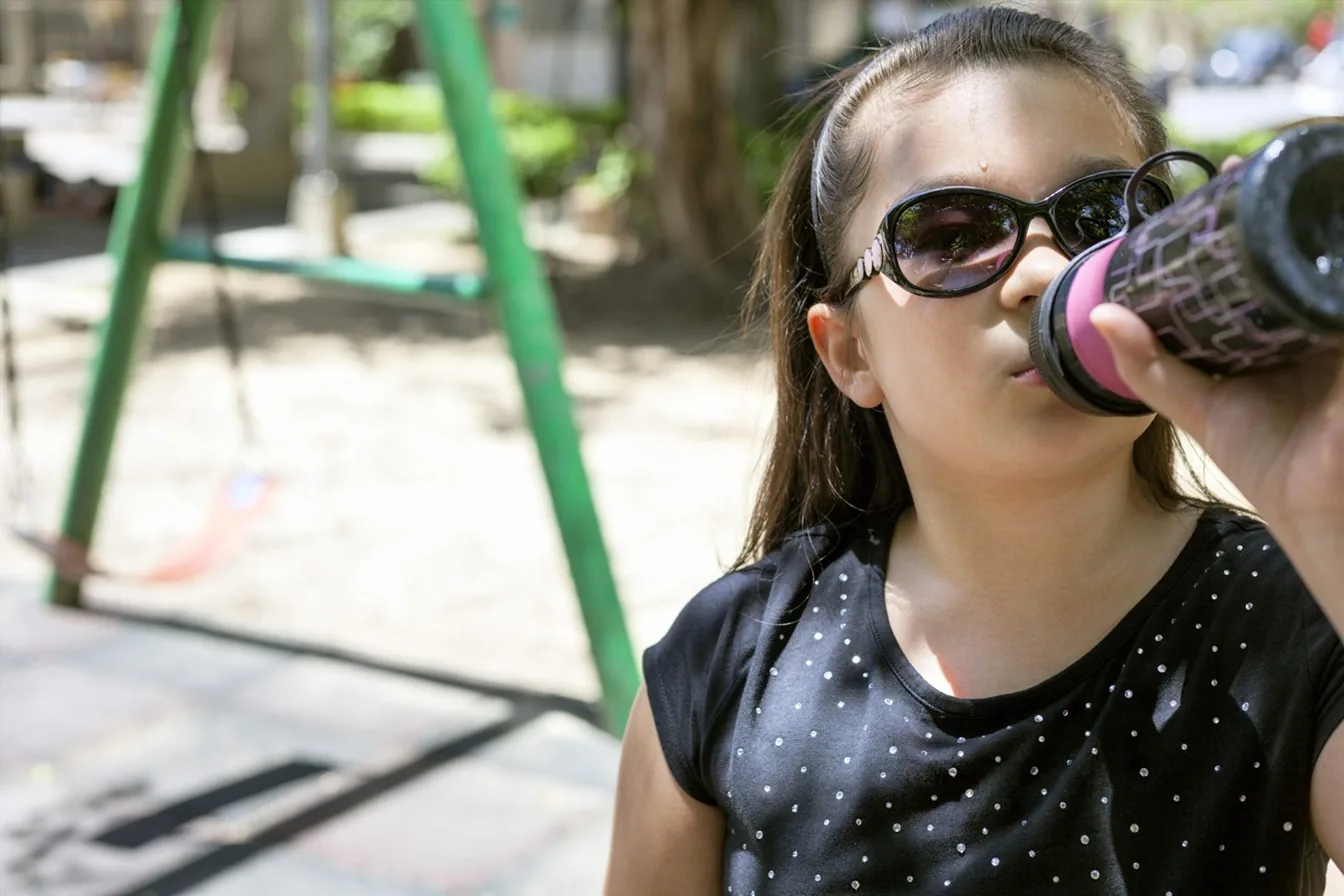
Free drinking water for students
The Healthy, Hunger-Free Kids Act of 2010 requires schools participating in the National School Lunch Program (NSLP) to make free water available to students during mealtimes—where meals are served. The standards also require schools in the School Breakfast Program (SBP) to make drinking water available when breakfast is served.
In addition to these requirements, schools can use other strategies to:
- Ensure that water fountains are clean and properly maintained.
- Provide water fountains, dispensers, and hydration stations throughout the school.
- Allow students to have water bottles in class, or to go to the water fountain if they need to.
U.S. Environmental Protection Agency (EPA) standards and regulations assure that public water supply is clean and safe as it leaves the water utility. However, lead plumbing parts (pipes, fittings, and fixtures) can contaminate water after it leaves the water main. Schools can test the water quality and have a plan in case there is contamination. When tap water may be unsafe to drink, schools can offer drinking water in other ways until the contamination is fixed. This could include installing filtration systems or buying drinking water.
Promote more water consumption
Microlearning modules
These short video training modules guide schools on how to help students drink more water during the day. School staff will learn what can be done to ensure water is available, safe, and promoted as the beverage of choice.
Resources
- EPA | Healthy School Environments
- Keep It Flowing: A Practical Guide to School Drinking Water Planning, Maintenance, & Repair
- CDC | Lead in Drinking Water | Sources of Lead
- National Drinking Water Alliance
- Nutrition and Obesity Policy Research and Evaluation Network (NOPREN) | Drinking Water Work Group
- USDA | Water Availability During National School Lunch Program Meal Service
- USDA | Resources for Making Potable Water Available in Schools and Child Care Facilities
- Model Wellness Policy Language for Water Access in Schools
This page was last updated on this date. Updates may include minor edits, image changes, or other modifications to page content.
The information on this page was last reviewed by subject matter experts to ensure accuracy.
- Kaushik A, Mullee MA, Bryant TN, Hill CM. A study of the association between children's access to drinking water in primary schools and their fluid intake: can water be 'cool' in school? Child Care Health Dev. 2007;33(4):409–415.
- Muckelbauer R, Libuda L, Clausen K, Toschke AM, Reinehr T, Kersting M. Promotion and provision of drinking water in schools for overweight prevention: randomized, controlled cluster trial. Pediatrics. 2009;123(4):e661–e667.
- Wang YC, Ludwig DS, Sonneville K, Gortmaker SL. Impact of change in sweetened caloric beverage consumption on energy intake among children and adolescents. Arch Pediatr Adolesc Med. 2009;163(4):336–343.
- Popkin BM, D'Anci KE, Rosenberg IH. Water, hydration, and health. Nutr Rev. 2010;68(8):439–458.
- Kempton MJ, Ettinger U, Foster R, et al. Dehydration affects brain structure and function in healthy adolescents. Hum Brain Mapp. 2011;32(1):71–79.
- Edmonds CJ, Jeffes B. Does having a drink help you think? 6–7-year-old children show improvements in cognitive performance from baseline to test after having a drink of water. Appetite. 2009;53(3):469–472.
- Edmonds CJ, Burford D. Should children drink more water? The effects of drinking water on cognition in children. Appetite. 2009;52(3):776–779.
- Benton D, Burgess N. The effect of the consumption of water on the memory and attention of children. Appetite. 2009;53(1):143–146.