



Key points
- Prion diseases occur when proteins in the body misfold and cause brain damage and other symptoms.
- Prion diseases are rare; some affect people, and some affect animals.
- Prion diseases always lead to death within months to years after symptoms begin.
- There is no treatment or vaccine for prion diseases.
Overview
Prion diseases occur when proteins normally in the body misfold and cause illness. The misfolding leads to brain damage and other symptoms. Symptoms may take years to develop. But once they do, the disease rapidly progresses and leads to death.
Certain prion diseases affect people, while others affect animals. Prion diseases are very rare, and there's not always a reason people get them. Sometimes, people can get sick with prion diseases from:
- Eating or handling meat contaminated with prions
- Getting infected through organ transplants or being exposed to contaminated equipment during surgery
Prion disease in people
The most common prion disease in people is Creutzfeldt-Jakob disease (CJD). Another prion disease, variant Creutzfeldt-Jakob disease (vCJD), has a similar name but is a different, much rarer, disease.
Other prion diseases include kuru, variably protease-sensitive prionopathy, sporadic fatal insomnia, and inherited forms caused by genetic mutations.
Creutzfeldt-Jakob disease (CJD)
CJD causes a person's brain to break down or stop working normally. Once symptoms start, the disease progresses quickly. It is always fatal, usually within a year.
CJD is sometimes called "classic CJD" to avoid confusion with variant CJD. Most cases of classic CJD are in older people. They appear sporadically, meaning there's no known reason that cases begin.
A smaller number of cases occur in people who inherited genetic changes that make them prone to CJD. Occasionally, there have been CJD illnesses in people who were exposed to surgical equipment or other products contaminated with prions.
variant CJD (vCJD)
vCJD is tied to eating beef from a cow that had a prion disease called Bovine Spongiform Encephalopathy (BSE).
vCJD was discovered in 1996 in the United Kingdom. Though very rare, when it does occur, vCJD often infects people in their 20s or younger. It causes neurological symptoms and behaviors, as well as pain when touching things (dyesthesiasis).
There have been only four vCJD cases reported in the United States. All occurred in people who were likely exposed to BSE outside the United States.
How animals are affected
There are a number of known prion diseases in animals, and they're all very rare. The two best known in the United States are Bovine Spongiform Encephalopathy (BSE) and Chronic Wasting Disease (CWD).
Bovine Spongiform Encephalopathy (BSE)
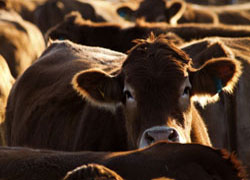
BSE affects cows. The first cases of BSE were identified in the mid-1980s. However, BSE didn't gain widespread attention until a major outbreak in the United Kingdom during the late 1980s-90s affected millions of cows.
By 2005, 24 countries, almost all in Europe, had reported BSE among native cattle.
The first BSE case in North America was reported in 1993 in a cow imported into Canada from the United Kingdom. Additional BSE cases were identified in Canada beginning in 2003.
Later that year, a cow in Washington state also tested positive. The cow had been imported from a Canadian farm and was likely exposed there. This case remains the only classic BSE case identified in the United States, although cases of atypical BSE have been found.
Experts eventually concluded that the BSE spread in cattle was likely tied to feeding practices. Cows were fed meat and bone meal from other cows that had prion disease. These practices have since changed.
Chronic Wasting Disease (CWD)
CWD affects animals like deer, elk, moose, and reindeer. It has been found in the United States, Canada, Norway, Finland, and Sweden. Imported cases have also been reported in South Korea. First recognized in Colorado in the late 1960s, CWD has now been identified in 32 U.S. states.
Though there have been no cases of CWD in people, experts think it may be possible because CWD is related to BSE, which has caused disease in people. If CWD could spread to people, hunters and people who eat meat from CWD-infected animals would likely be most at risk.
Resources
- THE PUBLIC HEALTH IMPACT OF PRION DISEASES (cdc.gov)
- TRANSMISSIBLE SPONGIFORM ENCEPHALOPATHIES IN HUMANS
- Prion Diseases | NIAID: National Institute of Allergy and Infectious Diseases
- National Prion Disease Pathology Surveillance Center
- World Health Organization infection control guidelines for transmissible spongiform encephalopathies, 1999