



What to know
Prevent respirable crystalline silica (RCS) exposures and control dust when working around materials that contain crystalline silica such as concrete, mortar, granite, and natural and engineered (artificial) stone. Follow safe work practices and use engineering controls for equipment or processes to protect workers from health risks.

Exposure prevention
Following a layered approach, like the hierarchy of controls, can prevent workplace exposures and protect workers from RCS. It includes elimination, substitutions, engineering controls, administrative controls, and personal protective equipment (PPE).
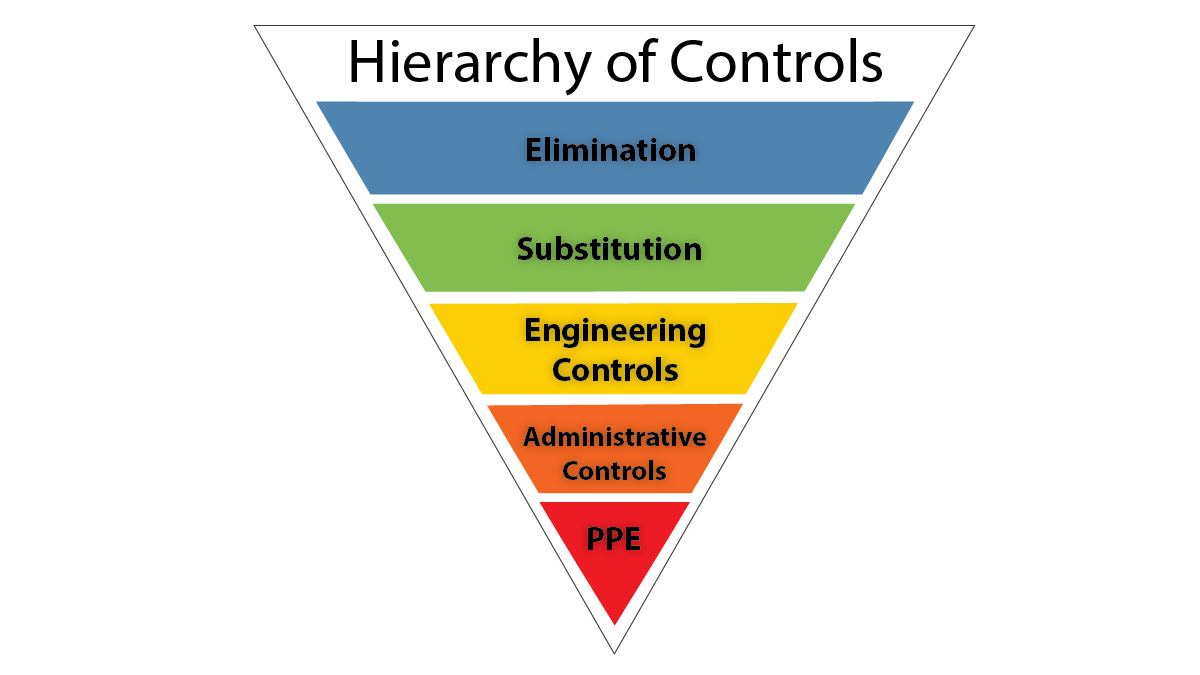
Engineering controls are interventions used to eliminate or reduce exposures and work more safely around hazards. Incorporating engineering controls is beneficial because they reduce work-related injuries and illness. It's important to ensure all engineering controls are working properly before using them.

Using water spraying methods to cut stone can prevent dust exposure. Wet methods that use water sprays can be used to suppress dust emission. There are also dry methods to reduce dust such as ventilation controls that use vacuums and high efficiency particulate air (HEPA) filters.
- Use local exhaust ventilation where work is dusty.
- Use enclosures, when available, to isolate work processes.
- Use both water and ventilation controls when possible.
- Replace water and air filters when needed or per manufacturer's instructions.
- Avoid dry sweeping or using compressed air during housekeeping procedures.
The 2026 NIOSH and OSHA Hazard Alert recommends using the hierarchy of controls. The document compiles research on the health risks of RCS to workers exposed during countertop manufacturing, finishing, and installation.
The NIOSH Directory of Engineering Controls provides resources to help implement workplace controls. Other resources include:
- Occupational Safety and Health Administration (OSHA) Construction Guide
- OSHA Guide for General Industry and Maritime
- NIOSH Mining Dust Control Handbook
The NIOSH Engineering and Physical Hazard Reports include research described in an assortment of report types. Go to Workplace Survey Reports to view these reports.
Ensuring worker protection
Occupational Safety and Health Administration
Under the OSHA Respirable Crystalline Silica Rule, employers are responsible for protecting workers from exposure to silica. This includes controlling dust levels below the permissible exposure limit (PEL) of 50 µg/m3 (micrograms of RCS per cubic meter of air) as an 8-hour time weighted average. A PEL is the maximum daily concentration that workers can be exposed to for a working lifetime without adverse health effects.
Go to the OSHA Respirable Crystalline Silica webpage for more information on requirements for employers. Employers in states that have an OSHA-approved state plan should follow the applicable standards.
Mine Safety and Health Administration
Miners can be exposed to high levels of RCS dust. Exposure can occur during mine operations such as extraction, transport, and processing. To protect exposure to mine workers, the 2024 Mine Safety and Health Administration (MSHA) Respirable Crystalline Silica Rule adopted a PEL of 50 µg/m3 for a full shift, calculated as an 8-hour time-weighted average, similar to the PEL used by OSHA. Implementation is delayed pending the outcome of legal challenges.
Mining operators can go to the NIOSH Mining webpage for silica-related requirements and safe mining guidance.
Respiratory protection
Employers should provide workers with respiratory protection when dust controls and safe work practices cannot limit exposures below exposure limits. Find out more on respirators by going to NIOSH Respirator Types and Use and Occupational Safety and Health Administration Respiratory Protection.
Medical surveillance programs
Employers should provide workers with medical monitoring or surveillance programs. This includes:
- Medical exams as required by OSHA.
- Worker training about the hazards of silica exposure, tasks where exposures can occur, and ways to limit exposure.
Employers should also keep records of worker exposures and medical exams.
This page was last updated on this date. Updates may include minor edits, image changes, or other modifications to page content.
The information on this page was last reviewed by subject matter experts to ensure accuracy.