



Key Points
- Rapidly expanding use of Additive Manufacturing (3D Printing) can expose workers to potential safety and health hazards.
- NIOSH conducts research and provides recommendations for workers to support the safe and responsible deployment of this technology.
Overview
Additive manufacturing technologies are rapidly expanding in use and accessibility. Large numbers of people use this technology daily. Additive manufacturing technologies pose potential hazards to users. NIOSH is performing research to understand and minimize potential health and safety risk to the American worker.
Definitions
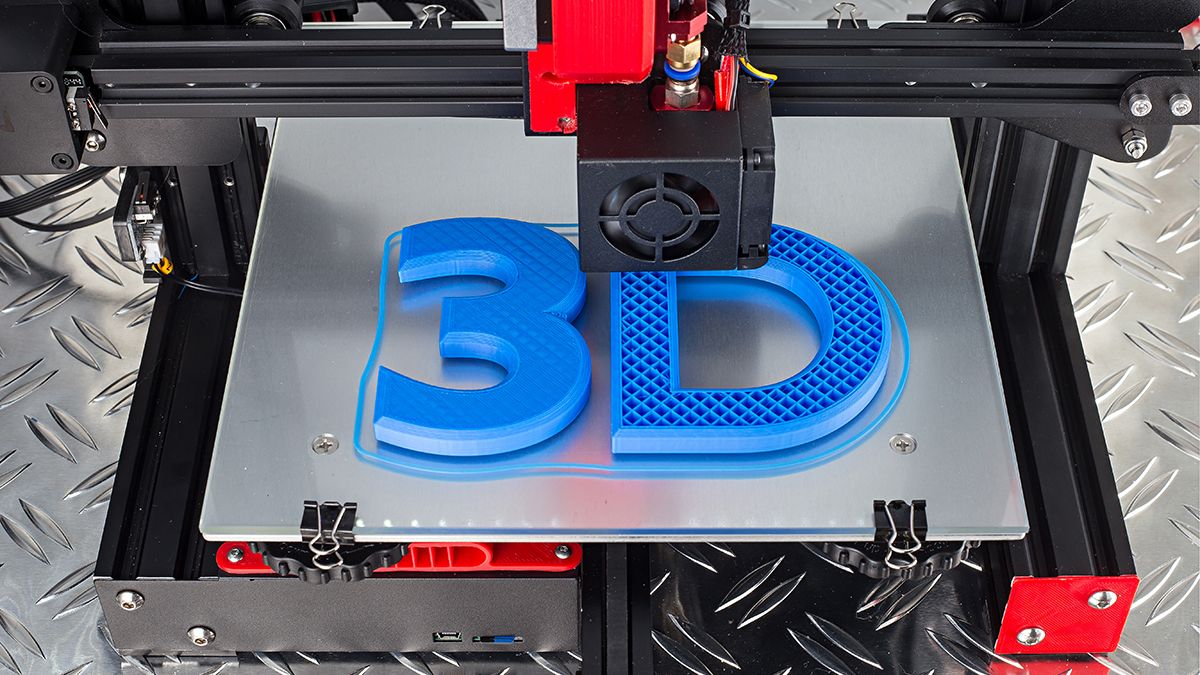
Additive manufacturing (also called 3-dimensional or 3D printing) is a set of technologies that assemble objects from smaller pieces of material. Examples of these technologies include fused filament fabrication, vat polymerization, or powder bed fusion.
Once just used for prototyping, these techniques are becoming less expensive and are used in production. Additive manufacturing techniques affect the automotive, aerospace, electronics, medical, and consumer markets.
What are the types of hazards?
Additive manufacturing hazards vary widely depending on the technology, materials used and environmental use
- Inhalation of materials used in powdered form may occur. Materials may emit VOC's during 3D printing.
- Dermal exposure to powdered and liquid hazardous materials
- Risk of fire or explosion from flammable or combustible substances.
- Mechanical or ergonomic injury from machine support and maintenance, loading and handling of build materials, and handling of products.
What is NIOSH doing to help?
NIOSH is conducting research on safe additive manufacturing to identify knowledge gaps, to develop robust science necessary to advance understanding in the field, and to best apply these developments in order to protect the American worker.
One pillar of this effort is traditional, laboratory-based research to answer key questions and solve major problems for safe additive manufacturing. Laboratory studies have indicated that fused filament fabrication desktop printers emit respiratory irritants, that filament material and coloration significantly affected volatile organic compound emission rates, and that printing with nanomaterial containing filaments led to emission of nanomaterial containing particulate matter
A second pillar is that comprehensive exposure assessments have been performed by the NIOSH Nanotechnology and Advanced Materials Field Studies Team at ten different additive manufacturing sites. Fieldwork allows NIOSH to fill knowledge gaps on real-world technologies, uses, and exposures.
NIOSH continues to perform both laboratory and field studies, to determine the hazards and potential for worker exposures while using emerging technologies such as additive manufacturing. Please reach out to us if you are interested in finding out more information or having this team visit your facility.
Resources
- Approaches to Safe 3D Printing: A Guide for Markerspace Users, Schools, Libraries, and Small Businesses
- How to Reduce Exposures When 3D Printing with Plastic Filament
- NIOSHTIC-2 search results on Advanced Manufacturing. NIOSHTIC-2 is a database of occupational safety and health publications funded in whole or in part by NIOSH.
- Stefaniak A, LeBouf R, Yi J, Ham J, Nurkewicz T, Schwegler-Berry D, Chen B, Wells J, Duling M, Lawrence R, Martin S, Johnson A, & M. Virji M. (2017) Characterization of chemical contaminants generated by a desktop fused deposition modeling 3- dimensional Printer, Journal of Occupational and Environmental Hygiene, 14:7, 540-550, DOI:10.1080/15459624.2017.1302589
- Stephens B, Azimi P, El Orch Z, & Ramos T. Ultrafine particle emissions from desktop 3D printers. (2013) Atmospheric Environment, (79) 334-339. https://doi.org/10.1016/j.atmosenv.2013.06.050
- Yi J, Duling M, Bowers L, Knepp A, LeBouf R, Nurkiewicz T, Ranpara A, Luxton T, Martin S, Burns D, Peloquin D, Baumann E,Virji M, & Stefaniak A. (2019) Particle and organic vapor emissions from children's 3_D pend and 3-D printer toys, International Forum for Respiratory Research, 31:13-14, 432-445, DOI: 10.1080/08958378.2019.1705441
- Dunn KL, Dunn KH, Hammond D, & Lo S. (2020) Three-dimensional printer emissions and employee exposures to ultrafine particles during the printing of thermoplastic filaments containing carbon nanotubes or carbon nanofibers. Journal of Nanoparticle Research. 22, 46 (2020). https://doi.org/10.1007/s11051-020-4750-8