


At a glance
- Infants with HIV need treatment quickly, but in Namibia, early infant HIV test results could take weeks to reach clinics, delaying lifesaving treatment.
- CDC and partners strengthened testing and digital systems, cutting turnaround time from over 20 days to six.
- Faster results mean infants diagnosed with HIV can begin treatment sooner, reducing missed opportunities for care as Namibia advances toward eliminating mother-to-child transmission of HIV.
Closing a Critical Gap in Infant HIV Care
For babies infected with HIV, time is critical. Newborns and infants who acquire HIV from their mothers during pregnancy, childbirth, or breastfeeding are among the most vulnerable patients in any health system. Without rapid diagnosis and treatment, HIV can progress quickly, leading to severe illness and even death within the first years of life. In the absence of treatment, approximately 50% of infants with HIV die by age 2, and about 75% die by age 5.
Namibia has made remarkable progress in preventing mother-to-child transmission of HIV. In February 2024, the country achieved Bronze Tier status on its Path-to-Elimination framework. This milestone means that mother-to-child transmission of HIV is below 5% and reflects years of successful prevention efforts. Across the country, all Namibian health facilities now offer testing for HIV-exposed infants, supported by a strong national laboratory network.
However, even as mother-to-child transmission rates fell, challenges remained. Receiving a diagnosis for the infants who became infected often took too long, which prevented an immediate start of life-saving antiretroviral therapy (ART). Addressing this gap became a top priority for the CDC team in Namibia. CDC experts worked intensely with Namibia's Ministry of Health and Human Services to improve clinical conditions.
- Katherine (Katie) Battey, Former Lead (2020–2024), Maternal and Child Health Team, CDC Namibia
The race against time
In 2023, turnaround times for diagnosis of infant HIV could be three weeks or more. For an infant living with HIV, those lost weeks could mean the difference between timely treatment and serious illness, or death.
Namibia relies exclusively on dried blood spot (DBS) samples for early infant diagnosis (EID) of HIV. A few drops of blood collected from an infant's heel are placed on a special filter paper card, dried, and sent for laboratory analysis. While the process sounds simple, it involves multiple steps. Samples must be collected correctly, dried properly, transported to regional or national laboratories, tested, and finally, the results must be returned to the health facility that requested them. Delays at any point can slow the entire process.
A national effort to improve early diagnosis
To address these challenges, CDC Namibia partnered with the Namibia Institute of Pathology, the Government of Namibia's laboratory service provider, and the Ministry of Health and Social Services during 2024 and 2025 to strengthen every stage of the testing process.
Healthcare workers and laboratory staff were encouraged to treat EID samples as a priority. Through training, supportive supervision, and regular reminders during site visits, previously common issues such as over-dried samples or DBS cards left on drying racks became increasingly rare.
At the laboratory level, regional and national facilities introduced policies requiring EID samples to be tested within 48 hours of arrival. In addition, CDC staff prepared quarterly reports on turnaround times and reviewed the findings with healthcare and laboratory staff. At first, interest in these data was limited, but over time health administrator and clinic staff came to value the opportunity to track and follow up on recurring delays and lost specimens. Updates on test turnaround times soon became a standing item at regional health directorate meetings. These reviews helped identify bottlenecks and guide targeted improvements through CDC's partnerships with local organizations.
From weeks to days: Digital tools bring lifechanging gains
Perhaps the most transformative change came through the introduction of two digital systems that dramatically accelerated the delivery of test results.
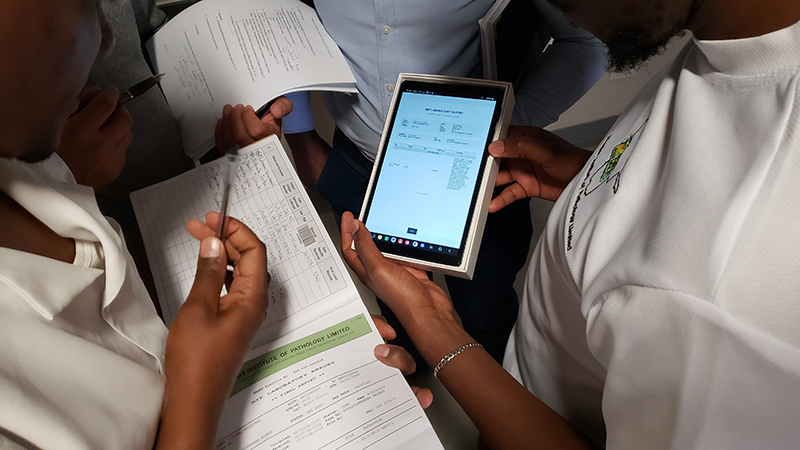
The CDC-supported laboratory information system was upgraded with an online results portal, allowing authorized healthcare facilities to access laboratory results immediately after they were released. Clinics and hospital wards received tablets or computer access, enabling staff to quickly retrieve patient results using requisition numbers from patient files. What previously required days—or even weeks—for physical delivery could now happen instantly.
A second innovation was the introduction of a text-alert system. Whenever a positive infant HIV-test result was confirmed, designated clinicians in each district received an immediate notification on their phone. This allowed healthcare teams to rapidly locate affected infants and begin antiretroviral treatment without delay.
Patients at remote, hard-to-reach facilities benefit particularly from access to online results. Sister Nanvula Mushabati, a nurse at Namibia’s Impalila Island Clinic, confirms: “The digital results were a game changer for us; it shortened the time for infant diagnosis by a whole week.”
Going for gold
The testing and results delivery improvements achieved over the past two years are clearly visible both in national performance data and in everyday clinical practice. However, real challenges remain. Human errors, equipment failures, limited transportation capacity for specimen transport, and occasional difficulties with access to the online portal and unstable internet connectivity can all still cause delays.
Namibia is working to overcome these barriers and aims to build on its successes on the path to eliminating mother-to-child transmission of not only HIV but also hepatitis B, and syphilis. With current recognition at the Bronze Tier for HIV and the Silver Tier for hepatitis B, Namibia continues to advance toward Gold Tier status. Achieving Gold would signify that Namibia has met key targets for eliminating mother-to-child transmission as a public health problem and strengthened sustainable systems that protect mothers and infants.
Namibia's progress demonstrates that even as countries approach elimination of mother-to-child transmission, strengthening systems for rapid diagnosis remains essential.
This page was last updated on this date. Updates may include minor edits, image changes, or other modifications to page content.
The information on this page was last reviewed by subject matter experts to ensure accuracy.