



At a glance
HIV drug resistance (HIV DR) is a serious and growing public health threat that undermines the effectiveness of HIV treatment, fuels the spread of HIV, and drives up costs to economies and healthcare systems.
508 text
Overview
The global scale-up of antiretroviral therapy (ART) has been one of the most significant public health achievements of the past decade, with over 20 million people receiving ART in 2025 through the U.S. President's Emergency Plan for AIDS Relief (PEPFAR). In HIV programs supported by CDC, over 96% of individuals on ART are virally suppressed. Reaching high rates of viral suppression helps prevent the transmission of HIV within communities, significantly reducing the spread of the virus.
The long-term success of ART, however, depends on its continued effectiveness. The emergence of HIV drug resistance (HIV DR) is a serious public health threat that can weaken the effectiveness of treatment options, hinder efforts to control HIV, and increase the risk of severe disease and death. With increased globalization and travel, the rise and spread of HIV DR anywhere in the world poses a direct threat to the health and safety of Americans. Proactively monitoring drug resistance trends overseas provides an early warning system to protect Americans against the emergence of costlier and deadlier strains of HIV.
HIV Drug Resistance with CADRE
CDC leads global efforts to monitor HIV DR, focusing particularly on dolutegravir (DTG)-based regimens, which make up over 90% of ART provided through PEPFAR.
What is CADRE?
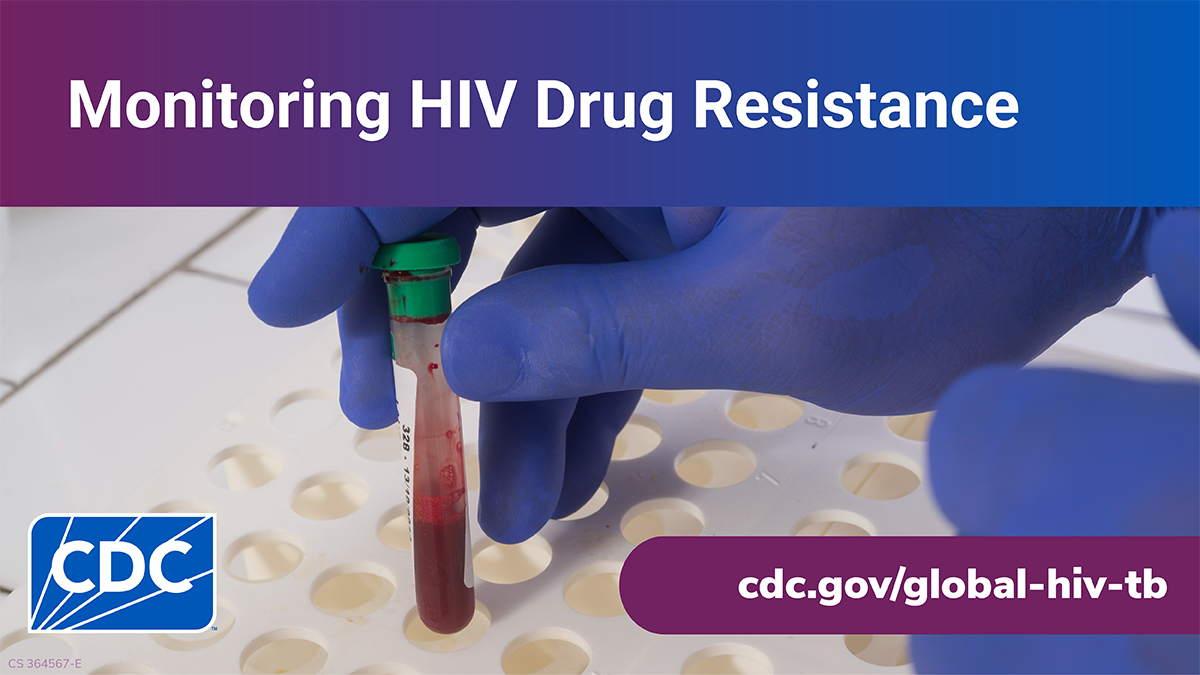
CDC uses the Cyclical Acquired HIV Drug Resistance Surveillance (CADRE), a laboratory-based HIV DR monitoring process. CADRE uses existing laboratory networks to conduct genetic testing on leftover viral load specimens collected for patient care.
CDC strengthens surveillance of HIV DR in countries by:
- guiding laboratories in the procurement of equipment and supplies.
- providing training and technical support.
- ensuring quality assurance.
Data from CADRE is used to:
- Measure resistance to DTG and other antiretroviral drugs in different populations and settings.
- Identify risk factors that increase the likelihood of developing resistance.
- Inform treatment choices when resistance is detected.
- Provide countries with evidence to inform national guidelines, optimize ART regimens, and prioritize resource allocation for a self-sustained HIV response.
Understanding Treatment Effectiveness
Laboratory and clinical surveys show that most patients on DTG-based treatments have low levels of drug resistance, meaning these regimens are still effective. PEPFAR studies found that nearly 4% to 20% of patients who had treatment failure in low- and middle-income countries developed resistance to DTG, suggesting that a change in treatment would not be beneficial. When treatment fails, it is often because patients did not complete their full treatment; therefore, providing support and education is important for preventing HIV DR.
Sustainable, Cost-Efficient Solutions
CDC is leading the implementation of CADRE in 15 countries, building capacity for surveillance, strengthening laboratories, and developing cost-efficient solutions to support countries to self-sustain drug resistance monitoring.
CDC-led innovation cuts HIV DR testing costs by $4 million annually.
CADRE fills an important gap in monitoring HIV DR in settings where it is not feasible to conduct patient-level drug resistance testing. The routine collection and analysis of specimens through CADRE also allows for cost-effective and continuous monitoring of DTG resistance. With CADRE, CDC is creating a stronger surveillance database for in-depth analysis of factors contributing to HIV DR. This data is crucial for helping to guide countries' treatment choices for the large number of patients struggling to achieve viral suppression on DTG-based regimens, preventing severe disease and onwards virus transmission that increase costs to healthcare systems.
What's Next for Monitoring HIV DR?
CDC's work on drug resistance has created enduring laboratory infrastructure that boosts global outbreak detection and response. The establishment of a robust network of genomic sequencing laboratories in countries has been widely used to investigate outbreaks of emerging and high-consequence pathogens, including tuberculosis, malaria, Ebola virus, Marburg virus, influenza viruses, and other pathogens.
CADRE is continuing to provide a unique opportunity to analyze DTG resistance across a substantial number of cases and countries. These insights inform global and national treatment guidelines, ensuring that countries can sustain responsive and effective disease programs. This proactive, data-driven approach minimizes the risk of costly treatment failures in the U.S. and abroad, protects substantial U.S. investments in HIV treatment, and ensures continued progress against HIV, drug resistance, and other emerging health threats.
This page was last updated on this date. Updates may include minor edits, image changes, or other modifications to page content.
The information on this page was last reviewed by subject matter experts to ensure accuracy.