



At a glance
- The 2014 Ebola epidemic exposed major gaps in Guinea's ability to detect and respond to health threats.
- CDC partnered with Guinea in 2016 to establish the Field Epidemiology Training Program (FETP).
- Since its launch, more than 400 FETP disease detectives have strengthened Guinea's public health workforce and improved early outbreak detection and response to prevent the spread of disease to the United States.
Background
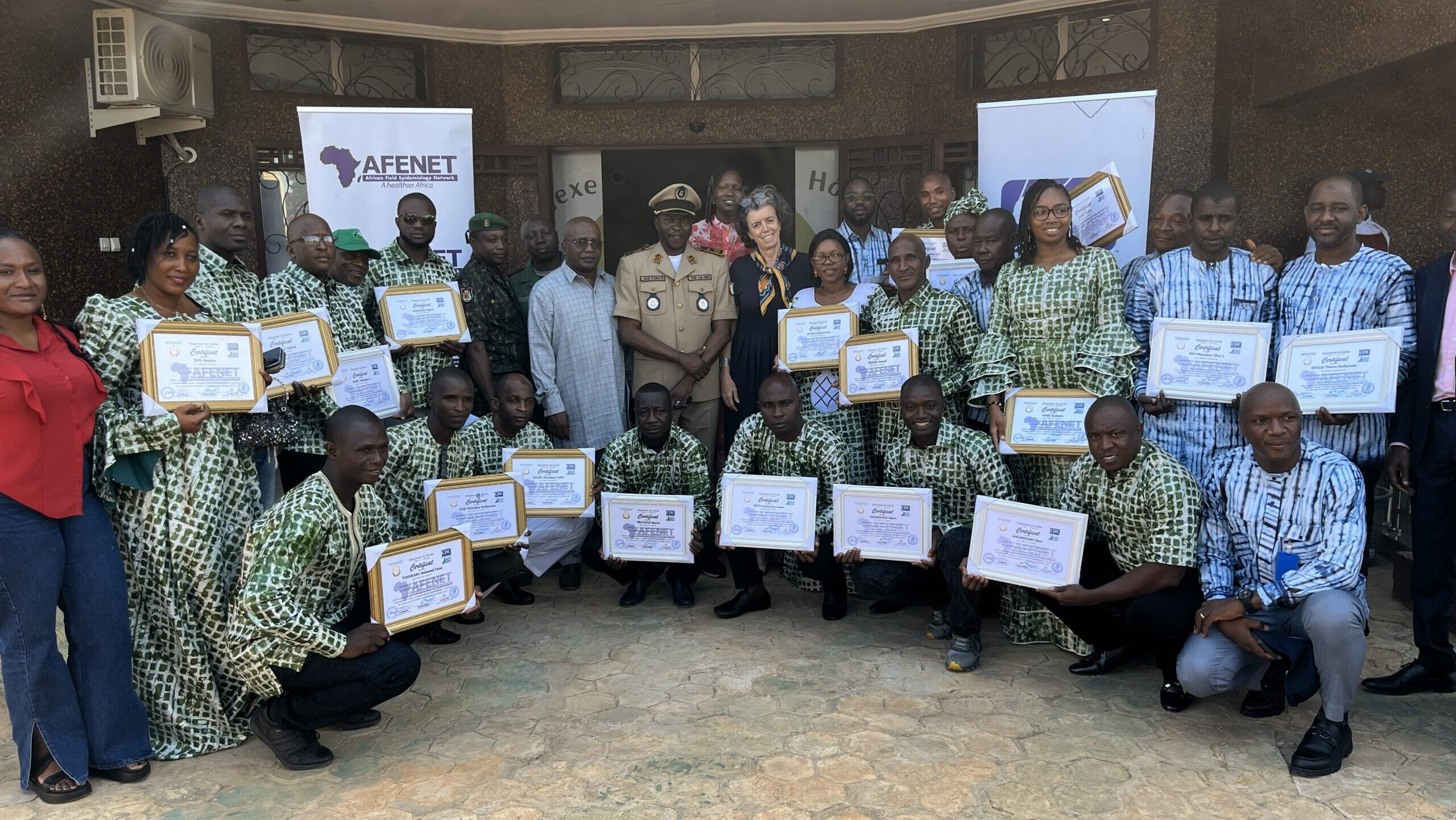
In June 2025, Guinea, a small West African country boarding the Atlantic Ocean, graduated their 12th Frontline cohort. Their impact was immediate. They investigated five outbreaks from mumps, polio, to brucellosis. These Field Epidemiology Training Program (FETP) disease detectives didn't just respond—they also built systems. The cohort developed surveillance bulletins, led 17 analyses on underreporting and inconsistent data, and proposed practical fixes to strengthen district-level health surveillance.
Their work underscores how FETP has advanced CDC's Division of Global Health Protection's (DGHP's) mission in Guinea and made a tremendous impact in the region since its inception 10 years ago. Today, when outbreaks are contained early in Guinea, the spread of disease is prevented from crossing into neighboring countries, stopping outbreaks from reaching the United States.
- Els Mathieu, MD, MPH, CDC Country Director in Guinea
The Challenge
Guinea’s public health system did not always have a strong capacity to detect, respond, and contain outbreaks. In 2014, Guinea was thrust into the global spotlight as Ebola tore through West Africa. The epidemic devastated families and communities, claiming over 2,500 lives in Guinea alone, and exposing deep weaknesses in the country’s ability to detect and respond to emerging health threats. Surveillance systems were fragmented. Data was unreliable. Trained epidemiologists were scarce. Outbreaks had space to spread before action could be taken—often with deadly consequences.
CDC's Efforts
In the wake of the Ebola crisis, DGHP partnered with Guinea's Ministry of Health to chart a new path. Together, they launched FETP in 2016—an initiative designed to transform Guinea's public health workforce into a decentralized, skilled network of outbreak responders. From 2016 to 2025, the African Field Epidemiology Network (AFENET) served as the primary implementing partner, providing technical leadership, mentoring, and operational support while helping transition the program to full government ownership. By accelerating the detection, response, and containment of disease threats, FETP would not only safeguard Guinea, but also strengthen global defenses, including protecting the United States from outbreaks that know no borders.
In addition to its global health partners, Guinea's FETP program's success reflects its close collaboration with CDC's locally employed staff and U.S. based colleagues.
- Els Mathieu, MD MPH, CDC Country Director in Guinea
Impact
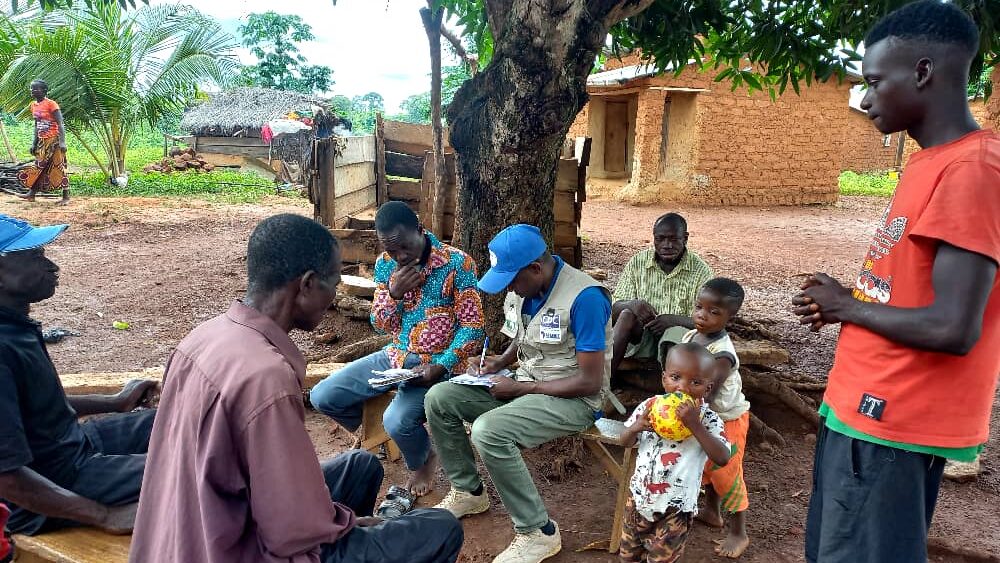
From its start, FETP was built to be practical and hands-on: 25 percent classroom learning, and 75 percent in-the-field training. It was also deliberately cross-cutting, adopting a "One Health" model to train professionals from human, animal, and environmental health sectors. This reflected a simple but powerful truth: the next outbreak might come from anywhere, and only a unified workforce could stop it at its source.
Before FETP, Guinea's health system was ill-equipped to act swiftly. Now, more than 400 professionals have been trained—336 through the 3-month Frontline program, 69 through the 9-month Intermediate program, and 21 through the 2-year Advanced programs done in partnership with neighboring countries. These graduates have been on the frontlines of responses to Ebola, Lassa fever, COVID-19, yellow fever, Marburg virus disease, monkeypox, measles, diphtheria, and brucellosis. Their investigations and operational research have directly improved vaccination coverage, health-seeking behaviors, and outbreak preparedness.
The numbers tell the story: routine surveillance reporting timeliness increased from 60 percent to 90 percent, while report quality measured by completeness and accuracy improved from 66 percent to 93 percent. In Mamou district, FETP-led interventions in 2025 ensured 100 percent consistency between summary surveillance reports and individual-level case data—closing gaps that once hampered effective response.
Voices from the Field
For those who have lived through this transformation, the change is personal:
- Mamadou Bah, Head of Animal Health Section (Mentor, Pita): "FETP gave me clarity. Now I can analyze outbreaks, mentor teams, and influence local health decisions. We must keep training new professionals."
- Bakary Oularé, Physician in charge of diseases (Mentor, Lélouma): "For effective surveillance, we must love what we do. FETP is not just training—it's a commitment."
- Leontine Niamy, Chief Curator of the Nimba Mountains (Graduate, Nzérékoré): "FETP helped me correct under-reporting and lead field audits in private vet clinics. It's a tool for prevention and cross-sector collaboration."
- Ibrahima Kalil Diawara, Surveillance focal point at the DPAE Prefectural Department of Agriculture and Livestock (Graduate, Conakry): "Thanks to the FETP training, I was able to analyze underreporting of diseases and propose concrete solutions. This program gave me a clear understanding of the role I can play in strengthening our surveillance system."
These voices reveal the cultural shift underway: a growing pride in using surveillance data more effectively, a commitment to mentorship, and a belief that local action can prevent global disaster. Over the past nine years, FETP in Guinea has come a long way. The work of these graduates shows how strong partnerships between CDC and the Guinea Ministry of Health—combined with lessons learned from past outbreaks—make achievements like this possible.
Broader Implications
In October 2025, Guinea's Ministry of Health has assumed full management of the FETP program, ensuring that it is firmly embedded within the country's National Health Security Agency. Government leaders are working to secure sustainable funding streams, career pathways for graduates, and performance tracking systems to maximize impact. With this integration, Guinea will not just maintain its progress—it will deepen its leadership in regional outbreak preparedness.
As Nouonan Gbamou, MD, MPH, senior field epidemiologist and FETP Coordinator, Guinea Ministry of Health, put it, "Thanks to FETP, Guinea has become a regional leader in outbreak detection and preparedness."
The story of FETP in Guinea is more than a tale of national resilience—it is a demonstration of how protecting health abroad protects Americans at home. By building a skilled, decentralized workforce, Guinea is not only protecting its own communities but has also become an essential partner in preventing threats that could otherwise spread unchecked and reach the United States.
For CDC, this is precisely the point—every outbreak stopped in Mamou, Nzérékoré, or Conakry is one less chance for a pathogen to leap borders, destabilize economies, or arrive on U.S. shores. From Guinea to the globe, from outbreak to action—this is how U.S. health security and global health security are strengthened.