



At a glance
- CDC experts worked with Guinea partners to quickly detect, investigate, and respond to a monkeypox outbreak.
- Prior investments in workforce development and preparedness, including Field Epidemiology Training Program (FETP) training, ensured responders were ready to act when the outbreak emerged.
- Rapid coordination, strengthened surveillance systems, and community engagement limited transmission and build lasting capacity for future health threats.
The Challenge
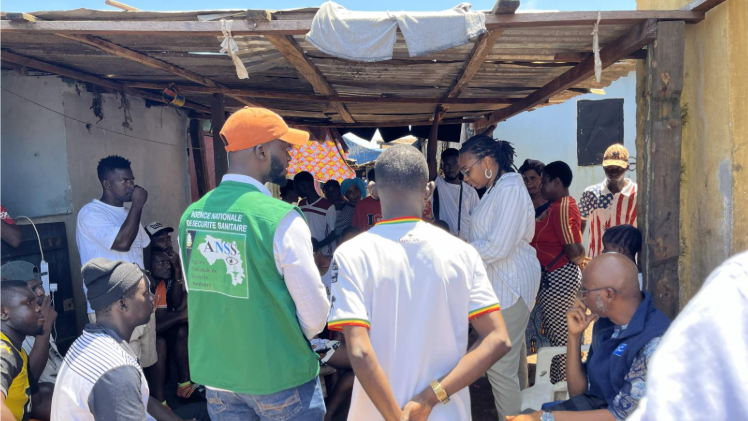
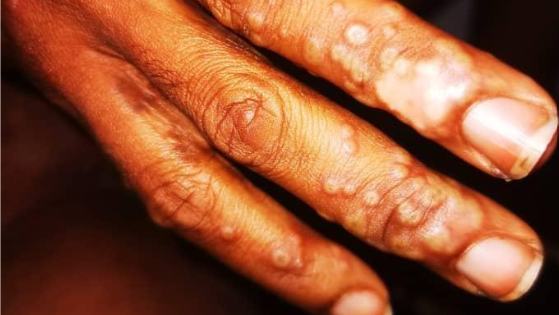
In June 2025, Guinea was facing its largest monkeypox outbreak to date. Monkeypox is a viral disease that spreads through close, often intimate contact, causing painful lesions and other symptoms, severe illness, and in some cases, death. What began as a small number of clade II monkeypox cases in Conakry, the nation's capital, soon began to spread.
As the outbreak expanded, CDC deployed global health security experts who worked closely with monkeypox subject matter experts and national partners. On-the-ground support helped to rapidly detect, track, and contain the outbreak at its source, moving quickly to contain a potentially deadly virus. Through a coordinated response, CDC played a critical role in slowing transmission, limiting further spread, and reducing the risk of the virus reaching the United States — helping protect communities both abroad and at home.
- Els Mathieu, MD, MPH, CDC Guinea Country Director
A Rapidly Expanding Outbreak
Early infections were largely among adult men, who often presented with visible monkeypox lesions. Available data suggested the outbreak was spreading through sexual transmission, like patterns seen in neighboring West African countries affected by recent clade I outbreaks.
Within weeks, cases spread beyond Conakry into seven regions, with weekly totals surging to as many as 99 nationwide.
By December 11, 2025, Guinea had reported 1,894 confirmed cases, including five deaths.
The outbreak highlighted the urgent need to find cases faster and strengthen laboratory testing capacity for quicker and more accurate results. It also underscored the importance of tracking individuals who may have been exposed and better understanding how monkeypox was spreading within communities.
The situation demanded speed, precision and coordination.
CDC Support on the Front Lines
For more than a decade, CDC had been working with Guinea's Ministry of Health as a trusted partner strengthening disease surveillance, laboratory systems and outbreak response capacity. When the Ministry of Health asked CDC to assist with the outbreak, CDC's experts stepped up.
CDC in collaboration with the Ministry of Health, the National Institute of Public Health (INSP), and the National Health Security Agency (ANSS), focused on what mattered most in the moment. Teams worked to find suspected cases sooner, confirm them quicker, and strengthen contact tracing so potential exposures didn't slip through the cracks. They also connected data across teams, turning scattered information into a clearer picture of how the outbreak was unfolding, helping responders move faster.
- CDC Guinea Regional Associate Director Kathleen Gallagher, D.Sc., MPH
CDC supported the deployment of eight Field Epidemiology Training Program (FETP) graduates and 18 contact tracers to the most affected districts in Conakry and Kindia over a 12-week period. Both graduates and contact tracers worked case by case — identifying infections, tracing contacts, and helping local health workers respond quickly. Each connection mapped meant another opportunity to stop the virus from spreading further.
Strengthening Laboratory Capacity Became Critical
CDC Guinea, working with CDC poxvirus laboratory experts, provided technical support to the National Institute of Public Health (INSP). This included helping the laboratory connect to the International Reagent Resource (IRR) platform to directly access the reagents and supplies needed to detect and confirm monkeypox cases. CDC poxvirus laboratory experts also provided virtual training on how to use diagnostic tests capable of identifying viruses like monkeypox, and ensured the laboratories had the tools and supplies needed to carry out testing. Together, this support strengthened INSP's independence, enabling the laboratory to manage its own supply orders and sustain testing capacity without relying on external coordination.
Behind the scenes, stronger data systems helped turn information into action. Through support to implementing partner, AFENET, Guinea expanded its use of DHIS2 to track monkeypox cases and strengthen coordination across national response teams, resulting in clearer situational awareness and faster, more targeted decision-making.
Closing the Investigation Gap
As the outbreak evolved so did the response.
By December, CDC identified a critical gap: the need to better understand how monkeypox was spreading through close and sexual contact, and who was most at risk. Early investigations showed that many cases involved close and sometimes intimate contact, but this information was not being consistently or safely collected.
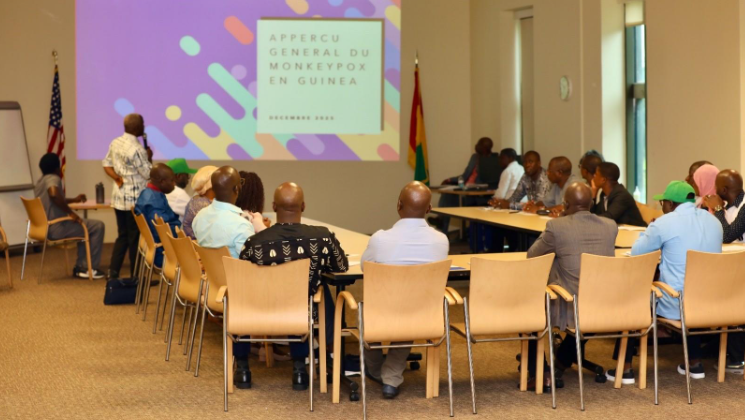
In response, CDC's global health security experts supported a national training that brought together 20 experts from across Guinea to strengthen how sensitive information such as sexual history and close contact exposure was collected during case investigations. The training focused on building skills to ask these questions respectfully, confidentially, and effectively, while collecting information essential for public health action.
Those trained are now equipped to extend this knowledge across all 38 of the country's districts, further strengthening outbreak investigations across the nation.
Impact That Reaches Beyond Borders
Within weeks of the response launch, the trajectory began to shift. Transmission began to slow as districts brought cases under control and chains of infection were interrupted. What had been a rapidly expanding outbreak was contained through coordinated action, local leadership, and sustained technical support.
CDC support also extended beyond the immediate response to strengthen core systems needed to sustain and scale Guinea's monkeypox response. This included the work CDC had done improving surveillance and contact tracing, building laboratory testing capacity, and equipping health workers to conduct more effective case investigations. As a result, several districts were able to exit active outbreak status, while stronger data collection enabled more targeted and effective public.
Looking Ahead
Slowing monkeypox in Guinea not only protected local communities but also helped stop the further spread of the virus and reduce its impact globally, including in the US.
Future global health security efforts in the country will focus on expanding training, strengthening integrated surveillance systems, and ensuring Guinea is better prepared to respond quickly to any future outbreaks.
Across dozens of countries, CDC is working side by side with partners to detect outbreaks early, respond rapidly, and stop threats before they escalate.
In a connected world where disease travels quickly, containing outbreaks at their source reduces the risk of international spread. It's the kind of response and preparedness work that helps protect lives around the world and here at home.
This page was last updated on this date. Updates may include minor edits, image changes, or other modifications to page content.
The information on this page was last reviewed by subject matter experts to ensure accuracy.