



At a glance
Use this practice to apply grades as an incentive for restaurant operators to improve food safety. New York City redesigned its inspection program to assign public letter grades based on inspection scores. They also inspect poorer performing establishments more often.
Background
New York City restaurants (including cafeterias, concession stands, cafés and bakeries, delis, ice cream shops, and more) serve more than 1 billion meals each year.
The New York City Department of Health and Mental Hygiene (NYC Health Department) designed its restaurant inspection program to encourage the highest level of food safety, while allocating limited resources where they are needed most.
Key actions
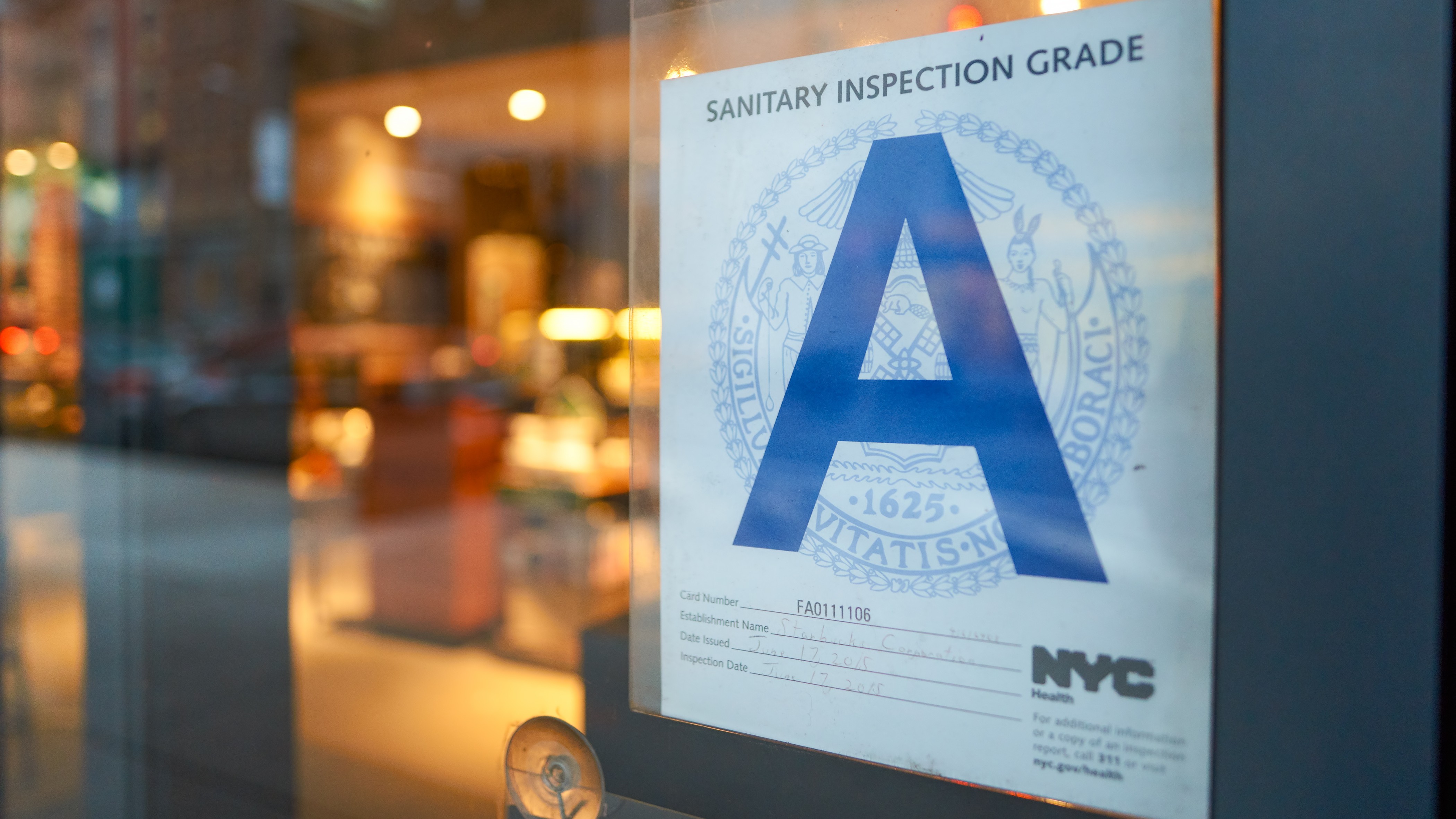
The NYC Health Department launched the restaurant letter grading program in 2010. It requires restaurants to post their current grade at a public entrance. The program includes the following key components:
- Conducting routine food safety inspections in restaurants using existing regulations
- Calculating letter grades based on inspection results and requiring restaurants to display them at a public entrance
- Scheduling more frequent inspections in establishments with lower grades
The grades increase transparency of inspection results, make results more accessible to diners, and provide an incentive for restaurants to improve food safety.
Using this practice
We selected this practice as an example of environmental public health practice successfully applied in the field. We based our selection on these four domains:
- Effectiveness: Did it solve or help solve the environmental health problem?
- Feasibility: What conditions and resources are needed to use it?
- Sustainability: Is it realistically able to continue going forward?
- Transferability: Could other health departments use it with little to no changes?
Others interested in applying this practice can consider these factors and this health department's experience.
Effectiveness
A program evaluation found that posting restaurant inspection grades in New York City was associated with improved restaurant food safety practices. In a citywide survey, residents expressed overwhelming support for the program and stated that they used it when making dining decisions.
The impact of the program can be seen over time, as A-grade restaurants tend to maintain that grade, and more than half of B-grade restaurants improved their grades on their next inspection. Ongoing monitoring supports these findings.
Feasibility
To use this practice, health departments may need the following capacity:
- Leadership support (such as from a board of health)
- Ability to integrate training and practice into regular office and field activities
- Ability to create an application that integrates program rules (e.g., calculating grades, setting inspection schedules) into existing data systems, as applicable
Sustainability
The health department's restaurant letter grading program has been in operation since 2010. Outcomes remain consistent over time. Funding for the program was incorporated into the health department's budget.
Health departments may want to consider the following factors to help sustain this practice:
- Integration: The program is incorporated into routine inspection scheduling, rules, and regulations.
- Training and workforce: Staff training and workforce development are incorporated into regular office activities.
- Equipment and supplies: Handheld computers can be helpful to conduct inspections.
- Software and information technology: The NYC Health Department integrated business rules into a custom data entry application.
Transferability
Programs interested in this practice might want to consider how it would integrate with existing food safety rules and regulations and gauge support from government leaders. If technological or equipment changes are necessary, they could consider whether they have the necessary staff and resources.
Restaurant operators might be concerned about public scrutiny of their inspection scores. Health departments might want to involve their communication staff early in the process to help address these concerns. Staff may want to focus on the economic benefits of achieving an A.
Successes and challenges
- The health department met with another large jurisdiction that implemented a similar program.
- Implementing the program required significant work to integrate grading rules into the NYC Health Department's data platforms.
Connections to Essential Services
Documenting how programs contribute to the Essential Public Health Services may help health departments in the accreditation process with the Public Health Accreditation Board. The activities in this practice support and align with these services:
- Educate (3)
- Implement policies (5)
- Utilize legal or regulatory approaches (6)
- Improve or innovate (9)
Resources
- Impact of a letter-grade program on restaurant sanitary conditions and diner behavior in New York City (journal article)
- Letter grading for restaurants (NYC Health website)
- What a difference a grade makes: Evidence from New York City's restaurant grading policy (journal article)
Citation
In citing this practice in articles, presentations, or elsewhere, we suggest the following citation:
Centers for Disease Control and Prevention. National Center for Environmental Health. Environmental Public Health Practices Gateway. Restaurant inspection grading program: A practice from New York City Department of Health and Mental Hygiene. U.S. Department of Health and Human Services, CDC, 2026, https://www.cdc.gov/environmental-health-practice/php/gateway/restaurant-inspection-grading-program.html