



At a glance
Use this practice to find and test private wells at high risk for contamination. New Jersey identified high-risk wells using existing data, offered free testing, educated homeowners about results, and provided recommendations.
Background
More than one million people in New Jersey receive drinking water from private wells.
In New Jersey, homes with private wells that are sold or leased must be tested for contaminants per the New Jersey Private Well Testing Act. The results are sent to the New Jersey Department of Environmental Protection and shared with state and local health departments.
Among the most commonly detected contaminants in New Jersey private well water are naturally occurring arsenic and gross alpha radioactivity. Arsenic and gross alpha radioactivity in drinking water can cause adverse health effects, including increased risk of cancer.
Key actions
In this practice, the New Jersey Department of Health used data from the New Jersey Private Well Testing Act to identify a single private well with an unsafe amount of a contaminant. Then, they identified neighboring homes with private wells that could also be contaminated. The health department offered education and well water testing to these homeowners and helped them interpret testing results.
Using data to inform their outreach, the health department identified neighbors at a higher risk of private well water contamination. Their practice involved the following activities:
- Using available data to identify a home with a private well that had an unsafe level of a contaminant known to affect health
- Using geospatial methods to identify neighboring properties that could also be at risk
- Mailing letters to neighbors with private wells to inform them of their potential risk and offering free, confidential well testing
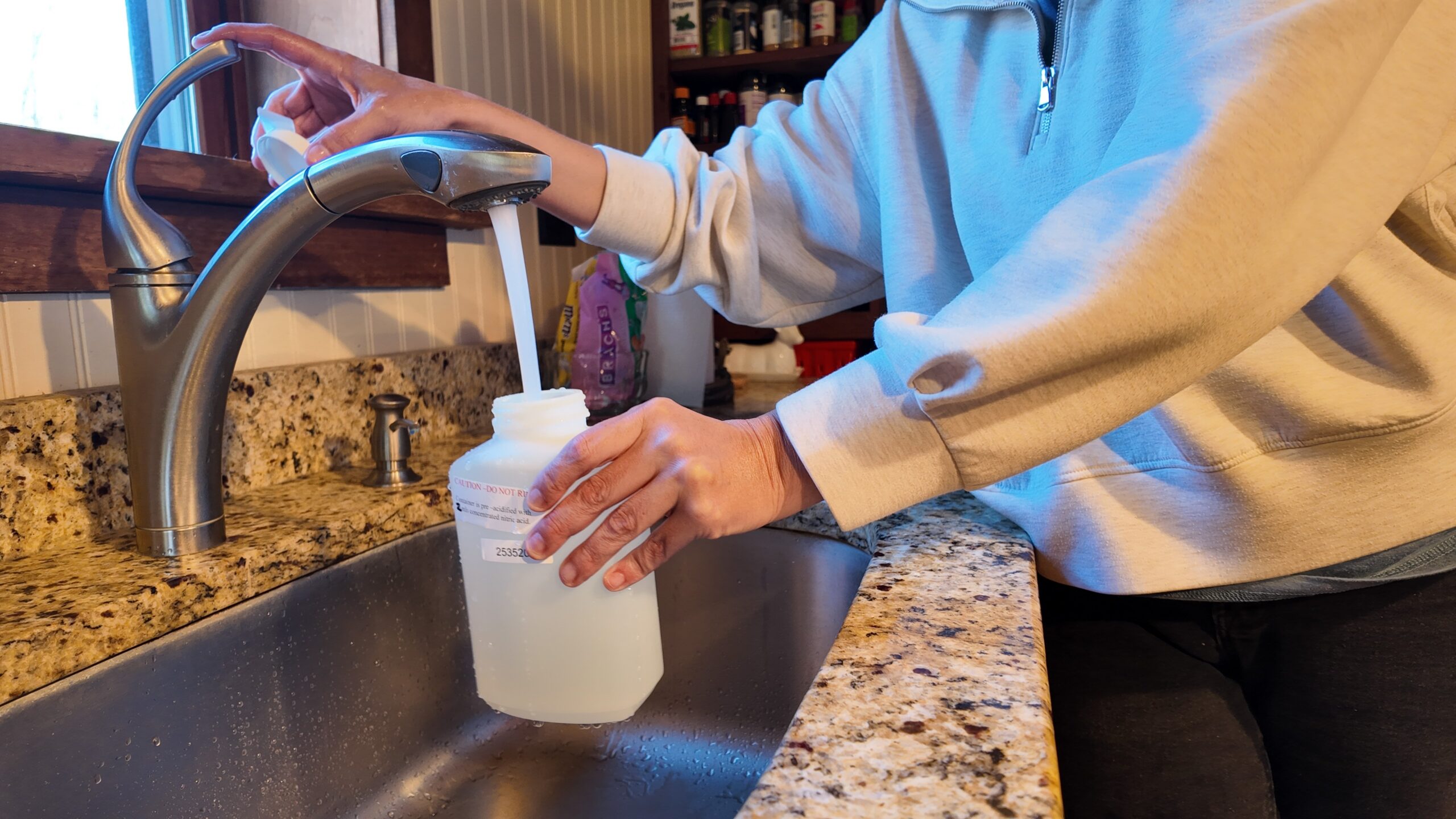
- Sampling and testing the private wells of neighbors who agreed to participate
- Educating well owners about their test results and health risks from their drinking water
- Providing tailored recommendations to reduce well owners' risk
- Understanding the impact of the practice through follow-up surveys to participants
Using this practice
We selected this practice as an example of environmental public health successfully applied in the field. We based our selection on the following four domains:
- Effectiveness: Did it solve or help solve the environmental health problem?
- Feasibility: What conditions and resources are needed to use it?
- Sustainability: Is it realistically able to continue going forward?
- Transferability: Could other health departments use it with little to no changes?
Effectiveness
The health department collected and published data on the effectiveness of this practice in reaching private well users and preventing exposure to environmental health hazards.
They also surveyed those who participated in the program. Among respondents whose wells were contaminated, nearly half (45%) reported taking action to reduce their risk.
Feasibility
Other health departments interested in this practice may need the following capacity:
- Access to private well testing data to identify high-risk wells
- Ability to use Geographic Information System (GIS) software to identify neighboring homes with private wells that could be at risk
- Ability to sample and test well water for contaminants
- Technical knowledge to help well owners understand their test results and options to reduce exposure
- Ability to communicate effectively with the public
Sustainability
To maintain this practice, the health department took the following actions:
- Dedicated staff time to identifying high-risk wells, well water sampling, and interpreting sampling results for homeowners
- Had resources to pay for laboratory costs of analyzing levels of contaminants
This practice has a high upfront investment of staff time to learn necessary GIS skills and create communication materials. However, once this is done, the practice can be repeated many times.
Transferability
Programs interested in this practice should consider the following factors:
- Ability to access and use private well data
- Contaminants in the groundwater in their community
- Testing costs associated with well water sampling
- Current GIS capability
- Knowledge of risk communication principles to effectively educate private well users about their sampling results and remediation options
This practice is scalable and can be adjusted to sample more homes or test for more contaminants as resources allow.
Successes and challenges
The health department has been able to repeat this practice yearly since 2017.
They found that having health department staff take water samples themselves, rather than contracting with a laboratory, resulted in increased interest and support from private well users in their community.
Connections to Essential Services
Documenting how programs contribute to the Essential Public Health Services may help health departments in the accreditation process with the Public Health Accreditation Board. The activities in this practice support and align with these services:
- Assess and monitor (1)
- Investigate and address hazards (2)
- Educate (3)
- Strengthen communities and partnerships (4)
- Implement policies (5)
- Utilize legal and regulatory actions (6)
- Ensure access to services (7)
- Support the workforce (8)
- Improve or innovate (9)
Resources
New Jersey Department of Health
- Evaluating the impact of free private well testing outreach on participants' private well stewardship in New Jersey (article)
- Private well outreach project
- Private well testing outreach: Reducing exposure to gross alpha in drinking water (brochure)
- Targeted education and outreach to neighbors of homes with high gross alpha radioactivity in domestic well water (article)
Citation
Centers for Disease Control and Prevention. National Center for Environmental Health. Environmental Public Health Practices Gateway. Private well outreach: A practice from the New Jersey Department of Health. U.S. Department of Health and Human Services, CDC, 2026, https://www.cdc.gov/environmental-health-practice/php/gateway/private-well-outreach.html.