



What to know
This page guides you through an activity to learn how genomic sequencing can help identify infectious diseases, determine their severity, track their source, and inform treatment and prevention actions.

Sequence the Source
In this activity, there is an outbreak of Pathogen X in your community.
As a scientist in a local public health department, you and your team must extract genomic data from patient samples collected in the community. This detailed data holds the key to how the pathogen functions.
The genomic data will be connected to information from the patient, such as what foods they ate or if they had contact with certain animals. Using the combined data, you will determine which strain of the pathogen is causing people to get sick and how it is spreading.
Step 1: Sequence the data
Patient samples are sent to public health labs. Scientists extract the pathogen's genetic material—it's DNA or RNA—and read the genomic data.
Here is one of the samples your team is analyzing:

Step 2: Analyze the data
Bioinformaticians use powerful computers to analyze the pathogen’s genomic data. The data are often visualized in phylogenetic trees. Phylogenetic trees are diagrams that help us visualize how organisms are related to each other.

Step 3: Link the data
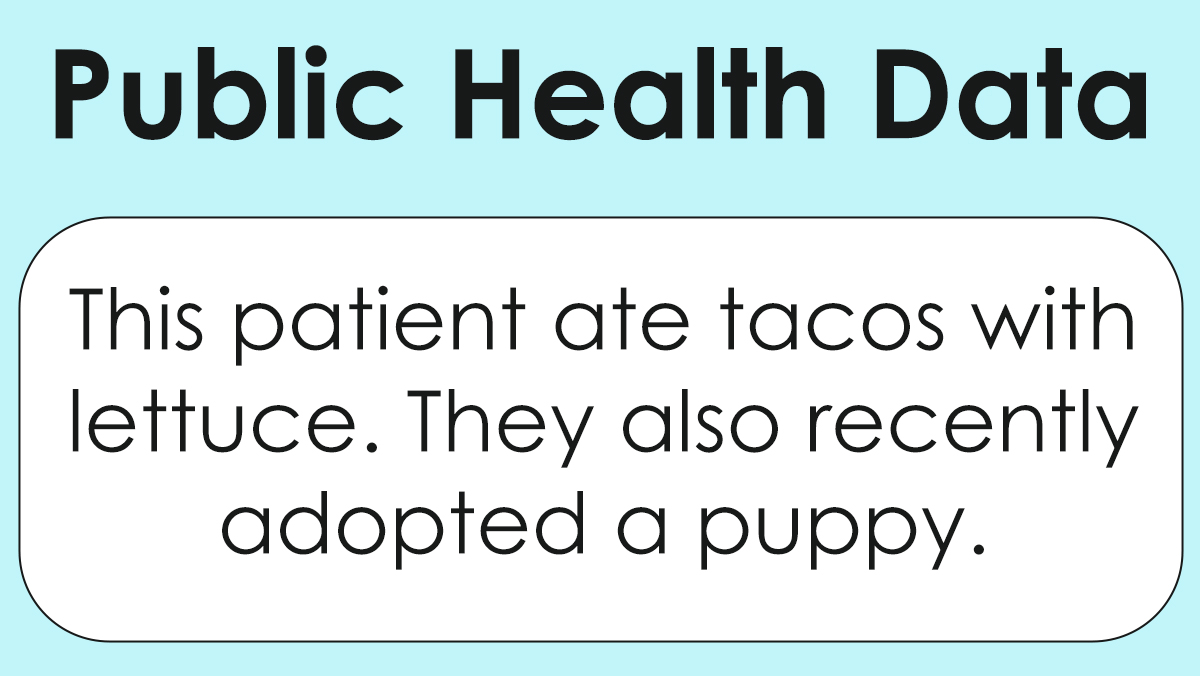
By combining the genomic data with public health data, epidemiologists can learn the source of the disease, how it is spreading, and how to stop it.
Review what you know
At this point, you and your team have collected 30 samples, sequenced them, analyzed them, and integrated the public health data for those patients. In this activity, researchers found six potential sources for the pathogen:
- Lettuce
- New Puppy
- Backyard Poultry
- Cheese
- Deli Meat
- Pet Turtles

Guess the source!
Based on your analysis, make your decision regarding the strain and the potential source of the outbreak. Use the information above to guide your choice.
- Can you tell which strain is behind the current outbreak?
- What do you think is the likely source?
Submit your answers here: Sequence the Source