



What to know
- There are proven treatments to help people quit smoking.
- Using counseling and medication together gives people who smoke the best chance of quitting for good.
You can quit smoking: here's how
Quitting smoking is one of the most important steps you can take to improve your health. This is true no matter how old you are or how long you have smoked. The good news is there are proven treatments that can help you quit.
Many people who smoke become addicted to nicotine, a drug that is found naturally in tobacco. This can make it hard to quit smoking. But the good news is there are proven treatments that can help you quit.
Download and print the infographic
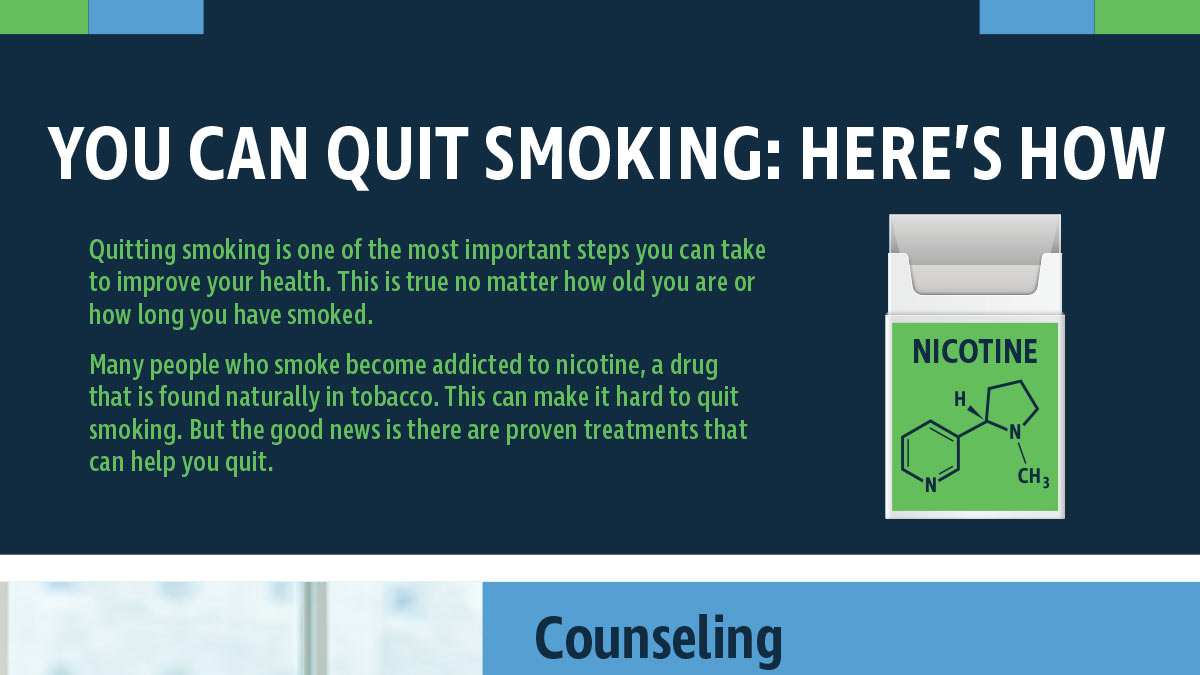
You can quit smoking: here’s how infographic
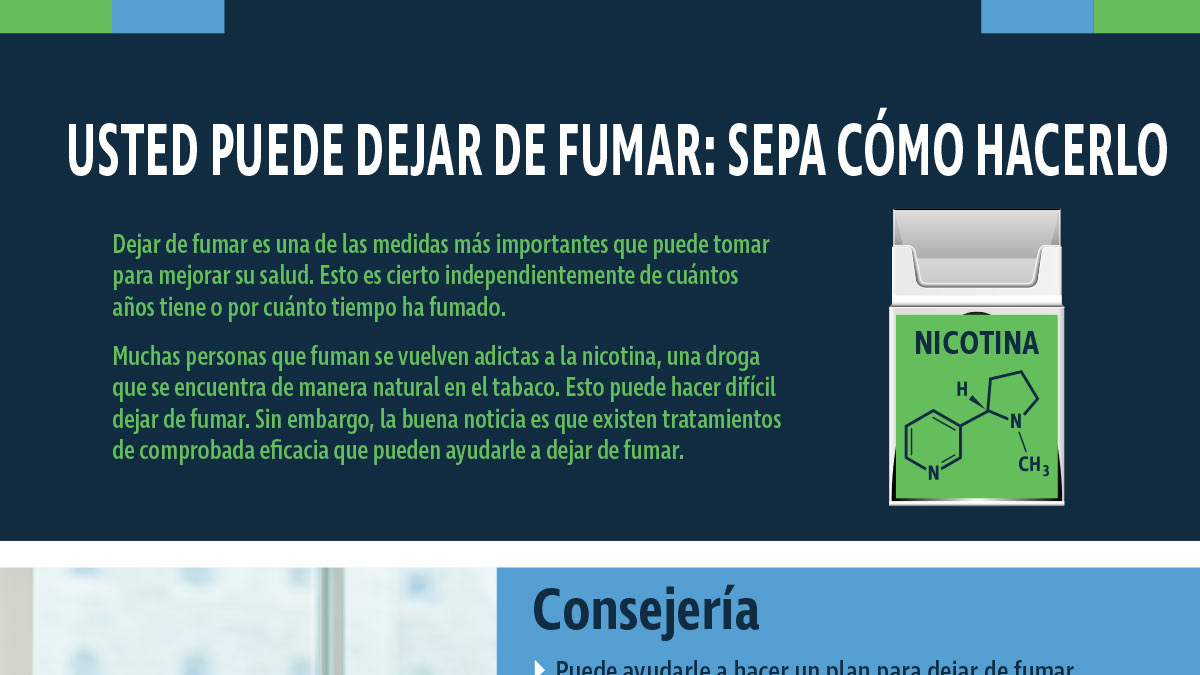
Usted puede dejar de fumar: sepa cómo hacerlo
Counseling
Counseling can help you make a plan to quit smoking. Counseling can also prepare you to cope with stress, urges to smoke, and other issues when trying to quit.
Seek counseling
- Talk to a quit smoking counselor individually or in a group.
- Get free confidential coaching through a quitline (1-800-QUIT-NOW).
- Use free online resources like CDC.gov/quit and Smokefree.gov.
- Sign up for free texting program.
- Use a mobile app like quitSTART.
Medications
Medications can help you manage nicotine withdrawal symptoms and cravings, which helps you stay confident and motivated to quit.
You can use Nicotine Replacement Therapy (NRT)
Nicotine Replacement Therapy (NRT) includes several options.
- Over-the-counter forms: patch, gum, lozenge.
- Prescription forms: inhaler, nasal spray.
You can talk to your health care provider about using a pill prescription medication
Varenicline and buproprion are pill prescription medications you can discuss with your doctor.
You can combine quit medications
Use a long-acting form of NRT (nicotine patch) together with a short-acting form (nicotine gum or lozenge). Compared to using one form of NRT, this combination can further increase your chances of quitting.
Counseling plus medications
Using counseling and medication together gives you the best chance of quitting for good.
Many treatments and resources may be available to you for free of charge or may be covered by your insurance.
Get help quitting today
If you are ready to quit:

- Call a quitline coach (1-800-QUIT-NOW) or
- Talk to a health care professional
They can help you decide what treatment is best for you and can connect you to quit smoking programs and resources.
Remember, even if you've tried before, the key to success is to keep trying and not give up. More than half of U.S. adults who smoked have quit.
For more information about quitting smoking, visit CDC.gov/quit.