Resources for Health Professionals
Description
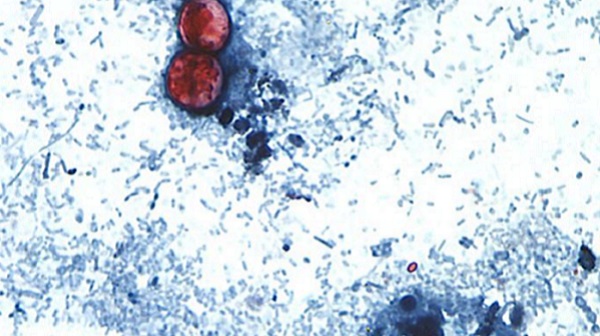
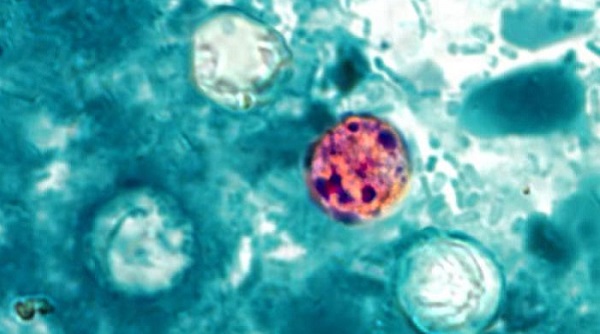
Cyclospora infection is transmitted by ingesting infective Cyclospora oocysts (for example, in contaminated food or water). Outbreaks in the United States and Canada have been linked to various types of imported fresh produce.
Cyclospora cayetanensis completes its life cycle in humans. However, the oocysts shed in the feces of infected persons must mature (sporulate) outside the host, in the environment, to become infective for someone else. Therefore, direct person-to-person (fecal-oral) transmission of Cyclospora is unlikely. However, indirect transmission can occur if an infected person contaminates the environment and oocysts have sufficient time thereafter, under favorable conditions, to become infective. The process of maturation (sporulation) is thought to require days to weeks.
Persons of all ages are at risk for infection. Persons living or traveling in the tropics and subtropics may be at increased risk because cyclosporiasis is endemic in some developing countries. In some regions, infection appears to be seasonal. But the seasonality varies in different settings and is not well understood.
The incubation period between acquisition of infection and onset of symptoms averages ~1 week (ranges from ~2-14 or more days). Cyclospora infects the small intestine and typically causes watery diarrhea, with frequent, sometimes explosive, stools. Other common symptoms include loss of appetite, weight loss, abdominal cramping/bloating, increased flatus, nausea, and prolonged fatigue. Vomiting, body aches, low-grade fever, and other flu-like symptoms may be noted. If untreated, the illness may last for a few days to a month or longer, and may follow a remitting-relapsing course. Some infected persons are asymptomatic, particularly in settings where cyclosporiasis is endemic.
On the basis of currently available information, avoiding food or water that might be contaminated with stool is the best way to prevent infection. Symptomatic reinfection can occur.
Read More:
Contact Us:
- Centers for Disease Control and Prevention
1600 Clifton Rd
Atlanta, GA 30333 - General public:
- 1-800-CDC-INFO (1-800-232-4636)
- cdcinfo@cdc.gov
- Health care professionals:
- 1-404-718-4745 (M-F 7:30am-4pm EST)
- After-hours emergencies: 1-770-488-7100
- parasites@cdc.gov