Saving Lives Through Screening: Cervical Cancer
For More Information
The Problem
Worldwide, cervical cancer affects half a million women and kills a quarter million women each year. Over 85% of cervical cancer cases and deaths occur in developing countries. Virtually all cases are linked to persistent infection with human papillomavirus (HPV). The disproportionate burden of cervical cancer is highest in countries where effective screening, diagnosis, and treatment is limited or absent. In several Western countries, where screening programs that have been linked to effective treatment have long been established, cervical cancer rates have decreased by as much as 65%. Cost-effective screening that can detect cervical cancer and pre-cancerous cervical lesions is available for limited resource settings.
Where We Work
- Bolivia
Key Partners
- Pan American Health organization (PAHO)
- World Health Organization
- International Agency for Research on Cancer
- The Union for International Cancer Control
- American cancer Society
- Other non-governmental organizations
The CDC Response
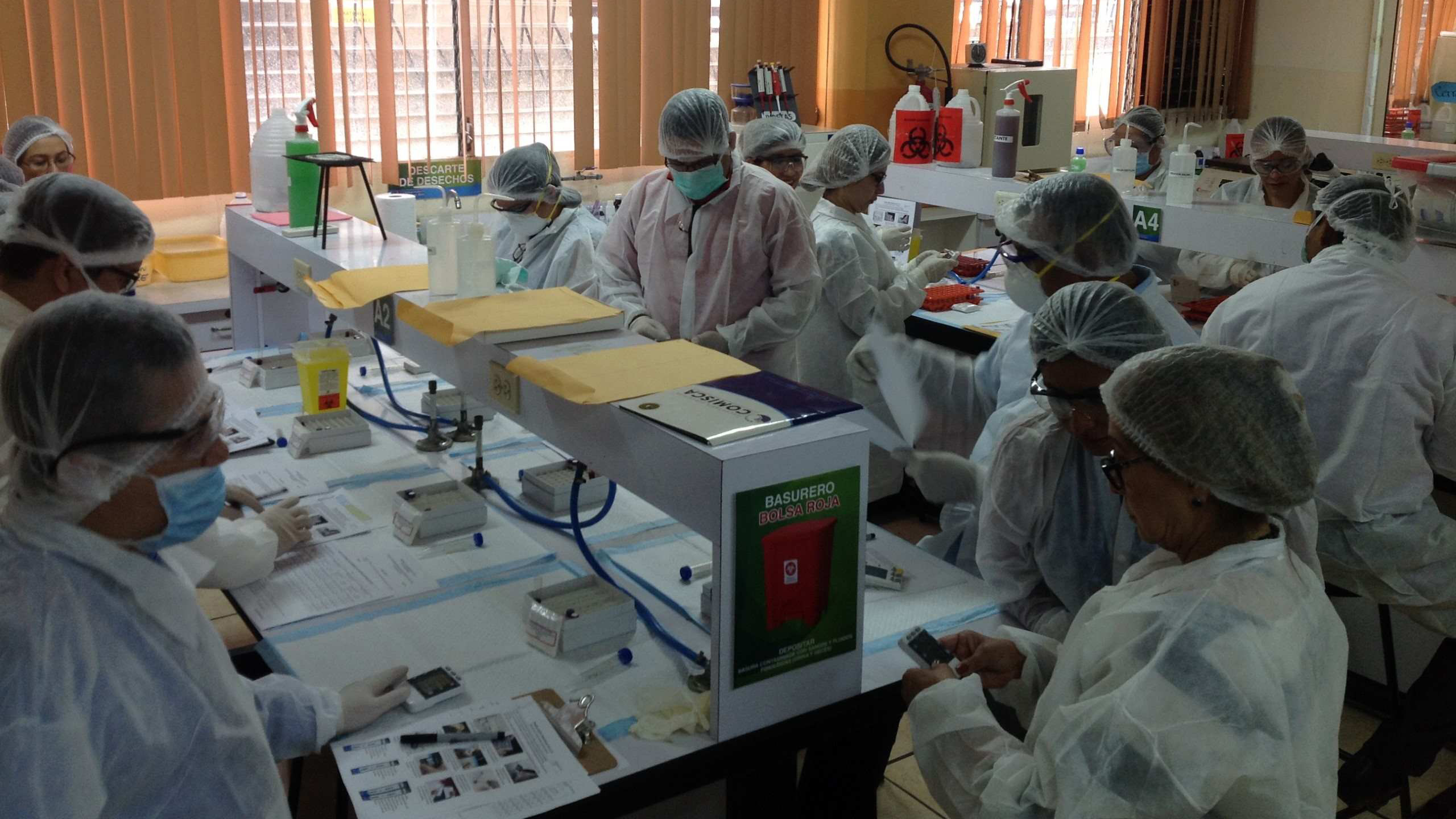
CDC is collaborating with the Pan-American Health Organization, to build capacity for cervical cancer screening in Latin America. In Bolivia, a country with a tremendous cervical cancer burden but with little infrastructure to address the problem, physicians and nurses have been trained to screen patients for cervical cancer and precancerous cervical lesions. One of the techniques, visual inspection with acetic acid (VIA), is effective and affordable and requires minimal technology. As such, it offers great potential for increasing access to screening in low-income countries such as Bolivia. In addition, CDC is providing assistance to Bolivia as it embarks on starting a cancer registry in La Paz to characterize its cancer burden.
Status
Women from Bolivian communities learning about cervical cancer and visual inspection with acetic acid (VIA) in order to become promotoras de salud (health promoters).
CDC hosted the head of Bolivia’s cytopathology laboratory at CDC headquarters to study programs for cancer registries and early detection of cancer, with lessons learned now being applied in Bolivia. In addition to activities in Bolivia, CDC is providing assistance to the World Health Organization (WHO) on a number of important cervical cancer-related projects, including developing guidance on clinical recommendations for cryotherapy, updating WHO cervical cancer screening guidelines, and providing guidance on how to monitor the impact of the HPV vaccine.
Vision for Growth
Newly-trained health practitioners in Bolivia will go on to train others throughout the country resulting in increased screening rates, increased awareness of cervical cancer among Bolivian women, and ultimately reducing the cervical cancer burden in Bolivia.
Get email updates about this site
Your email address: