



Key points
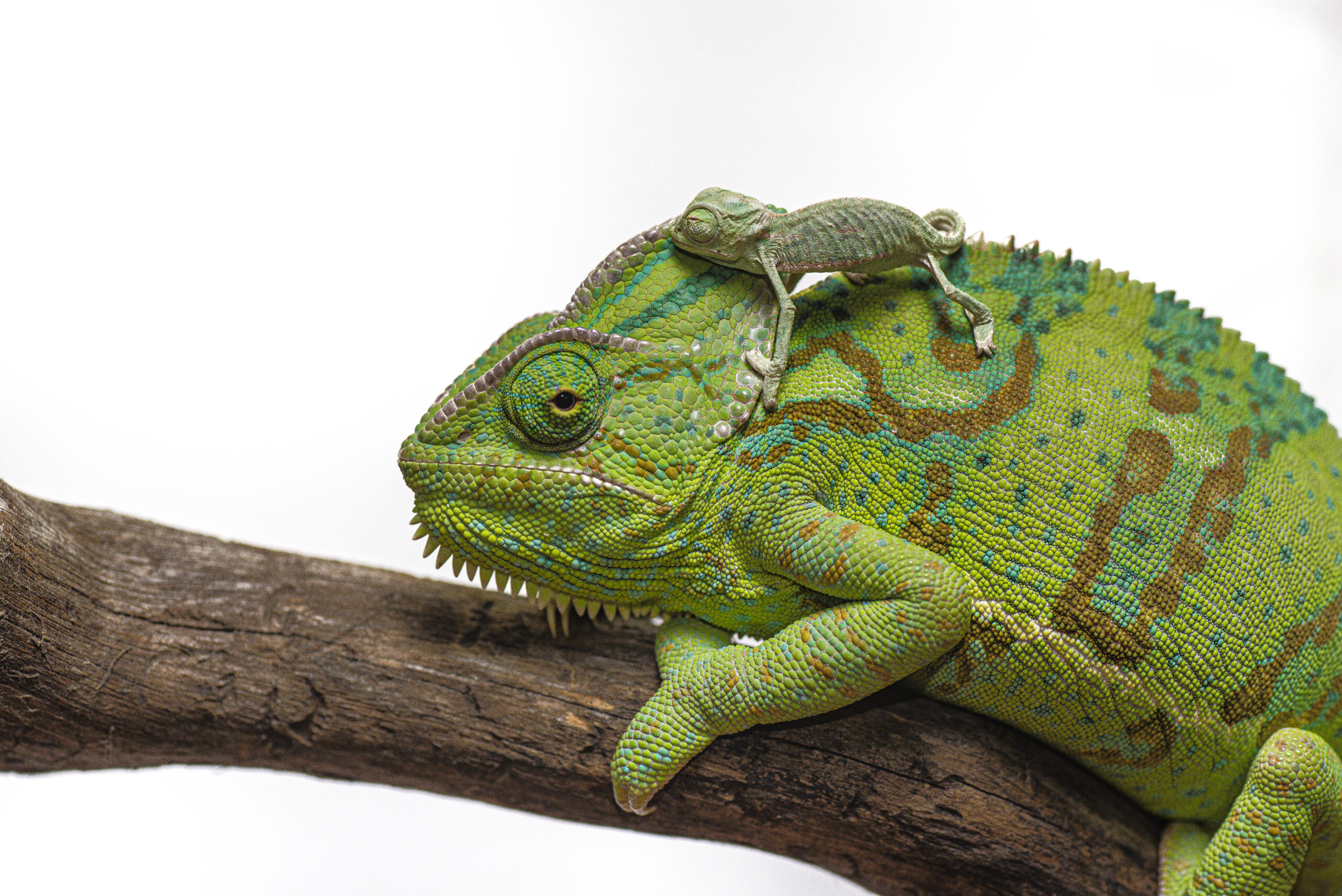
This outbreak investigation is over. Public health officials in several states investigated a multistate outbreak of Salmonella illnesses linked to contact with veiled chameleons. All sick people in this outbreak were children 2 years old or younger. Any reptile can carry Salmonella germs that can make you sick. Always take steps to stay healthy around your pet veiled chameleon or any pet reptile.
Final update
June 9, 2026
CDC and public health officials in several states collected different types of data to investigate a multistate outbreak of Salmonella Woodinville infections. All sick people in this outbreak were children two years old or younger.
Epidemiologic, laboratory, and traceback data showed that contact with pet veiled chameleons may have made children sick in this outbreak.
Epidemiologic data
A total of five children infected with the outbreak strain of Salmonella Woodinville were reported from four states. Illnesses started on dates ranging from February 12, 2026, to April 10, 2026. Two of these children (40%) have been hospitalized. No deaths were reported.
The true number of sick people in this outbreak was likely much higher than the number reported, and the outbreak may not have been limited to the states with known illnesses. This is because many people recover without medical care and are not tested for Salmonella.
Demographics
Public health officials collect many different types of information from sick people, including their age, race, ethnicity, other demographics, and the animals they came into contact with in the week before they got sick. This information provides clues to help investigators identify the source of the outbreak.
The table below has information about sick children in this outbreak ("n" is the number of children with information available for each demographic).
Age
(n=5)
Range from <1 to 2 years
Median age of 1 year
100% under 5 years
Sex
(n=5)
20% female
80%
male
Race
(n=5)
60% White
40% more than one race
Ethnicity
(n=5)
100% non-Hispanic
0% Hispanic
Animal contact
State and local public health officials interviewed parents and caregivers about the animals the children came into contact with in the week before they got sick. Parents and caregivers reported that all five children visited or lived in a home with a veiled chameleon before getting sick.
Laboratory and traceback data
Public health investigators used the PulseNet system to identify illnesses that may have been part of this outbreak. CDC PulseNet manages a national database of DNA fingerprints of bacteria that cause gastrointestinal illnesses. DNA fingerprinting is performed on bacteria using a method called whole genome sequencing (WGS).
WGS showed that bacteria from sick children's samples were closely related genetically. This meant that children in this outbreak likely got sick from contact with the same type of animal.
Samples were collected for testing from chameleons where the sick children lived or visited in Iowa, Nebraska, and Texas. WGS showed that the Salmonella Woodinville from the chameleons were all closely related to the bacteria from sick children.
People in this outbreak reported purchasing veiled chameleons at multiple retail locations. Investigators collected information about where the families or caregivers of the sick children obtained their chameleons and the breeder that supplied these retail stores. CDC worked with state partners to notify the supplier of these links and provided information to reduce transmission of the outbreak strain throughout the reptile supply chain.
Based on WGS analysis, bacteria from 5 children's samples had no predicted resistance. More information is available at the National Antimicrobial Resistance Monitoring System (NARMS) site.
Previous updates
May 7, 2026
CDC and public health officials in several states are collecting different types of data to investigate a multistate outbreak of Salmonella Woodinville infections. All sick people in this outbreak are children two years old or younger.
Epidemiologic data show that contact with pet veiled chameleons may be making children sick in this outbreak.
Epidemiologic data
As of May 4, 2026, a total of 5 children infected with the outbreak strain of Salmonella Woodinville were reported from 4 states. Illnesses started on dates ranging from February 12, 2026, to April 10, 2026. Two of these children (40%) have been hospitalized. No deaths have been reported.
The true number of sick people in an outbreak is likely much higher than the number reported, and the outbreak may not be limited to the states with known illnesses. This is because many people recover without medical care and are not tested for Salmonella. In addition, recent illnesses may not yet be reported as it usually takes 3 to 4 weeks to determine if a sick person is part of an outbreak.
Demographics
Public health officials collect many different types of information from sick people, including their age, race, ethnicity, other demographics, and the animals they came into contact with in the week before they got sick. This information provides clues to help investigators identify the source of the outbreak.
The table below has information about sick children in this outbreak ("n" is the number of children with information available for each demographic).
Age(n=5)
Range from <1 to 2 years
Median age of 1 year
100% under 5 years
Sex
(n=5)
20% female
80% male
Race
(n=5)
60% White
40% more than one race
Ethnicity
(n=5)
100% non-Hispanic
0% Hispanic
Animal contact
State and local public health officials are interviewing parents and caregivers about the animals the children came into contact with in the week before they got sick. Parents and caregivers reported that all 5 children visited or lived in a home with a veiled chameleon before getting sick.
Laboratory and traceback data
Public health investigators used the PulseNet system to identify illnesses that may be part of this outbreak. CDC PulseNet manages a national database of DNA fingerprints of bacteria that cause gastrointestinal illnesses. DNA fingerprinting is performed on bacteria using a method called whole genome sequencing (WGS).
WGS showed that bacteria from sick children's samples are closely related genetically. This means that children in this outbreak likely got sick from contact with the same type of animal.
People in this outbreak reported purchasing veiled chameleons at multiple retail locations. Investigators are collecting information about where the families or caregivers of the sick children obtained their chameleons and what breeders supplied these retail stores.
Based on WGS analysis, bacteria from 5 children's samples had no predicted resistance. More information is available at the National Antimicrobial Resistance Monitoring System (NARMS) site.