



Key points
- TMVII is a new fungus that causes severe ringworm, a fungal rash.
- It is on the genitals, groin, buttocks, face, or other parts of the body.
- It spreads through close skin-to-skin contact, including intimate and sexual contact.
- TMVII also spreads through contact with surfaces like towels, bedding, razors, and sex toys.
- Recent cases are reported among gay, bisexual, and other men who have sex with men but anyone can get TMVII.
What is TMVII?
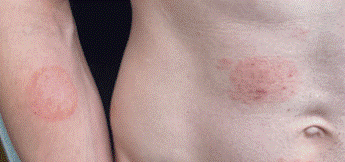
Trichophyton mentagrophytes genotype VII, or TMVII (spoken as "T-M seven"), is a new type of fungus that causes severe ringworm. These infections may last longer and be harder to treat than typical ringworm.
TMVII primarily spreads through direct skin-to-skin contact, including intimate or sexual contact. Recent cases have been reported among gay, bisexual, and other men who have sex with men, but anyone can get TMVII.
TMVII may be easy to miss, or mistaken for other skin conditions. People may not expect ringworm after intimate contact or on areas like the groin, genitals, buttocks, or face.
Symptoms
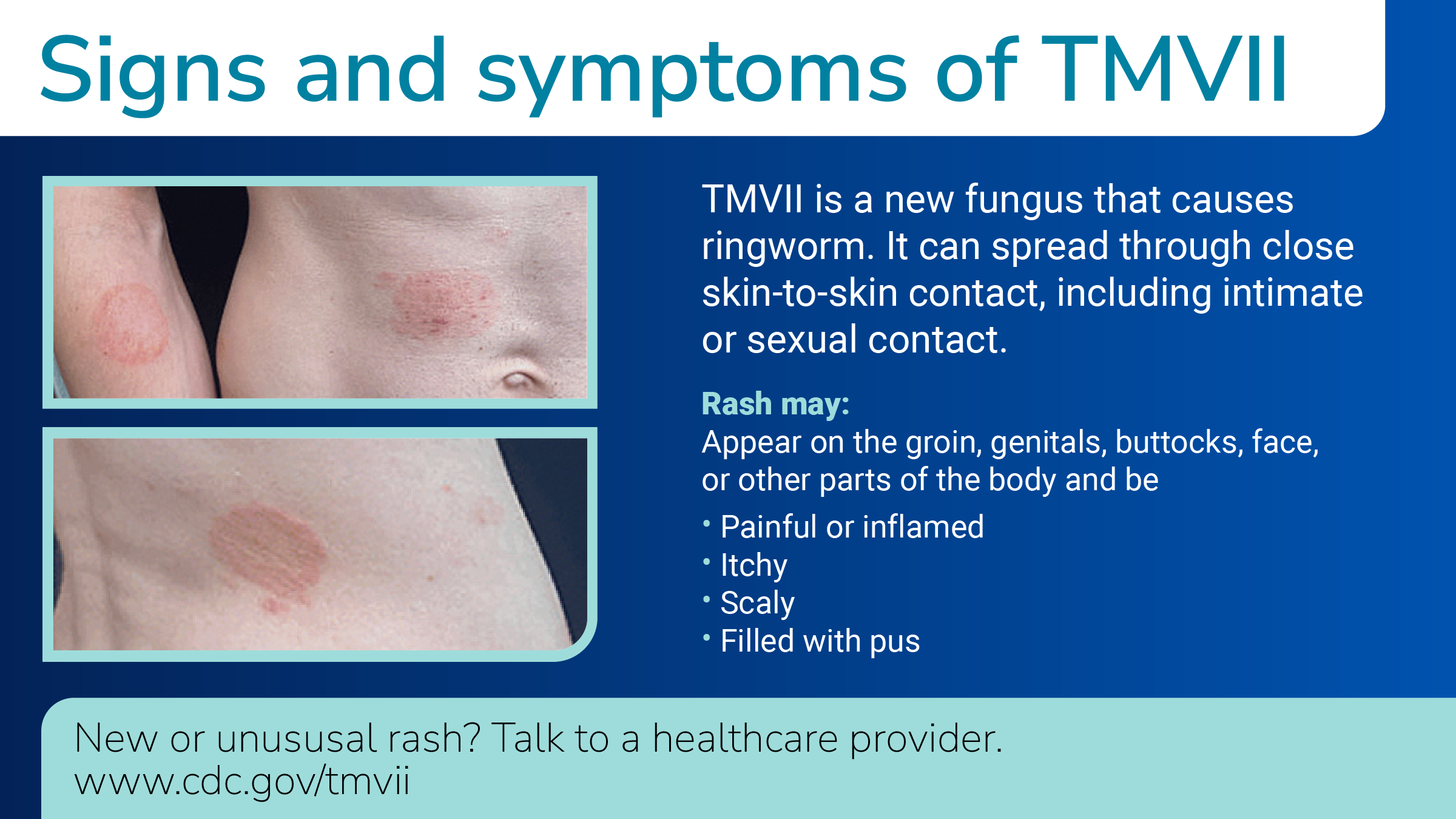
TMVII may cause skin changes, such as rashes or sores, that can be
- Painful or inflamed.
- Itchy.
- Scaly.
- Filled with pus or look like deep, inflamed bumps.
These rashes often appear on the groin, genitals, buttocks, or face, but they can also appear on other parts of the body.
How it spreads
TMVII can spread through direct skin-to-skin contact with infected skin, including during sex. It is not yet clear if someone without visible symptoms can spread TMVII.
TMVII can also spread through shared personal items such as towels, bedding, clothing, razors, or objects shared during sexual activity (e.g., sex toys). The risk of spread from these items is not fully understood.
Prevention
What to do if you notice a rash
- Avoid close, skin-to-skin contact, including intimate and sexual contact, and see a healthcare provider.
- Wash your hands if you have touched the rash.
- If avoiding contact is not possible, cover rash and lesions with a secure bandage or clothing.
- Do not use steroid creams unless a healthcare provider tells you to.
When to get medical care
- You notice a new or unexplained rash, particularly after sex or other intimate contact.
- The rash is painful, itchy, or inflamed.
- The rash is spreading across the body.
- The rash is on the groin, genitals, buttocks, or face.
- The rash is not getting better after using an over-the-counter antifungal treatment.
How to help prevent TMVII for yourself and your partners
- Avoid touching or scratching a suspected rash.
- Wash your hands after touching a rash on yourself, another person, or an animal.
- Do not share towels, bedding, clothing, sex toys, or other personal items.
- Wash towels, bedding, and clothing on high heat when possible.
- Pay attention to any new or unusual rash on your body or your partner's body.
- Talk openly about any new symptoms affecting either you or your partners.
- Avoid sex and intimate contact. If that is not possible, cover rash and lesions with a secure bandage or clothing.
How TMVII is treated
TMVII may take longer to treat than typical ringworm, lasting for several weeks or months. Treatment usually includes prescription antifungal medicine taken by mouth (oral medicine). In some cases, a healthcare provider may also recommend antifungal creams or other topical treatments.
This page was last updated on this date. Updates may include minor edits, image changes, or other modifications to page content.
The information on this page was last reviewed by subject matter experts to ensure accuracy.