



Purpose
- One Health Timeliness Analysis (OHTA) is a review process to understand outbreak detection, notification, and response timeliness across One Health sectors.
- This process helps participants identify opportunities to improve cross-sector One Health coordination for current and future responses.
- Emerging health threats often involve complex interactions among people, animals, and the environment. Responding effectively requires close coordination across One Health sectors.
Background
One Health Timeliness Analysis (OHTA) is a structured, multisectoral review process that builds on the 7-1-7 approach to analyze outbreak or event timeliness for detection, notification, and response within and across public health, animal health, and environment sectors.
The OHTA toolkit includes standardized tools to document when key actions occurred, identify factors that delayed or supported timely action, and recommend improvements to strengthen sector-specific and cross-sector One Health coordination for current or future responses. The OHTA toolkit captures time periods for key events, including the time to:
- Detect an event
- Notify responsible authorities and relevant sectors
- Start applicable sector-specific and coordinated cross-sector One Health response actions
Who should use the OHTA toolkit
The OHTA toolkit can be used by a variety of people involved in emergency response and management across One Health sectors.
When to use OHTA
Use OHTA for an event that requires action, communication, or coordination by two or more One Health sectors. Cases or events do not need to occur in every participating sector to conduct the analysis.
OHTA can be conducted:
- During an ongoing response to support timely improvements
- After an outbreak or other One Health event
- As part of an early action review or after-action review
- After a simulation exercise
- As part of broader preparedness improvement efforts
Examples include zoonotic and emerging infectious diseases, foodborne outbreaks, antimicrobial resistance events, wildlife mortality events, environmental contamination, and other One Health threats requiring coordination across sectors.
About the OHTA process
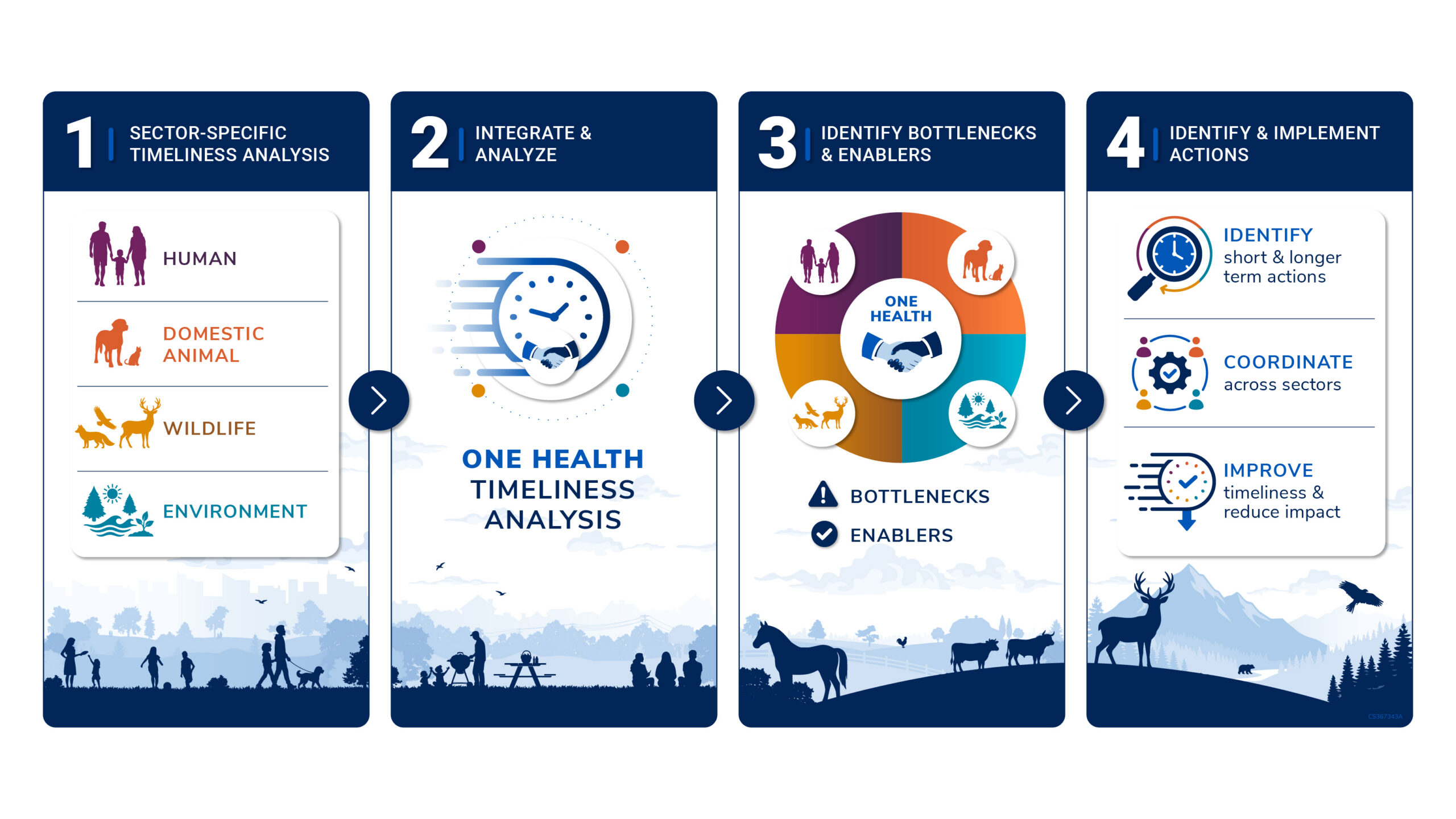
OHTA process
- Conduct Sector-Specific Timeliness AnalysesEach participating sector (human health, agriculture, wildlife, and environment) uses a sector-specific tool to record key milestone and response-action dates. Each sector also identifies its bottlenecks, enablers, and corrective actions.
- Integrate and AnalyzeParticipants enter sector-specific dates into the standardized OHTA tool. The tool brings the information together into a single timeline to help users review cross-sector One Health notification, information sharing, coordination, and response.
- Identify Bottlenecks and EnablersParticipants agree on the most important factors that delayed action and the practices or resources that supported timely action. They use these findings to identify practical improvements.
- Identify and Prioritize Corrective Actions
One Health sectors work together to identify and prioritize corrective actions, identify responsible organizations, and propose timelines.
Where appropriate, the actions can then be incorporated into existing sector-specific or cross-sector One Health preparedness and response plans, procedures, trainings, or coordination mechanisms to support implementation.
Expected outputs
OHTA produces:
- A timeline of sector-specific and joint One Health milestones and response actions
- Shared understanding of conditions that improved or delayed timely detection, notification, or response
- A list of prioritized actions for improvement
- Recommendations for strengthening preparedness and response
These outputs help sectors turn lessons from an event into practical improvements for current and future One Health responses and preparedness.
Downloads
OHTA tools and reference guides
- The OHTA toolkit, including sector-specific and cross-sector One Health materials, is available to download:
- Visit 7-1-7 Alliance for more information about the 7-1-7 approach and related training materials for public health.
This page was last updated on this date. Updates may include minor edits, image changes, or other modifications to page content.
The information on this page was last reviewed by subject matter experts to ensure accuracy.