



Key points
- Nipah is a serious and often deadly disease spread by fruit bats found mostly in South and Southeast Asia.
- Nipah virus spreads from animals to people and from person to person.
- Treatment consists of managing symptoms and supportive care,
- Around 40%–70% of people with Nipah die.
What it is
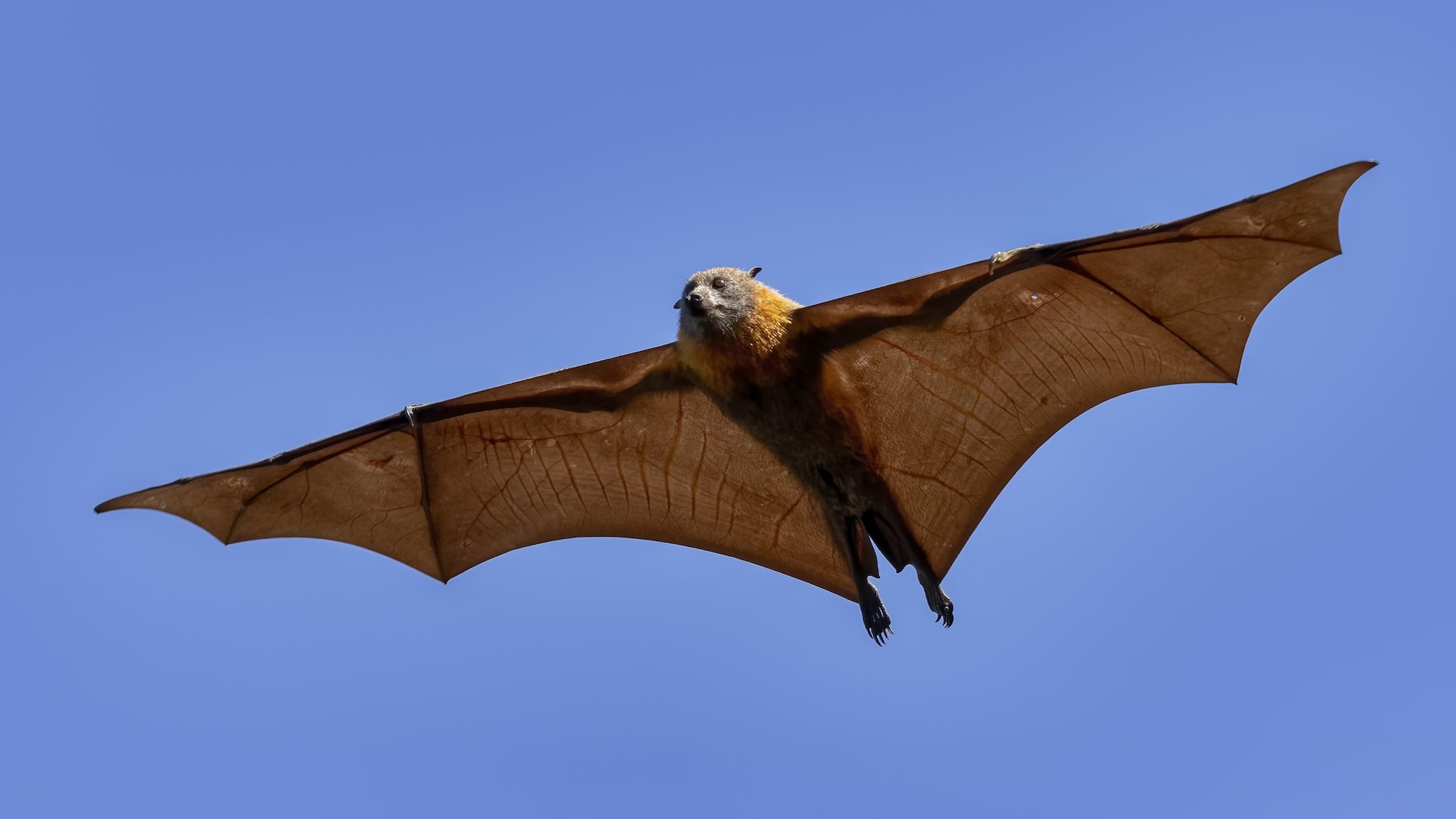
Nipah virus causes disease that can spread between animals and people. Nipah virus is carried by fruit bats (genus Pteropus), also known as flying foxes.
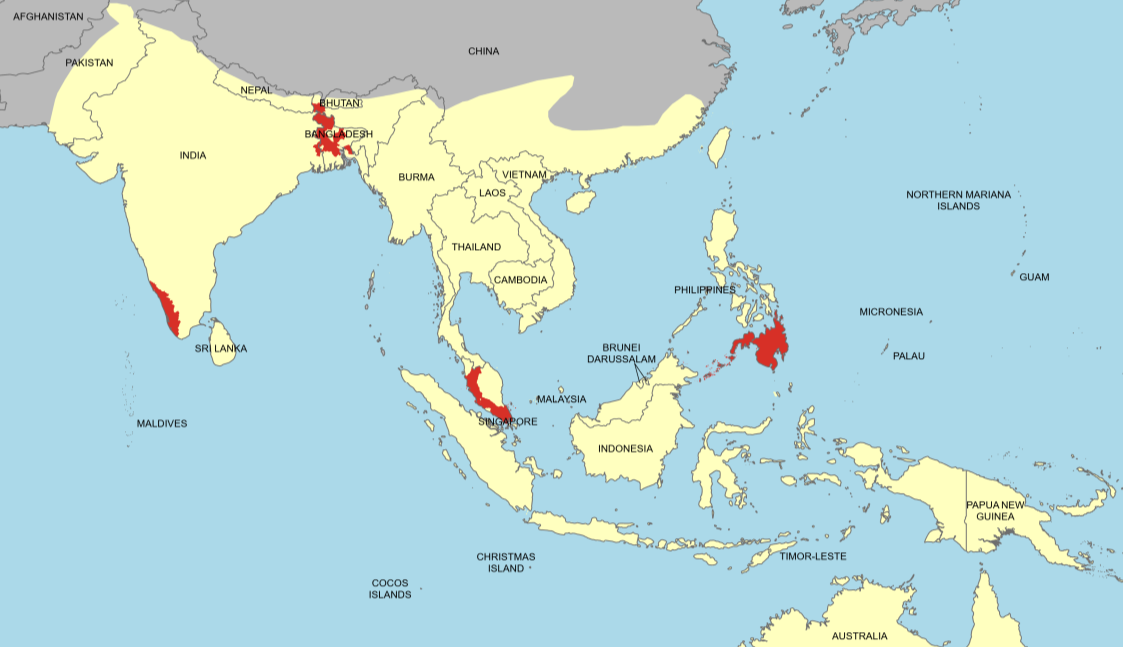
In 1999, Nipah was first discovered in Malaysia and Singapore following an outbreak that started in pigs and then spread to people. More than 300 people got sick, and more than 100 of those people died.
Nipah outbreaks have only been reported from Bangladesh, India, Malaysia, Philippines, and Singapore. However, the fruit bats that carry the Nipah virus are found throughout Asia, the South Pacific, and Australia.
Signs and symptoms
Nipah can cause mild to severe disease, including swelling of the brain and death.
People with Nipah are typically sick for 3 to 14 days with fever, headache, cough, sore throat, and difficulty breathing. Later in the infection, some people may experience brain swelling, or encephalitis, and severe symptoms can include confusion, drowsiness, and seizures. People with these symptoms can fall into a coma within 24-48 hours.
How long it takes for signs to show
People with Nipah usually start getting sick 4-14 days after they were infected with the virus.
How it spreads
People can be infected with Nipah from:
- Direct contact with infected animals, like pigs or bats called flying foxes
- Consuming food or drinks that are contaminated by infected animals. Many outbreaks have happened after people consumed raw date palm sap or fruit contaminated by an infected bat.
- Close contact with body fluids of an infected person
Once a person is infected with Nipah by coming in contact with an infected animal or contaminated food, they can spread the virus to other people.
Reducing risk
Caregivers and healthcare providers caring for a patient with Nipah are at a higher risk of becoming infected.
If you travel to or live in an area where Nipah virus outbreaks have occurred, you should:
- Wash your hands regularly with soap and water.
- Avoid contact with flying fox bats or sick pigs.
- Avoid areas where bats roost
- Avoid touching anything that could be contaminated by bats.
- Avoid eating raw date palm sap or fruit that could be contaminated by bats.
- Avoid contact with the blood or body fluids of someone with Nipah.
- Lo MK, Amblard F, Flint M, et al. Potent in vitro activity of β-D-4'-chloromethyl-2'-deoxy-2'-fluorocytidine against Nipah virusexternal icon. Antiviral Res. 2020 Mar;175:104712.
- Welch SR, Tilston NL, Lo MK, et al. Inhibition of Nipah Virus by Defective Interfering Particlesexternal icon. J Infect Dis. 2020 Feb 28:jiz564.
- Welch SR, Scholte FEM, Harmon JR, et al. Corrigendum to: In Situ Imaging of Fluorescent Nipah Virus Respiratory and Neurological Tissue Tropism in the Syrian Hamster Modelexternal icon. J Infect Dis. 2019 Dec 31:jiz627.
- Lo MK, Spengler JR, Welch SR, et al. Evaluation of a Single-Dose Nucleoside-Modified Messenger RNA Vaccine Encoding Hendra Virus-Soluble Glycoprotein against Lethal Nipah virus Challenge in Syrian Hamstersexternal icon. J Infect Dis. 2019 Nov 21:jiz553.
- Genzer SC, Welch SR, Scholte FEM, et al. Alterations in Blood Chemistry Levels Associated with Nipah Virus Disease in the Syrian Hamster Modelexternal icon. J Infect Dis. 2019 Nov 20:jiz552.
- Welch SR, Scholte FEM, Harmon JR, et al. In Situ Imaging of Fluorescent Nipah Virus Respiratory and Neurological Tissue Tropism in the Syrian Hamster Modelexternal icon. J Infect Dis. 2019 Oct 30:jiz393.
- Arunkumar G, Devadiga S, McElroy AK, et al. Adaptive Immune Responses in Humans During Nipah Virus Acute and Convalescent Phases of Infectionexternal icon. Clin Infect Dis. 2019 Oct 30;69(10):1752-1756.
- Hegde ST, Salje H, Sazzad HMS, et al. Using healthcare-seeking behaviour to estimate the number of Nipah outbreaks missed by hospital-based surveillance in Bangladeshexternal icon. Int J Epidemiol. 2019 Aug 1;48(4):1219-1227.
- Lo MK, Feldmann F, Gary JM, et al. Remdesivir (GS-5734) protects African green monkeys from Nipah virus challengeexternal icon. Sci Transl Med. 2019 May 29;11(494):eaau9242.
- Spiropoulou CF. Nipah Virus Outbreaks: Still Small but Extremely Lethalexternal icon. J Infect Dis. 2019 May 24;219(12):1855-1857.
- Nikolay B, Salje H, Hossain MJ, et al. Transmission of Nipah Virus—14 Years of Investigations in Bangladeshexternal icon. N Engl J Med. 2019 May 9;380(19):1804-1814.
- Bruhn JF, Hotard AL, Spiropoulou CF, et al. A Conserved Basic Patch and Central Kink in the Nipah Virus Phosphoprotein Multimerization Domain Are Essential for Polymerase Functionexternal icon. Structure. 2019 Apr 2;27(4):660-668.e4.
- Sadanadan R, Arunkumar G, Laserson KF, et al. Towards global health security: response to the May 2018 Nipah virus outbreak linked to Pteropus bats in Kerala, Indiaexternal icon. BMJ Glob Health. 2018 Nov 9;3(6):e001086.
- Yadav P, Sudeep A, Gokhale M, et al. Circulation of Nipah virus in Pteropus giganteus bats in northeast region of India, 2015external icon. Indian J Med Res. 2018 Mar;147(3):318-320.
- Whitmer, S.L., et al., Inference of Nipah virus evolution, 1999–2015. Virus Evolution, 2021. 7(1): p. veaa062.
- Satter SM, Rahman DI, et al. Epidemiology, clinical characteristics, and genetic diversity of Nipah virus strains from Bangladesh: 2016-2023. Int J Infect Dis. 2025 Oct;159:108010. doi: 10.1016/j.ijid.2025.108010. Epub 2025 Aug 7. PMID: 40783163.