



At a glance
CDC works with countries and partners worldwide to protect people, especially children, from measles.
Measles elimination
Measles elimination in a country or region means that there are no locally transmitted measles infections or outbreaks lasting 12 months or longer.
The Pan American Health Organization announced on November 10 that the Americas has lost its verification as a region free of endemic measles transmission. Endemic measles transmission has been reestablished in Canada, where the virus has circulated for at least 12 months. US measles elimination status will be assessed in 2026.
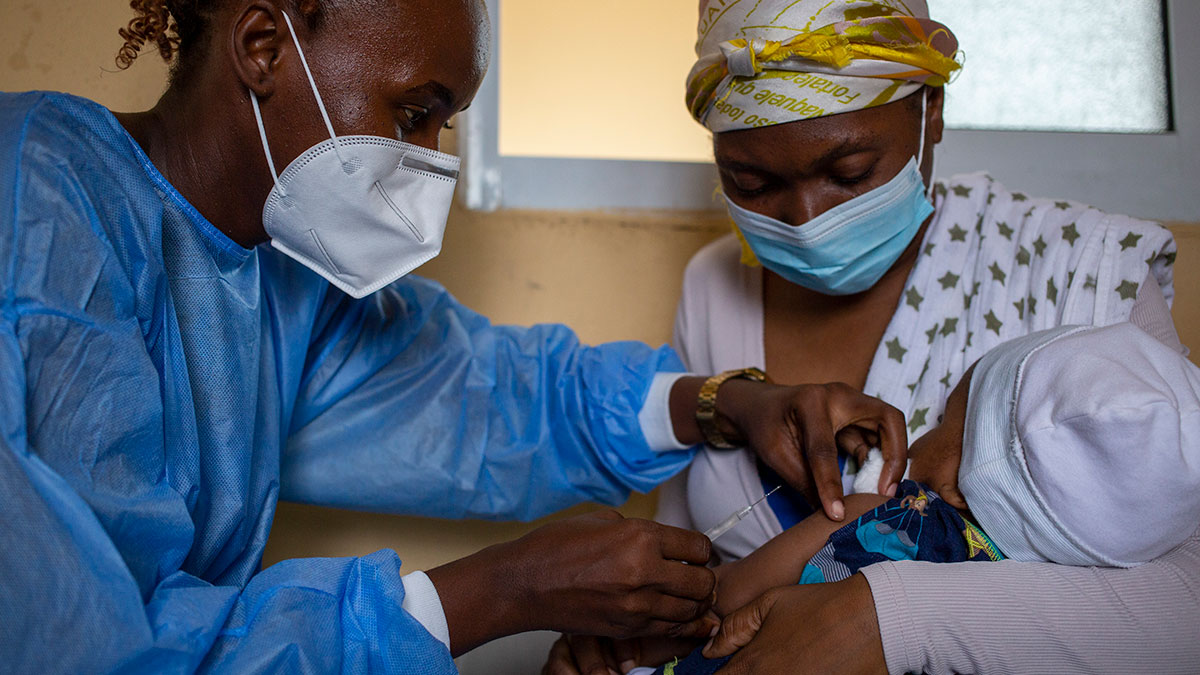
Measles elimination is possible by reaching every child with 2 doses of measles vaccine. CDC works with partners to implement the Measles & Rubella Strategic Framework, a global strategy to reach every child with 2 doses of vaccine.
Strengthening vaccination programs
Because measles is highly contagious, it can easily spread in unvaccinated or under-vaccinated communities. Measles cases anywhere in the world pose a risk to all countries and communities where vaccination coverageA is below 95%.
CDC works with countries and global partners to:
- strengthen national vaccination programs
- reach more people with the measles vaccine
- strengthen surveillance systems that detect measles early
- confirm cases through a global laboratory network
- respond quickly to outbreaks
Partnerships
CDC is a founding member of the Measles & Rubella Partnership (M&RP), a global initiative to lead and coordinate efforts to achieve a world without measles or rubella. The partnership is aligned with the Immunization Agenda 2030 initiative, which aims to save 50 million lives by providing access to lifesaving vaccines by the end of 2030.
- Vaccination coverage is the estimated percentage of people who have received specific vaccines.