



Key points
- Cough keeping you up at night? Congestion? Sore throat? You may have a chest cold (or acute bronchitis).
- If you're a healthy person without underlying heart or lung problems or a weakened immune system, this information is for you.
- Viruses usually cause chest colds.
- Antibiotics will not help you feel better if you have a chest cold.
Overview
Acute bronchitis (often called a “chest cold”) occurs when the airways of the lungs swell and produce mucus (a thick, sticky fluid).
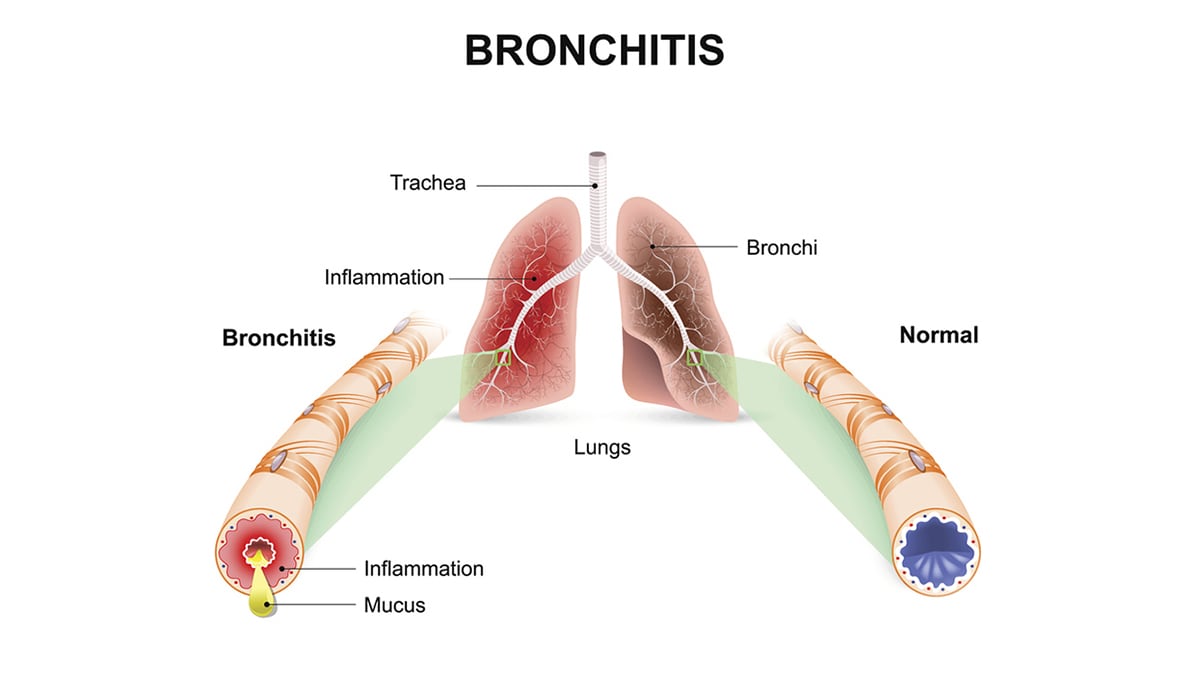
Symptoms
Symptoms of acute bronchitis last less than 3 weeks and can include:
- Coughing with or without mucus
- Feeling tired
- Congestion
- Sore throat
- Mild body aches
Causes
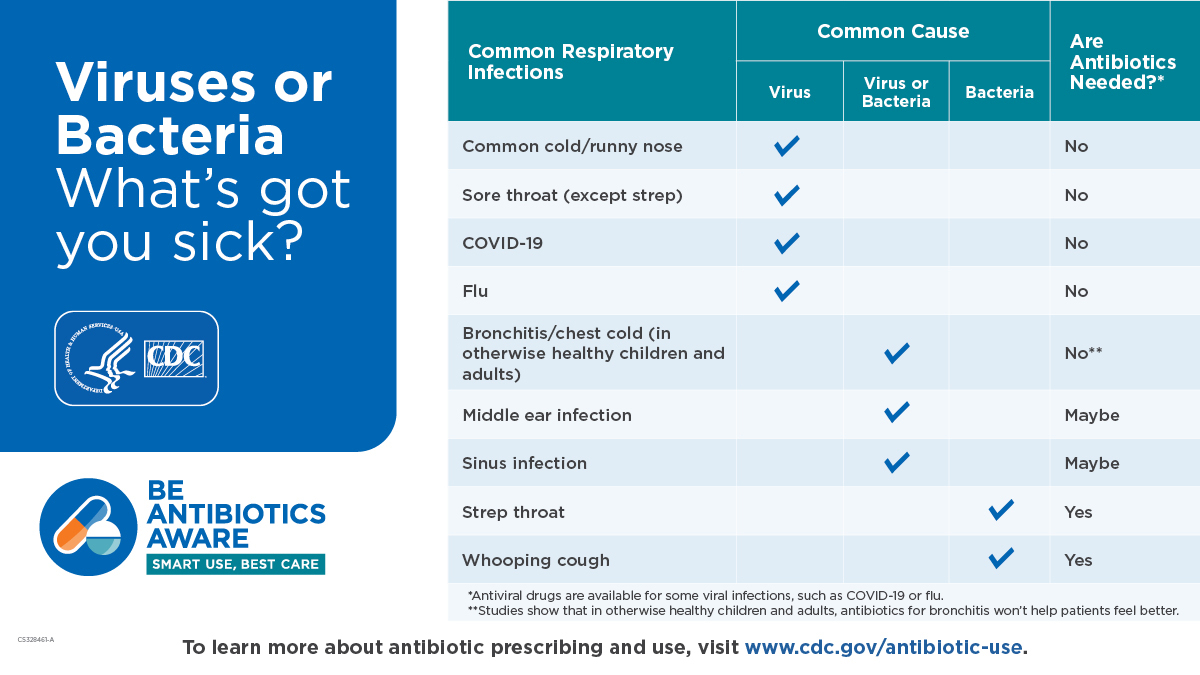
A virus usually causes a chest cold. Bacteria can sometimes cause a chest cold, but even in these cases, antibiotics are NOT recommended and will not help you feel better.
Prevention
CDC recommends that all people use core prevention strategies. These are important steps you can take to protect yourself and others from respiratory viruses, including those that cause acute bronchitis:
- Stay up to date with recommended vaccines and boosters, such as the flu vaccine.
- Practice good hygiene (practices that improve cleanliness).
- Cover your coughs and sneezes
- Wash or sanitize your hands often
- Clean frequently touched surfaces
- Take steps for cleaner air.
- Bring in fresh outside air
- Purify indoor air
- Gather outdoors
For more information on core prevention strategies, visit: Respiratory Virus Guidance | Respiratory Illnesses | CDC.
When to seek medical care
See a healthcare professional if you have any of the following:
- Fever that lasts longer than 5 days or fever of 104°F or higher
- Cough with bloody mucus
- Shortness of breath or trouble breathing
- Symptoms that last more than 3 weeks
- Repeated episodes of bronchitis
This list is not all-inclusive. Please see a healthcare professional for any symptom that is severe or concerning.
Treatment
Acute bronchitis usually gets better on its own—without antibiotics. Antibiotics won't help you get better if you have a chest cold.
If you have whooping cough (pertussis) or pneumonia, which can have similar symptoms to acute bronchitis, a healthcare professional will most likely prescribe antibiotics.
How to feel better
- Get plenty of rest.
- Drink plenty of fluids.
- Use a clean humidifier or cool mist vaporizer.
- Use saline nasal spray or drops.
- For young children, use a rubber suction bulb to clear mucus.
- Breathe in steam from a bowl of hot water or shower.
- For young children, sit with the child in a bathroom filled with steam from a running shower.
- Use throat lozenges or cough drops.
- Do not give lozenges to children younger than 4 years of age.
- Use pasteurized honey to relieve cough for adults and children at least 1 year of age or older.
Over-the-counter medicine
Ask a healthcare professional about over-the-counter medicines that can help you feel better.
- Over-the-counter medicines may provide temporary relief of symptoms, but they will not cure your illness.
- Always read over-the-counter medicine product labels and use as directed.
- Tell a healthcare professional about all prescription and other over-the-counter medicines you are taking.
Some over-the-counter medicines are not recommended for children of certain ages.
Ask a healthcare professional about the right dosage of over-the-counter medicines for your child's age and size and follow all directions.
Pain relievers and fever reducers
- Children younger than 3 months: do not give pain relievers or fever reducers unless a healthcare professional tells you to do so.
- Children between 3 months and 6 months: only give acetaminophen.
- Children 6 months or older: it is OK to give acetaminophen or ibuprofen.
Cough and cold medicines
- Children younger than 6 years: over-the-counter cough/cold medicines are not recommended and can result in serious and sometimes life-threatening side effects.
- Children 6 years or older: discuss the use of over-the-counter cough/cold medicines with a healthcare professional.
Resources
For more on treatment of common illnesses, visit CDC resources:
- Ear Infection
- Sinus Infection
- Sore Throat
- Urinary Tract Infection
- Preventing and Managing the Common Cold
- Skin Infection Fact Sheet
Print version: Preventing and Treating Bronchitis [PDF – 2 pages]