The
Centers for Disease Control and Prevention (CDC) awards
more than $3.5 million per year
to 10 institutions for new research on Lyme disease.
The studies are designed to improve understanding of
the disease and to examine new methods for testing, prevention,
and control.
Lyme
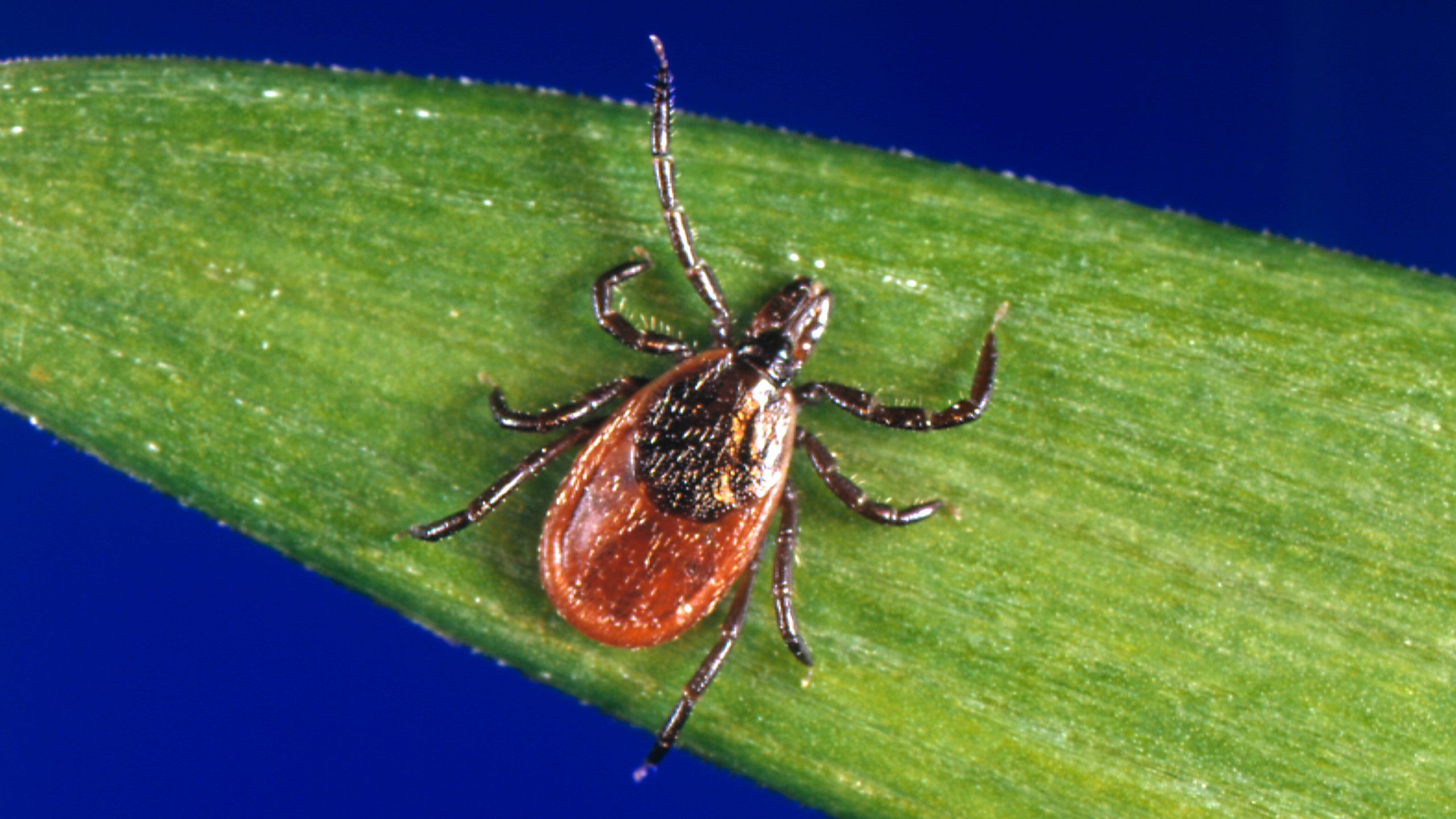
disease is a bacterial infection spread through the
bite of an infected tick. It is the most prevalent
vector-borne infectious disease in the United States,
with more than 23,000 cases reported in 2002.
"We
know that early diagnosis is crucial to enable prompt
treatment to prevent long-term complications from Lyme
disease," said Dr. James M. Hughes, Director of CDC's
National Center for Infectious Diseases. "These awards
will lead to improvements in surveillance, clinical
testing, tick control and community-based prevention
programs."
Brief
descriptions of the studies along with the names of
the principal investigators and institutions are included
below:
Diagnosis,
Immunology, and Pathogenesis Research
- Diagnosis
and Pathogenesis of Early Lyme Disease, Allen
C. Steere, M.D., Massachusetts General Hospital,
Boston, Massachusetts. The goals of this project
are to improve the accuracy of serodiagnostic testing
for Lyme disease, and to identify bacterial and
host factors that lead to more severe disease.
Laboratory markers for patients who would benefit
from more intensive treatment may be developed.
- Pathogenesis
of Lyme Borreliosis in the Rhesus Monkey, Mario
T. Philipp, Ph.D., Tulane University Health Sciences
Center, New Orleans, Louisiana. This proposal will
advance understanding of the effects of Lyme disease
on the central nervous systems. Mechanisms of neural
injury will be determined using primate cells in
culture.
- Analysis
of pgf 54 Members in Lyme Disease Serodiagnosis,
James A. Carroll, Ph.D., University of Pittsburgh,
Pittsburgh, Pennsylvania. This study will identify
and evaluate proteins that vary as Lyme disease
bacteria cycle between ticks and mammals. These
variably expressed proteins will be evaluated in
diagnostic tests and as vaccine candidates.
- Innate
Immunity in Vector-Borne Lyme Borreliosis,
Linda Bockenstedt, M.D., Yale University, New Haven,
Connecticut. This study will explore factors that
contribute to susceptibility to infection. It also
will examine the characteristics of Lyme disease
bacteria that are "crippled" by antibiotic treatment.
- Lyme
Disease Diagnosis with Host Gene Expression Arrays,
Ira Schwartz, Ph.D., New York Medical College,
Valhalla, New York. This investigation will examine
how cells from mice and humans respond to infection
by Lyme disease bacteria. Gene expression that
changes with infection will be monitored using
a technique called microarray analysis. New diagnostic
tests for active infection may be developed based
on these changes.
Tick-Control
Research
- Spatial
Risk Model for Ixodes scapularis-borne Borrelia,
Durland Fish, Ph.D., Yale University, New Haven,
Connecticut. This project will lead to the development
of a GIS-based surface map of the population density
of nymphal ticks and prevalence of Lyme disease
spirochete infection to estimate human infection
risk in the eastern United States.
- Assessing
Community-based Tick Control for Lyme Disease Mitigation,
Thomas N. Mather, Ph.D., University of Rhode Island,
Kingston, Rhode Island. This proposal will assess
and evaluate tick control attitudes and practices
before and after implementing an aggressive community
outreach program for tick control in Rhode Island.
A comprehensive training manual for implementing
community-wide tick control programs throughout
the Northeast also will be developed.
- Control
of Ixodes scapularis, Eddy A. Bresnitz, M.D.,
New Jersey Department of Health and Senior Services,
Trenton, New Jersey. This investigation will test
integrated pest management strategies, assess effectiveness
of a sustained deer reduction program, and evaluate
effectiveness of broad-scale, seasonal acaricide
(pesticide against ticks) applications to reduce
tick populations and Lyme disease incidence in
New Jersey. In addition, educational materials
on tick management to improve tick control practices
in New Jersey will be developed.
Community-based
Prevention Programs
- A
School-Based Intervention to Reduce Lyme Disease,
Nancy Shadick, M.D., M.P.H., Brigham and Women's
Hospital, Boston, Massachusetts. This project will
evaluate the effectiveness of an efficient, cost
effective, school-based intervention program in
reducing the incidence of Lyme disease in endemic
areas.
- Prevention
of Lyme Disease in Connecticut, Matthew Cartter,
M.D., M.P.H., Connecticut Department of Public
Health, Hartford, Connecticut. This study will
evaluate the effectiveness of integrated prevention
measures to reduce the risk of Lyme disease in
the United States, and will evaluate the costs
of these interventions in relation to the number
of cases prevented.
#
# #
CDC
protects people's health and safety by preventing
and controlling diseases and injuries; enhances health
decisions by providing credible information on critical
health issues; and promotes healthy living through
strong partnerships with local, national, and international
organizations.
|